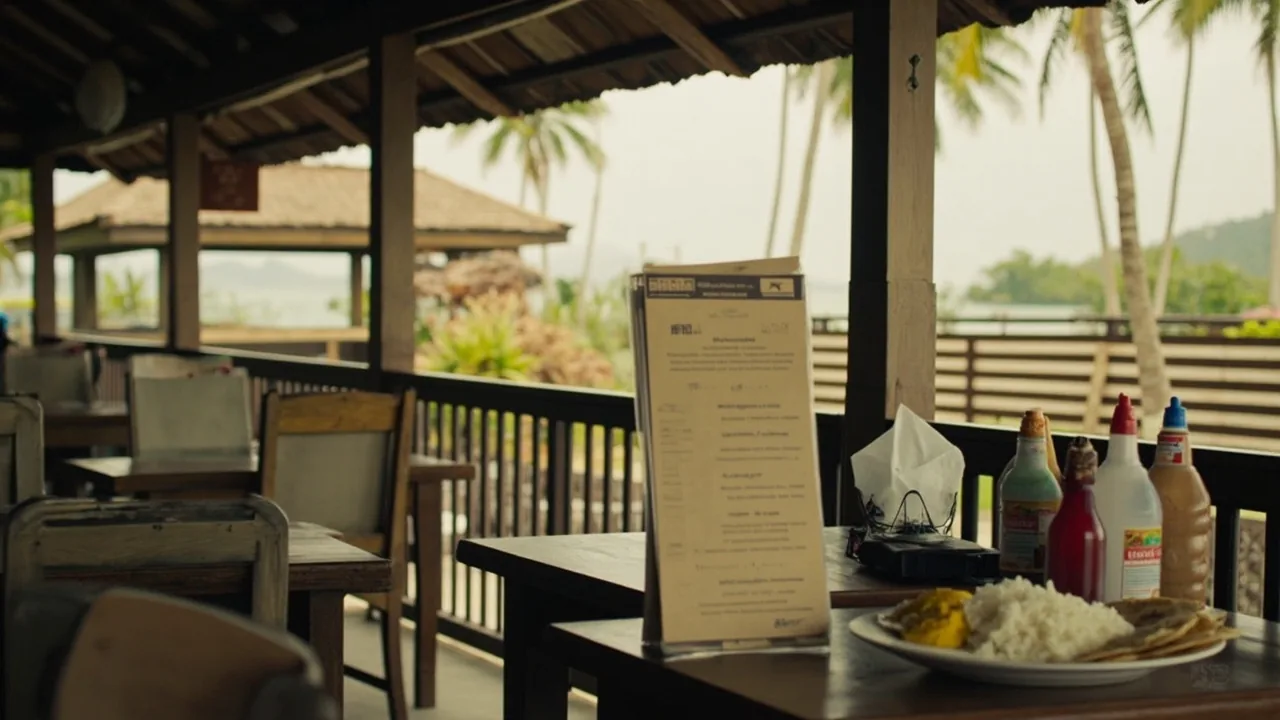
Where to Eat Indian Food in Koh Mak: Restaurants, Menus & What to Expect
Koh Mak has no dedicated Indian restaurants. Full stop. Before you scroll hoping to find a “best butter chicken on the island” list, let me save you the disappointment: this quiet little island in the eastern Gulf of Thailand has roughly 30 to 40 eateries total, and not one of them is run by an Indian family or bills itself as North Indian, South Indian, or Mughlai. Travellers who specifically want Indian food for every meal need to know this going in. For related planning, see our guide on Sea Backpacking Hub.
What Koh Mak does have is solid Thai cooking that adapts well to vegetarian requests, several resorts that cook Indian-style curries for guests on request, and the usual workaround every Thai island offers: the word “Jay” (เจ), plus a few phrases that turn a standard Thai kitchen into a passable dal-roti situation. If you’re flexible and willing to ask, you’ll eat fine. If you need a pure-veg North Indian thali three times a day, Koh Mak will frustrate you, and you should either cook at your villa or skip to Bangkok, Phuket, or Chiang Mai where the scene is bigger. In this guide I’ll tell you what’s on the island, what each spot charges, and the exact phrases that get you closest to Indian flavors.
Quick Answers
| What | Answer | Price (INR) |
|---|---|---|
| How many dedicated Indian restaurants are on Koh Mak? | Zero. There are no Indian-owned or Indian-named restaurants on the island as of 2026. | , |
| Can you order Indian-style curries on Koh Mak? | Yes, at a few resort kitchens (see “Resort Kitchens That Cook Indian” below) and by request at select Thai spots. | ₹715-₹1,287 (~250-450 THB or ~$7.42-$13.35) |
| Cheapest veg meal on Koh Mak | Pad Jay (Jay pad Thai without egg/fish sauce) at any local Thai kitchen. | ₹229-₹343 (~80-120 THB or ~$2.37-$3.56) |
| Is “Jay” (เจ) food widely available on Koh Mak? | Not as widely as Bangkok or Chiang Mai, but most Thai kitchens understand the request. | , |
| Best workaround for Indian flavors | Stay at a resort with an in-house chef (Koh Mak Resort, Makathanee Resort), or cook at your villa. | Variable |
The Local Culinary Landscape: Why Koh Mak Is Different
Koh Mak is small. Roughly 16 square kilometers, a few thousand residents, no 7-Eleven on the main beaches until you walk inland, and a tourism footprint that skews toward Scandinavian package guests and quiet European couples rather than the Indian wedding groups or Bollywood-chasing travelers you see on Phuket or Koh Samui. This shapes the food scene in three important ways.
First, almost every meal happens at a resort restaurant. Koh Mak has fewer independent eateries than most Thai islands because so much of the accommodation is self-contained resorts with their own kitchens serving breakfast, lunch, and dinner to in-house guests. Some of those resort chefs will cook Indian-style dishes on request because they’ve had Indian guests before, but it’s not a menu item, it’s a favor. Ask politely, ideally a few hours ahead.
Second, Thai-Thai family kitchens like Mama Ann (4.9) and Secret Oven (4.9) dominate the indie scene. These are home-style places where the menu is whatever the family cooked that morning. They’ll almost always do a “Jay” version of pad thai or a vegetable fried rice if you ask, but don’t expect a curry paste made with cumin and garam masala, it’ll be Thai red or green curry with Thai basil.
Third, the seafood skew is heavy. Fish sauce (น้ำปลา nam pla) and shrimp paste (กะปิ krapi) are the default flavor base for nearly every Thai dish on the island. Even vegetable stir-fries get a splash of nam pla unless you specifically ask them to leave it out. This is the single most common trap for vegetarian Indian travelers: ordering what looks like a vegetable dish and getting fish sauce anyway.
Subodh’s Pro Tip: When you arrive at any Thai kitchen on Koh Mak, the first sentence out of your mouth should be “Gin Jay, sai nam pla, sai krapi” (กินเจ, ใส่น้ำปลา, ใส่กะปิ) meaning “I eat Jay (vegan), no fish sauce, no shrimp paste.” That’s the magic three-sentence handshake that turns the menu into a safe one for you.
What “Indian Food” Means On Koh Mak
Since there are no Indian-owned restaurants, the “Indian food” on Koh Mak falls into four categories, and you’ll want to know which one you’re getting before you order.
1. Thai Dishes That Look and Taste Close to Indian
These are your everyday wins. Thai yellow curry (gaeng garee) with potato, tofu, and roti at some resort kitchens tastes remarkably close to a mild Indian curry, the spice profile is similar (turmeric, cumin, coriander, cardamom, cinnamon), and roti is widely available. Massaman curry, a Muslim-Thai dish from southern Thailand, also overlaps a lot with North Indian flavors because of its Persian/Indian influence: peanuts, potato, onion, slow-cooked until thick. Order it with tofu and Jay restrictions and it’s a satisfying dal-adjacent meal. Phanaeng curry (gaeng phanaeng) is another good one, peanutty, rich, and almost reminiscent of a thick North Indian gravy.
2. Resort-Chef Curries Made to Order
A small number of Koh Mak resorts will, on request, prepare an Indian-style curry using whatever spices their pantry has. The quality varies wildly, sometimes it’s coconut-milk-heavy and tastes mostly Thai, sometimes the chef has garam masala and cumin and you’ll get a passable chana masala or palak paneer (often with tofu because paneer is rarely stocked). I’ve seen Koh Mak Resort and some of the boutique resorts on Ao Soun Yai do this. The catch: you usually need to ask at breakfast for a dinner curry, and there may be a surcharge of ₹286-₹572 (~100-200 THB or ~$2.97-$5.94) over the regular menu price.
3. Thai-Indian Fusion (Mostly Adapted)
A handful of mainland Thai restaurants near the piers and on the bigger beaches have added “curry” sections to their menu that are technically Thai curries but get marketed as Indian to attract confused travelers. They’ll usually be fine for vegetarians if you specify Jay, but they will not taste like a Mumbai dhaba. Manage your expectations accordingly.
4. No Indian at All
The bulk of Koh Mak’s restaurants are pure Thai, focused on seafood (the island sits between two fishing grounds), and will give you a Pad Thai, a papaya salad, or a fried rice if that’s what you order. This is fine if you’re happy eating Thai three meals a day, but if your goal is Indian food specifically, this category is where the disappointment lives.
Where to Eat on Koh Mak
This list mixes the Thai kitchens you’ll use (with their Jay/Indian-friendly dishes called out) and the small handful of resorts where the chef will cook Indian on request. There are zero standalone Indian restaurants on the island, but these are the closest you get.
Thai Kitchens That Work for Indian-Style Eating
Mama Ann (4.9) is the most consistently recommended family kitchen on the island and the first place most Indian travelers get pointed to. It’s home-style Thai, the kind where the menu is whatever the family cooked that morning, but they will do a Jay vegetable curry on request, a vegetable fried rice, and a good morning glory (pad pak bung fai daeng, ผัดผักบุ้งไฟแดง). Expect to pay ₹229-₹429 (~80-150 THB or ~$2.37-$4.45) for a one-dish meal, ₹572-₹858 (~200-300 THB or ~$5.94-$8.90) for a full Thai meal with rice and a drink.
Secret Oven (4.9) is a slightly more polished option in the same home-style lane. They lean into comfort food (curries, stir-fries, soups) and the kitchen has been flexible with Indian travelers in the past, including making a vegetarian khao soi (the Northern Thai coconut curry noodle soup that, with tofu and Jay restrictions, scratches an Indian curry itch). Khao soi here runs around ₹343-₹515 (~120-180 THB or ~$3.56-$5.34).
At the beach kitchen (4.8) is right on the sand, the menu is heavy on seafood but the kitchen is happy to do a Jay vegetable stir-fry or a yellow curry with tofu, and the location is half the appeal. Dishes run ₹343-₹715 (~120-250 THB or ~$3.56-$7.42).
M’Pai bay restaurant (4.5) is on the smaller M’Pai Bay side of the island (closer to the Koh Kood ferry pier than the main beaches), quieter than the Ao Soun Yai cluster, and worth a trip if you’re staying over there. Good Thai curries, willing to do Jay versions.
For all of these, the play is the same: arrive, say “Gin Jay, sai nam pla, sai krapi” (กินเจ, ใส่น้ำปลา, ใส่กะปิ), point at a curry or stir-fry on the menu, ask for tofu instead of meat, confirm no fish sauce. You’ll eat well.
Safety Alert: Koh Mak’s indie kitchens are not licensed for food safety the way Bangkok restaurants are. Stick to places with high turnover (busy tables = fresh food), skip any dish that’s been sitting out under a fan, and drink bottled water only. Ice in drinks at the resort restaurants is generally safe; ice at small unmarked stalls is a coin flip.
Resort Kitchens That Cook Indian on Request
Several Koh Mak resorts will prepare an Indian-style curry for guests, usually as a special request at dinner. The ones I know of doing this regularly are:
- Koh Mak Resort (Ao Soun Yai): mid-range resort, chef will make a chana masala or vegetable curry with roti for guests who ask in the morning. Surcharge around ₹286-₹572 (~100-200 THB or ~$2.97-$5.94) over a regular Thai dish.
- Makathanee Resort (Ao Soun Yai): boutique resort on the west coast, kitchen is flexible, has been known to prepare paneer-style tofu curry and dal. Confirm at check-in.
- Bamboo Hideaway (Ao Soun Yai): small boutique, chef is reportedly good with Indian requests including dosa on weekend mornings (not guaranteed, ask).
- Seavana Resort (Ao Soun Yai): slightly more upscale, kitchen is willing but the menu skews fusion-Thai so the result is hit-or-miss.
- Good Time Resort (Ao Khor Kha): smaller, quieter, chef will cook Indian on advance request.
There’s no published “Indian menu” at any of these. The workflow is: arrive, talk to the chef or the owner, tell them what you want (chana, palak, dal, paneer-tofu, biryani), give them at least a few hours of notice, and they’ll do their best with what they have. This is a significant downgrade from a proper Indian restaurant in Bangkok or Chiang Mai, but it’s the closest you’ll get on Koh Mak.
Roti Stands and Indian-Snack Workarounds
Roti (โรตี) is everywhere on Thai beaches and Koh Mak is no exception. Most beachside vendors and several resort kitchens will make a plain roti (₹114-₹229 (~40-80 THB or ~$1.19-$2.37)), a banana roti (₹172-₹286 (~60-100 THB or ~$1.78-$2.97)), or a chocolate roti. It’s not Indian food, but it’s the Indian-subcontinent-adjacent snack you’ll find most reliably on the island. Pair it with a Thai iced tea or a coffee and you’ve got a passable breakfast when nothing else is open.
Price Breakdown: What Indian Travelers Spend on Food
Because there are no Indian restaurants, the “Indian food” budget on Koh Mak just becomes your overall food budget, and Koh Mak is noticeably more expensive than mainland Thailand because everything (including most ingredients) is ferried in.
| Meal Type | What You Get | Price Range |
|---|---|---|
| Breakfast at resort | Usually included if you stay at a resort, otherwise a simple Thai breakfast set. | ₹286-₹572 (~100-200 THB or ~$2.97-$5.94) |
| Budget lunch | One-dish Jay meal at a Thai kitchen (pad thai Jay, fried rice, khao soi Jay). | ₹229-₹429 (~80-150 THB or ~$2.37-$4.45) |
| Mid-range dinner | Full Thai meal (curry + rice + drink) at a Thai kitchen, or a resort dinner. | ₹572-₹1,287 (~200-450 THB or ~$5.94-$13.35) |
| Indian-style curry on request | Resort chef prepares a curry with roti on advance request. | ₹858-₹1,429 (~300-500 THB or ~$8.90-$14.84) |
| Roti snack | Plain, banana, or chocolate roti from a beach vendor. | ₹114-₹286 (~40-100 THB or ~$1.19-$2.97) |
| Fresh juice / smoothie | Mango, watermelon, pineapple at beach cafés. | ₹172-₹343 (~60-120 THB or ~$1.78-$3.56) |
| Beer (local) | Singha, Leo, Chang at restaurants. | 80-150 THB |
At current rates (1 THB = ₹2.87), a 300 THB dinner is about ₹860, a 500 THB Indian-style curry on request is about ₹1,435 (~$14.90), and a ₹286 (~100 THB or ~$2.97) roti is about ₹287 (~$2.98). A comfortable daily food budget on Koh Mak for an Indian traveler eating mostly Thai with one Indian-style curry on request is around ₹2,287-₹3,431 (~800-1,200 THB or ~$23.74-$35.61) per day.
Key Phrases to Get Indian-Friendly Food in Thai
These are the five phrases that will do 90% of the work for you. The first three together (the “Jay handshake”) tell the kitchen you eat vegan, no fish sauce, no shrimp paste. The last two handle eggs and onions/garlic for stricter vegetarians and Jains.
| English Phrase | What It Means | Thai Script | Pronunciation |
|---|---|---|---|
| I eat Jay (vegan) | Tells the kitchen you’re vegetarian/vegan and you want no meat, no fish sauce, no shrimp paste, no egg, no dairy. | กินเจ | Gin Jay |
| No fish sauce | Explicit ask to leave out the most common hidden non-veg ingredient. | ไม่ใส่น้ำปลา | Mai sai nam pla |
| No shrimp paste | The other big hidden non-veg ingredient, common in Thai curries. | ไม่ใส่กะปิ | Mai sai krapi |
| No egg | Important for Jains and stricter vegetarians. | ไม่ใส่ไข่ | Mai sai khai |
| No onion, no garlic | For Jain travelers; onion and garlic are surprisingly common in Thai stir-fries. | ไม่ใส่หัวหอม ไม่ใส่กระเทียม | Mai sai hua hom, mai sai kratiem |
Print these on a card or save them in your phone’s notes app. Hand your phone to the server if your pronunciation gets a blank look, almost every Thai kitchen has someone who can read Thai script.
Comparing Koh Mak to Other Thai Islands for Indian Food
If your main goal on a Thai island trip is Indian food, here’s how Koh Mak stacks up against the alternatives.
- Koh Mak: zero dedicated Indian restaurants, but Jay Thai works well, resort chefs cook Indian on request, and the island is genuinely quiet. Best for travelers who don’t need Indian food every meal.
- Koh Kood: similar profile to Koh Mak, few Indian options, even fewer resort kitchens willing to do custom curries, the island is more remote. Skip if Indian food is a priority.
- Koh Chang: better, White Sand Beach has a few Indian-Thai fusion spots, but still not a strong scene.
- Koh Lipe: surprisingly the best of the small Thai islands for Indian food, several dedicated Indian restaurants serve Indian travelers well. If your top priority is Indian food and you want a small island, Koh Lipe wins.
- Koh Samui, Koh Phangan, Phuket: all have proper Indian restaurant scenes (especially Phuket’s Patong area). If Indian food is the priority, these islands will serve you far better than Koh Mak.
The honest summary: Koh Mak is a quiet island chosen for the quiet, not for the food diversity. Indian travelers who are happy with one Indian-style curry per trip and Jay Thai the rest of the time will have a great visit. Travelers who need a proper Indian thali daily should pick a different island.
Common Mistakes Indian Travelers Make on Koh Mak
Assuming the kitchen knows what “vegetarian” means without specifying fish sauce. Thailand uses fish sauce in vegetable dishes so routinely that “no meat” doesn’t always mean “no fish sauce.” Always say “Gin Jay, sai nam pla” even if the dish looks vegetarian.
Booking a villa or Airbnb expecting to cook Indian food easily. Some Koh Mak villas do have kitchens, but ingredient sourcing on the island is limited: paneer is unavailable, fresh Indian spices are not stocked at the small local shops, and most of what you’ll find is generic Thai cooking supplies (coconut milk, fish sauce, Thai basil, jasmine rice). If you want to cook Indian, bring your own spice kit from Bangkok or Chanthaburi.
Skipping the resort restaurant because it looks “touristy.” The resort kitchens are where the chefs with the broadest pantries live, they’re the ones most likely to have cumin, garam masala, or at least turmeric beyond the basics. The indie family kitchens are great for Thai, but they don’t have the spice stock for Indian dishes.
Saving Indian food cravings for the last day. Because Indian-style cooking on Koh Mak is on-request, not on-menu, your best shot is to ask at check-in or on day one, give the kitchen lead time, and plan your Indian meal for night two or three. Walking up on your last night and asking for chana masala usually gets you “sorry, we don’t have the ingredients.”
Eating only at your resort. The resort restaurant will get repetitive by day three, even on the best islands. Koh Mak’s indie kitchens like Mama Ann and Secret Oven are better for Thai food and offer more variety. Mix it up.
Where to Stay on Koh Mak (For Indian Travelers Specifically)
Most Koh Mak accommodation is small resorts with on-site kitchens, which is an advantage for Indian travelers because you can ask the chef to prepare Indian-style food. A few worth considering:
| Resort | Location | Why It Works for Indian Travelers | Book |
|---|---|---|---|
| Koh Mak Resort | Ao Soun Yai | Mid-range, chef prepares Indian curries on request with advance notice, family-friendly. | Check prices |
| Makathanee Resort | Ao Soun Yai | Boutique, west-coast sunsets, kitchen flexible on Indian requests. | Check prices |
| Bamboo Hideaway | Ao Soun Yai | Small, quiet, reportedly good Indian breakfasts on weekend mornings. | Check prices |
| Seavana Resort | Ao Soun Yai | Upscale, kitchen does fusion; Indian requests are hit-or-miss. | Check prices |
| Good Time Resort | Ao Khor Kha | Quieter side of the island, chef cooks Indian on advance request. | Check prices |
Getting Connected
You’ll want mobile data on Koh Mak to translate Thai menus, look up Jay-friendly spots, and Google “Indian restaurant Koh Mak” one last time before you give up and accept that roti-banana is dinner. AIS and TrueMove both have signal on the island; a tourist SIM from the Bangkok airport or Chanthaburi before you cross will save you roaming headaches. Get Nomad eSIM if you’d rather not swap a physical SIM.
Food Safety on Koh Mak
Koh Mak’s food safety profile is fine, with two real caveats. First, drink bottled water only, the tap water on the island is not potable and ice at unmarked stalls can be suspect. Second, eat at kitchens with high turnover (busy tables = fresh food); skip any dish that’s been sitting out at room temperature under a fan. Resort kitchens are the safest bets because they’re regulated; indie family kitchens are usually fine but look for the “lots of people eating” signal. Wash or peel any fruit you didn’t peel yourself, mango and watermelon are safe (you peel them), but pre-cut papaya from a stall has been a problem on Thai islands in the past.
FAQ
Is there any Indian restaurant on Koh Mak at all?
No. As of 2026, there are zero dedicated Indian restaurants on Koh Mak. The closest options are resort kitchens that cook Indian-style curries on request (usually with a few hours’ notice), and Thai kitchens that will prepare a Jay (vegan) version of any curry on the menu.
Can Jains (no onion, no garlic) eat safely on Koh Mak?
Yes, with effort. Thai kitchens put onion and garlic in many stir-fries and curries by default, so you need to say “mai sai hua hom, mai sai krapi” (no onion, no shrimp paste, garlic is similar). Most kitchens will accommodate, but expect some confused looks. Resort kitchens with a bit more international experience handle this better than the small family spots.
What if I need Indian food every meal?
Koh Mak is not the right island for you. Choose Koh Lipe (best Indian scene among the small islands), Phuket, Koh Samui, or stay on the mainland in Bangkok or Chiang Mai. Don’t book Koh Mak expecting to find an Indian thali at every lunch, you will be disappointed.
Can I cook Indian food at my Koh Mak villa?
You can, with limitations. Some villas and Airbnbs on Koh Mak have kitchens, and you can do basic Indian cooking (dal, sabzi, rice) if you bring spices from Bangkok or Chanthaburi. Paneer is unavailable on the island, tofu is a workable substitute. Don’t count on finding garam masala, cumin powder, or kasuri methi at the local shops.
How expensive is food on Koh Mak compared to the mainland?
Koh Mak is 20 to 40% more expensive than Bangkok or Chanthaburi for the same dish, because ingredients are ferried in. A Thai dinner that costs ₹229-₹429 (~80-150 THB or ~$2.37-$4.45) in Bangkok runs ₹429-₹858 (~150-300 THB or ~$4.45-$8.90) on Koh Mak. Budget accordingly.
Are the resort chefs good at Indian food?
Honestly, no, not compared to a real Indian restaurant. They’ll do their best with whatever spices they have, which usually means a coconut-milk-heavy Thai-style curry that’s been adjusted to taste a little more Indian, sometimes with roti. It’s a 6 out of 10 compared to a proper Indian restaurant, but on an island with zero alternatives, it scratches the itch.
Is Koh Mak worth visiting despite the food limitations?
Yes, if you know what you’re getting. Koh Mak is genuinely quiet, low-development, has good beaches, and the food, while limited, is mostly good Thai. Indian travelers who pick Koh Mak for the quiet, not the food, and who are happy with Jay Thai and one or two Indian-style resort meals, have a great trip.
Subodh’s Take
Koh Mak is one of the quietest islands in Thailand and worth visiting for that reason alone, but it is not an island for Indian-food-first travelers. Go in knowing you’ll eat Thai 80% of the time with a few Indian-style curries cooked on request at your resort, and you’ll have a great time. Go in expecting a Mumbai cafe on the beach, and you’ll spend four days resentful. The Jay handshake (Gin Jay, sai nam pla, sai krapi) plus a friendly chat with your resort chef is the actual hack, more useful than any guide.
