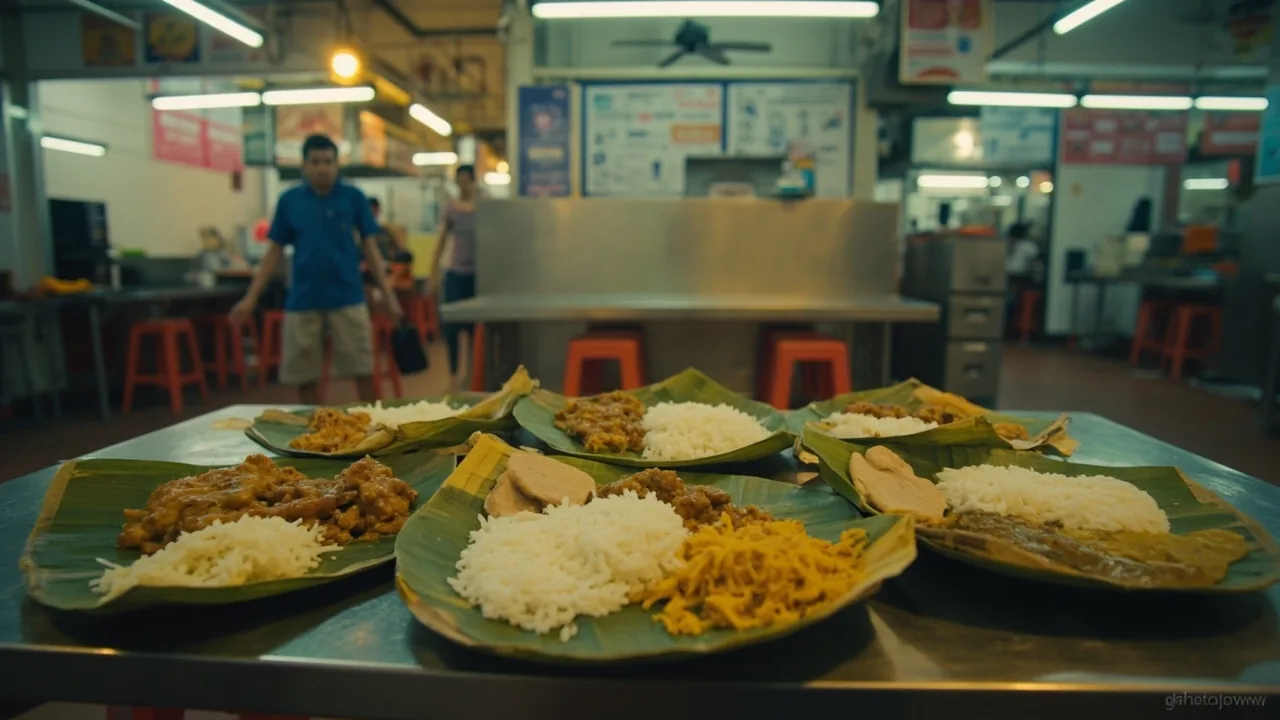
Singapore Veg Food Tour: The Ultimate Guide for Indian Vegetarian Travelers
Singapore is one of the rare Southeast Asia capitals where being a pure vegetarian is genuinely easy, not just survivable. Hawker centres across the city now run a See Singapore veg food tours on GetYourGuide circuit that explicitly stops at Indian, Chinese, and Malay vegetarian stalls, and Little India’s buffet scene means you never go hungry even on the strictest Jain travel day. This guide covers what a guided veg food tour includes, what you’ll eat, what it costs, and where to go if you want to DIY the same route. For related planning, see our guide on Sea Backpacking Hub.
Quick Answers
| What | Answer | Price (INR) |
|---|---|---|
| Typical guided veg food tour price | 4-hour small-group tour, 8-12 tastings | ₹6,500 (~115 SGD) |
| Hawker centre vegetarian meal | Single stall, one dish + drink | ₹500 (~7 SGD) |
| Indian vegetarian buffet in Little India | Unlimited thali, sit-down | ₹600 (~8 SGD) |
| MRT day pass for getting to tour starts | Covers unlimited rides | ₹260 (~3.5 SGD) |
| Veg-friendly Indian fine dining (Sahebs) | One main + naan + drink | ₹2,250 (~30 SGD) |
1 SGD ≈ ₹74.76 at current rates (1 INR = 0.0134 SGD roughly).
The Local Vegetarian Landscape
Singapore is genuinely one of the easier Southeast Asia capitals for vegetarians, but “easy” is relative. Around 9% of residents are vegetarian-leaning (Indian Hindu, Jain, Buddhist, and a growing vegan contingent), so the infrastructure exists, but you still have to ask.
Three hidden-ingredient traps to know before you walk into any hawker centre:
- Prawn stock in vegetable noodles. The “vegetable” noodle stall at Tiong Bahru or People’s Park will often use prawn or chicken stock as the base. Always ask “vegetarian, no seafood stock.”
- Lard in char kway teow and fried rice. Many Cantonese and Hokkien stalls render pork fat into their fried rice and noodles. Ask if you’re strict.
- Egg in everything “vegetarian.” Singapore considers egg-vegetarian acceptable by default. If you are no-egg, specify “no egg, no meat, no seafood.”
The good news: most hawker centres now have at least one Muslim-owned Indian vegetarian stall (look for the “vegetarian” word in the tray, often in Tamil alongside English). These are usually safe across the board, including onion-garlic-light for softer-Jain travelers.
What a Singapore Veg Food Tour Includes
Most guided vegetarian walking tours cover three to five stops in roughly four hours, walking between Little India, a hawker centre or two, and often a wet market or traditional spice shop. Here’s the typical structure based on what operators run in 2026:
- Little India wet market or Tekka Centre (60-90 min). A guided walk past banana-leaf vendors, fresh turmeric, tamarind, curry leaves, and a coconut-grinding stall. You taste fresh-cut fruit and a single idli or vadai sample.
- Hawker centre vegetarian trail (60-90 min). A guided hop between four to six stalls: an Indian veg stall (thali or biryani sample), a Chinese Buddhist vegetarian stall (mock char siew, mock duck), a Malay/Muslim stall (vegetarian mee goreng or nasi padal), and a drinks stop (sugarcane juice or bandung).
- Indian restaurant sit-down (45-60 min). A proper thali, dosa, or biryani main with one sweet. Most tours end here.
- Spice or tea stop (15-30 min). Optional add-on, sometimes used as a digestif.
For comparison with neighbouring countries and a wider hawker-and-tour rundown, see our Southeast Asia food tour booking guide.
What you’ll eat on a typical tour
| Stop | What you taste | Vegetarian type |
|---|---|---|
| Tekka Centre | Idli + sambar + a single vadai | Pure veg, can be Jain (no onion/garlic) |
| People’s Park hawker | Vegetarian char kway teow (mock meat) or vegetable rojak | Buddhist-style veg, usually contains egg in the dressing |
| Indian buffet stop | Mini thali: dal, sabzi, rice, roti, rasam | Pure veg, easy to request Jain |
| Spice shop | Fresh coconut water + a small sweet | Universal |
| Sweet stop | Gulab jamun, ladoo, or halwa | Pure veg |
Recommended Vegetarian Restaurants (DIY Route)
If you’d rather skip the guide and explore on your own, these spots from the Singapore shortlist are reliable and well-rated. Treat them as a self-paced tour map.
Pure Vegetarian / Indian spots
Chola Cafe - Biryani House (4.9 rating). The Hyderabadi biryani specialists. Ask for the veg biryani or the paneer versions, both come heavy on the dum cooking and skip the meat-stock entirely. Portions are generous, prices sit around ₹1,343-₹1,865 (~18-25 SGD or ~$13.94-$19.36) a main.
Zaffron Tandoori Restaurant @ Boat Quay (4.8 rating). North Indian tandoori at riverside prices (expect to pay a small premium for the view). Paneer tikka, dal makhani, and a wide veg thali lineup. The waterfront seating makes it a dinner-tour kind of stop.
Black Pepper Multicuisine Restaurant (4.8 rating). Covers both North and South Indian, so if you’re travelling with a mixed group, this solves the “where do we go” debate in one shot. Veg thali and dosas are the safest bets.
Sahebs - The Indian Restaurant on Orchard Road (4.7 rating). The fine-dining Punjabi option. Order the dal makhani, garlic naan, and one paneer main. Budget roughly ₹2,238 (~30 SGD or ~$23.23) per person before drinks.
We Desi - Indian Bistro (4.6 rating). Inside City Gate Mall near Bugis. North Indian street food and fusion. Their signature tandoori momos run around ₹1,492 (~20 SGD or ~$15.48); the chole bhature and pav bhaji are also solid.
KOTHI RESTAURANT & BAR (4.9 rating). The Amritsar-street-food homage. Heavy on the Punjabi veg side: chole, rajma, kadhi pakora, lassi. Best for groups.
If you want a wider write-up of the Indian restaurant scene across the city, our Indian Food in Singapore 2026 roundup covers Little India, Orchard, and the airport together.
Hawker centre anchors for self-guided tours
People’s Park Food Centre Blk 32 (4.1 rating). Chinatown’s most reliable hawker for a DIY veg walking route. Several stalls (look for the explicit “vegetarian” Tamil/English signs) do vegetarian char kway teow, vegetarian nasi briyani, and a daily-changing dosa corner. Meals cluster around ₹373-₹522 (~5-7 SGD or ~$3.87-$5.42) per dish.
Non-veg Indian/Asian cross-over
If you’re travelling with non-veg friends and want somewhere with strong veg options but also meat, Khao Hom by Rung Mama (AMK) (4.7 rating) and Sanook Kitchen - Square 2 (4.8 rating) both run authentic Thai with clear vegetarian menus. Yogiyo Korean restaurant (4.7 rating) has solid bibimbap veggie options, and KLARA Charcoal Dining @ Thomson (4.7 rating) does charcoal-grilled vegetable platters.
For something completely different, Joya Onsen Cafe (4.4 rating) combines a Japanese onsen with a vegetarian-leaning menu, good if you need a slow afternoon and have the entry ticket budget. Les Climats (4.9 rating) is the high-end French option, set-menu vegetarian on request.
Key Phrases in English/Mandarin/Tamil
Singapore is trilingual at the food counter, so you’ll get further in English than anywhere else in the region, but knowing a couple of local phrases helps at hawker stalls.
| English | What it means | Mandarin/Tamil | Pronunciation |
|---|---|---|---|
| I am vegetarian, no meat, no seafood | The full disclaimer you’ll repeat 50 times | 我吃素 (Chinese); Saapa veg (Tamil shorthand) | “wo chi su” / “saapa-veg” |
| No egg, no onion, no garlic | The Jain triple-check | 不要蛋 (Chinese); “no egg” (clear everywhere) | “bu yao dan” |
| No prawn stock, no lard | The two hidden-ingredient catches | 不要虾汤, 不要猪油 | ”bu yao xia tang, bu yao zhu you” |
| Just vegetable, please | The fallback when nothing else lands | 蔬菜就好 | ”shu cai jiu hao” |
| Pure veg, no meat broth at all | The hardcore version | 纯素 | ”chun su” |
For a broader Little India street-level safety breakdown, our Little India Singapore food safety guide covers which stalls to trust.
Safe Local Dishes to Eat
These are vegetarian or one-line customisable across hawker centres:
- Vegetarian biryani (Indian Muslim stall, ₹448-₹597 (~6-8 SGD or ~$4.65-$6.19)). Ask for the dum-style veg version, no chicken stock. Comes with raita and a boiled egg by default, so specify no egg for full no-egg.
- Dosa (South Indian stall, ₹298-₹522 (~4-7 SGD or ~$3.10-$5.42)). Plain masala or rava dosa. Strictly vegetarian batter by default. Skip the ghee version if you’re strict.
- Thali (Little India banana-leaf restaurants, ₹597-₹1,119 (~8-15 SGD or ~$6.19-$11.61)). Unlimited refills on dal, sabzi, rasam, rice, roti. Request no onion-garlic if Jain.
- Buddhist vegetarian mock meat (Chinatown hawker stalls, ₹448-₹671 (~6-9 SGD or ~$4.65-$6.97)). Mock char siew, mock duck, mock fish. Made from wheat gluten or soy, veg. Confirm no egg in the sauce.
- Mee goreng / nasi goreng vegetarian (Malay/Muslim stalls, ₹373-₹522 (~5-7 SGD or ~$3.87-$5.42)). Always available, ask specifically for “vegetarian, no seafood.”
- Rojak (Indian or Chinese style, ₹298-₹448 (~4-6 SGD or ~$3.10-$4.65)). Indian rojak is fully vegetarian (fried tofu, potato, banana, pineapple, dipping sauce). Safe in principle but the Chinese version often uses prawn paste, so ask.
For a fuller list with prices and ordering instructions, our where to find vegetarian food in Singapore has it organised by neighbourhood.
Food Safety Tips
Singapore has some of the strictest hawker hygiene enforcement in Asia. If a stall passes its annual health inspection, it gets a grade sticker (A/B/C) on the front. A-grade is effectively risk-free.
- Pick the busier stall. High turnover = fresh food = lower food-poisoning risk.
- Avoid stalls open at odd hours. The 2-3 AM crowd is fine, the 11 AM “just opened from a 12-hour shift” stall is not.
- Drink bottled water from a familiar label. Bottled water runs around ₹112 (~1.50 SGD or ~$1.16) everywhere.
- Skip pre-cut fruit from wet markets. Cut by hand, exposed to flies. Wash fruit yourself or eat it whole.
- Trust Muslim-owned “vegetarian” labels. They’re religiously enforced, not marketing claims.
- Stay clear of raw vegetables or salads from street carts. Local tap water in the wash is fine for residents, your gut isn’t used to it.
Getting Connected
Pick up either a tourist SIM (Singtel, StarHub, or M1 tourist pack, ₹1,492-₹2,238 (~20-30 SGD or ~$15.48-$23.23) for 7 days, 100 GB+) or use an eSIM before you land. Data on the MRT between food stops is genuinely useful for translating stall signs and finding the next tour pickup point.
Get Nomad eSIM, covers Singapore on the regional Southeast Asia pack, activates the moment your flight lands at Changi.
Common Mistakes Indian Vegetarians Make in Singapore
- Assuming “vegetarian thali” automatically means no onion/garlic. Most do, some use garlic as a base. Specify “no onion no garlic” once, in plain English, then confirm.
- Trusting “vegetarian” signs at Chinese Buddhist stalls without asking about egg. Many use egg in the dough, sauce, or batter. Egg-vegetarian is the default in Singapore.
- Walking past Muslim Indian stalls thinking they’re meat-only. The “vegetarian” column on the sign is almost always safe across the board. Muslim-owned Indian stalls in Singapore are often the safest veg option.
- Booking a generic “Singapore food tour” instead of a veg-specific one. Most small-group food tours prioritise seafood (chilli crab, satay). A specifically vegetarian tour focuses on the stalls that matter for you. Filter GetYourGuide listings on “vegetarian” before you book.
- Over-ordering at buffets because the price includes “unlimited.” A ₹895-₹1,119 (~12-15 SGD or ~$9.29-$11.61) veg thali includes refills, but pacing yourself saves the stomach for the next stop. Most tourists stack two rounds, then skip the next tour stop. Pace it.
For day-to-day budget hacks, our how to eat cheap in Singapore guide covers hawker-credit card tricks, tourist-pass inclusions, and the few genuinely free tasting stops.
What the Guided Tour Route Looks Like
The standard Singapore veg food walking tour route runs roughly like this. Useful if you’re mapping your own day:
- Pickup: Little India MRT (NE line, exit A or C). Most tours converge here.
- Walk through Tekka Centre (10-min walk). Wet market + hawker centre, both covered.
- Sample Indian vegetarian staples at one Indian stall (45-60 min total).
- Walk or MRT one stop to Rochor or Bras Basah-Bugis for a Chinese Buddhist vegetarian stall.
- End at Boat Quay, Clarke Quay, or Chinatown for dessert + final sampling.
Total walking is gentle (2-3 km over 4 hours), MRT top-ups or a day pass cover the gaps. Day passes are around ₹597 (~8 SGD or ~$6.19) and valid on all MRT/bus lines, which is the cleanest way to free yourself from recharge anxiety.
When a Pure-Vegan Tour Is the Better Fit
If you’re travelling vegan (no dairy, no egg, no honey), Singapore has vegan-specific hawker tours that route only through plant-based stalls. These tours are smaller, run fewer days a week, and cost slightly more (₹9,697-₹11,188 (~130-150 SGD or ~$100.65-$116.14)), but for vegan travelers they’re worth it. The standard “vegetarian” tour doesn’t filter for plant-milk-in-coffee or ghee-in-biriyani, which is the recurring trap.
Pricing Summary
For a typical Indian vegetarian traveller doing the tour scene:
| Activity | Price (SGD) | Price (INR) |
|---|---|---|
| Guided 4-hour veg food tour | 100-130 | 7,500-9,700 |
| DIY hawker vegetarian meal (per dish) | 5-7 | 380-525 |
| Indian veg thali (Little India) | 8-15 | 600-1,100 |
| Sahebs fine-dining dinner for one | 28-35 | 2,100-2,600 |
| We Desi tandoori momos | 18-22 | 1,350-1,650 |
| Bottled water | 1.5 | 110 |
| MRT day pass | 8 | 600 |
| Grab to tour pickup point | 10-15 | 750-1,100 |
1 SGD ≈ ₹74.76 at current rates.
For a broader cost-of-day breakdown, the Singapore food guide for Indian travelers has a per-meal hawker cost table.
FAQ
Is Singapore expensive for vegetarian food? A single hawker meal runs ₹373-₹522 (~5-7 SGD or ~$3.87-$5.42). That’s higher than Bangkok or Hanoi but still cheap by global standards. Indian buffets in Little India cluster around ₹597-₹1,119 (~8-15 SGD or ~$6.19-$11.61) for unlimited, fine dining starts at ₹1,865-₹2,238 (~25-30 SGD or ~$19.36-$23.23) per person.
Are all hawker centre stalls safe for vegetarians in Singapore? No. Many Chinese and Malay stalls use pork or seafood stock as a base. Look for the explicit “vegetarian” word in Tamil/English on the tray, or stick to Indian/Muslim-owned stalls where veg is religiously enforced.
Can I get Jain food (no onion, no garlic) easily? Yes, specifically in Little India. Most banana-leaf restaurants and thali stalls prepare a no-onion-no-garlic version on request. Ask once, when you sit down.
Do food tours include hotel pickup? Usually no. Most tours meet at an MRT station (Little India or Chinatown). Some private tours include pickup for an extra ₹1,492-₹2,238 (~20-30 SGD or ~$15.48-$23.23). Read the tour description before booking.
What’s the difference between a hawker centre and a food court? A hawker centre is a government-regulated open-air complex of independent stalls, usually with shared plastic seating. A food court is the same concept inside a mall, slightly higher prices for air-conditioning. Quality is comparable across both.
Is it worth booking the tour, or should I DIY? DIY works fine if you’re comfortable navigating MRT, reading stall signs, and asking for customisations in English. Tours add context (history of each dish, the meaning of the spice stops) and pre-vetted stalls. If it’s your first 24 hours in Singapore, the tour is the easier start.
