Wave Cave Vietnam: The Honest Guide to the Marble Mountains Cave (Time, Cost, Skip or Not)
The Wave Cave inside Da Nang’s Marble Mountains takes about 20 minutes inside the cave itself, but the full complex visit runs 1.5 to 3 hours depending on whether you take the lift or climb the 156 steps, and whether you walk up to all five peaks. If you are searching “how long is the Wave Cave hike” expecting a 4-hour jungle trek, recalibrate: this is a cave inside a hill complex, not a trail. It is also called Am Phu Cave by some travellers and Vietnamese tour blogs; the actual Wave Cave is one of the smaller chambers inside the same Marble Mountains complex. For related planning, see our guides on Sea Backpacking Hub and Vietnam February Weather Month By Month.
Quick Answers
| What | Answer | Price (INR) |
|---|---|---|
| How long does the Wave Cave visit take? | 1.5 to 3 hours for the full Marble Mountains complex; 20 minutes inside Wave Cave itself | Free (included in entry) |
| Marble Mountains entry fee | ₹147 (~40,000 VND or ~$1.52) per person at the gate | ~₹150 (~$1.56) |
| Marble Mountains elevator one-way | ₹55 (~15,000 VND or ~$0.57) | ~₹55 (~$0.57) |
| Best time of day to visit | 7:00 to 9:00 AM, before heat and tour buses arrive | Free |
| Can you skip Marble Mountains for Son Tra? | Yes, if caves are not your thing. Son Tra is free and half as crowded | Free |
Note: prices shown above are the on-the-ground VND amounts; the ₹ figure is the rupee conversion a traveller pays in India. There is no separate “skip the line” fee beyond the elevator. You may also find Largest Cave in Vietnam Tour useful for this trip.
What the “Wave Cave” Is
Travellers searching for the Wave Cave usually mean one of three things, and only one of them is the literal “Wave Cave”: See also: Caves Near Ho Chi Minh City.
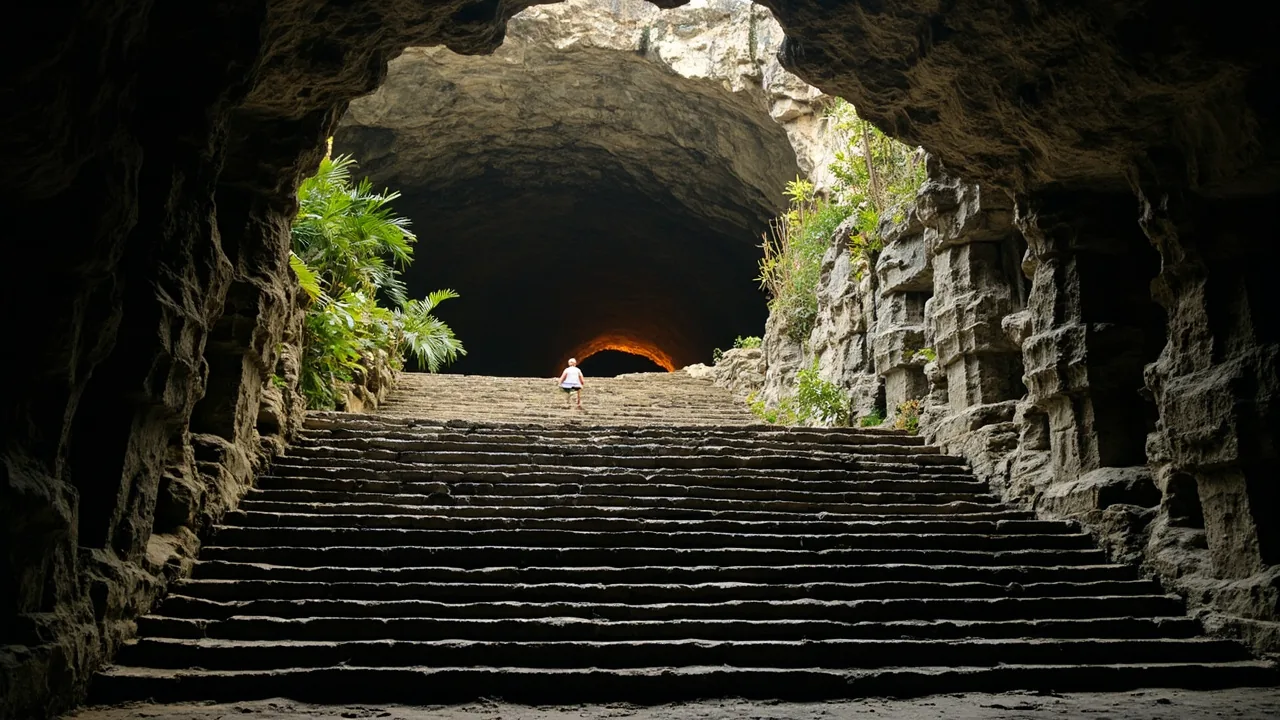
- Wave Cave (Hang Van Thuy), a small chamber near the top of Thuy Son, the largest of the five Marble Mountains. This is what the Instagram captions mean. The wave-like rock patterns on the ceiling are what gives it the English name. It is reached by a short flight of carved steps inside the cave system.
- Am Phu Cave (Hell Cave), the much larger cave complex below, with Buddhist and Daoist shrines. Most Marble Mountains tours include Am Phu, not Wave Cave. Some English-language blogs call Am Phu the “Hell Cave” and the upper chambers the “Heaven Cave”; Vietnamese signage often blurs them.
- The whole Marble Mountains complex (Ngu Hanh Son), five limestone peaks named after the five elements (metal, wood, water, fire, earth). You buy one entry ticket and walk between caves. For related planning, see our guide on Nha Trang Beach Season Weather Month Guide.
The honest answer to “how long is the Wave Cave hike” depends entirely on which one your friend or guidebook meant. For the actual Wave Cave chamber: 15 to 25 minutes, including the climb up to it. For the Marble Mountains complex as a whole: budget 1.5 to 3 hours.
Time Breakdown: What 1.5 to 3 Hours Looks Like
The lift vs stairs decision is the single biggest variable.
| Activity | With Elevator | Without Elevator (156 steps) |
|---|---|---|
| Walk from gate to base of Thuy Son | 5 min | 5 min |
| Elevator ride OR stair climb | 4 min | 8 to 12 min |
| Cave 1 (first major chamber) | 15 min | 15 min |
| Wave Cave (Hang Van Thuy) | 20 min | 20 min |
| Am Phu (Hell Cave) at the base | 25 min | 25 min |
| Pagoda at the top of Thuy Son | 15 min | 15 min |
| Walking between caves and viewpoints | 20 min | 20 min |
| Total | ~1 hour 45 min | ~2 hours to 2 hours 30 min |
Add 30 minutes if you also climb one of the other four peaks (most travellers skip this, the steps are not maintained, and the views are similar from Thuy Son’s pagoda). Add another 30 to 45 minutes if you are photographing slowly, queueing for the elevator on a busy weekend, or stopping at the marble-carving shops between caves.
Subodh’s Pro Tip: The elevator opens at 7:30 AM and the queue is empty until about 9:00 AM. If you arrive at 8:00 AM, you skip both the heat and the camera-toting day-trippers from Hoi An. If you arrive at 11:00 AM on a weekend in October, expect 20 minutes just to board the elevator.
The Real Cost (Gate vs Online vs Tour)
The Marble Mountains do not have an official online booking portal. Tickets are bought at the gate. Indian travellers sometimes get quoted a “tour price” of ₹2,203-₹3,305 (~600,000-900,000 VND or ~$22.87-$34.30) by hotel concierges or Hoi An day-trip sellers, which is six to nine times the actual entry fee. That markup pays for a guide and a driver, not faster access.
| Item | What You Pay | What It Costs |
|---|---|---|
| Marble Mountains entry | ₹147 (~40,000 VND or ~$1.52) per person | ₹147 (~40,000 VND or ~$1.52) per person (fixed) |
| Elevator one-way (optional) | ₹55 (~15,000 VND or ~$0.57) per person | ₹55 (~15,000 VND or ~$0.57) per person |
| Elevator round-trip (if you want) | ₹92 (~25,000 VND or ~$0.95) per person | ₹92 (~25,000 VND or ~$0.95) per person |
| Am Phu Cave (inside the complex) | Included in entry | Free once inside |
| Guided tour from Hoi An | ₹2,203-₹3,305 (~600,000-900,000 VND or ~$22.87-$34.30) | Driver + entry, no skip-the-line |
| ”Combo” with a driver and My Son | ₹5,141 (~1,400,000 VND or ~$53.36) and up | Not worth it for caves alone |
The 156 steps are not dangerous. If you can do a four-flight stair climb at home, you can do this. The elevator is for saving 12 minutes, not for accessibility. Travellers with knee issues should take it; everyone else should walk up once and enjoy the carved marble panels along the stair wall that you would otherwise miss.
Month-by-Month: When to Go
Da Nang’s Marble Mountains are open year-round, but the experience shifts hard between dry season and monsoon. The caves themselves are unaffected by rain; the climb up the steps is where weather bites.
| Month | Weather | Crowds | Cost Level | Verdict |
|---|---|---|---|---|
| January | Cool, dry | High (Tet holiday spillover) | Peak (₹₹₹) | Perfect weather, busiest month |
| February | Cool, dry, foggy mornings | High | Peak (₹₹₹) | Bring a light layer for the pagoda at the top |
| March | Warming up | Medium-high | Shoulder (₹₹) | Sweet spot, fewer tour buses |
| April | Hot, dry | Medium | Shoulder (₹₹) | Start at 7:30 AM, finish by 10 |
| May | Hot, pre-monsoon humidity | Medium | Shoulder (₹₹) | Last reliable dry month |
| June | Monsoon begins, afternoon storms | Low | Budget (₹) | Cave itself is fine, stairs get slippery |
| July | Heavy monsoon | Low | Budget (₹) | Skip if you don’t want humidity |
| August | Typhoon risk, heavy rain | Low | Budget (₹) | Check forecasts the morning of |
| September | Rain easing, hot | Medium | Shoulder (₹₹) | Good for budget travellers |
| October | Cooling, dry returning | Medium-high | Shoulder (₹₹) | Best month for price and weather |
| November | Dry, comfortable | High | Peak (₹₹₹) | Perfect, book Da Nang hostel early |
| December | Cool, dry | High | Peak (₹₹₹) | Christmas/NY crowds from Hoi An |
The honest sweet spot is March and October: dry enough that the stairs are not slick, not so busy that the elevator queue eats your morning.
Safety Alert: From August through October, the Marble Mountains’ outdoor stair sections get slick during and after rain. Wear shoes with grip, not sandals. The cave interiors stay dry year-round. For typhoon warnings in Da Nang, check the official Vietnam meteorological portal and the Indian MEA travel advisory page at mea.gov.in before you leave home.
Dry Season vs Monsoon. Real Differences
Dry season (February to May, October to January):
- Steps are dry and grippy
- Views from Thuy Son pagoda are clear, you can see Hoi An in the distance
- Elevator queue can hit 25 to 30 minutes from 10:00 AM onwards
- Daytime temperature at the pagoda top: 28 to 33°C, hot but bearable
Monsoon season (June to September):
- Stairs are slick within an hour of rain, dangerous in cheap flip-flops
- Visibility from the pagoda drops to 50 metres on heavy rain days
- Elevator queue disappears, you can walk straight in
- Temperature at the pagoda top: 30 to 36°C, high humidity makes the climb feel twice as long
- Cave interiors are cooler and stay dry, which is the best reason to come in monsoon
Indian travellers arriving in monsoon should not skip the Marble Mountains outright; go on a dry morning, finish by 9:30 AM, and treat the caves themselves as a refuge from the rain. The marble carvings inside the caves are best appreciated in monsoon anyway, because the humid air brings out the stone’s natural colour.
Pros and Cons of Adding the Marble Mountains to Your Da Nang Day
Pros:
- The caves themselves are genuinely interesting, Am Phu in particular is one of the better cave-shrine complexes in Vietnam
- ₹147 (~40,000 VND or ~$1.52) entry is cheaper than a Da Nang street food lunch
- Easy half-day from Hoi An, 30 minutes by car
- The pagoda view from Thuy Son is the best free viewpoint in Da Nang
- Doubles as a 2-hour air-conditioned-ish break from Hoi An’s afternoon heat
Cons:
- The marble carving shops between caves are aggressive, expect hard sells on incense and Buddhas
- The 156-step climb is real, not aesthetic, especially in May heat
- Day-trippers from Hoi An arrive between 10:30 AM and noon, so the cave interiors feel like a subway
- Some tour operators describe it as a “hike” in marketing, which sets the wrong expectation. There is no jungle, no trail, no trekking. It is a paved staircase and cave floors
- The actual Wave Cave chamber is small, 15 minutes of looking is enough
What to Pack Specifically for the Marble Mountains
- Shoes with grip, not sandals. The marble steps are polished smooth and slippery when wet, even in dry season.
- A small torch or phone flashlight. The deeper cave sections (especially Am Phu’s lower level) are poorly lit.
- A light scarf or shawl. Several cave sections are used as Buddhist shrines; shoulders covered is respectful and the caves themselves stay cooler than outside.
- A refillable water bottle. There is no water for sale inside the cave system, only at the base.
- Cash in small VND notes. The elevator ticket counter does not always have change for a ₹1,836 (~500,000 VND or ~$19.06) note.
- Leave the tripod at the hostel. Tripods and selfie sticks are technically restricted inside Am Phu’s shrine sections, guards will wave you away.
Monsoon season: add a foldable poncho. The outdoor sections between caves are exposed and a sudden shower will soak you before you can get back inside.
Season Costs Comparison (Da Nang, Not Marble Mountains Specific)
| Item | Peak Season (Jan-Feb, Nov-Dec) | Shoulder Season (Mar-May, Sep-Oct) | Low / Monsoon Season (Jun-Aug) |
|---|---|---|---|
| Flight from India (round trip) | ₹25,000 (~$259.50) | ₹18,000 (~$186.84) | ₹12,000 (~$124.56) |
| Dorm bed (per night) | 400 to 900 | 350 to 700 | 350 to 600 |
| Private room (per night) | 1,200 to 2,500 | 900 to 1,800 | 700 to 1,400 |
| Marble Mountains entry | ₹147 (~40,000 VND or ~$1.52) | ₹147 (~40,000 VND or ~$1.52) | ₹147 (~40,000 VND or ~$1.52) |
The Marble Mountains’ entry fee does not change with season; what changes is the queue and the heat. Dorm prices shown above use the canonical Da Nang range: ₹1-₹3 (~400-900 VND or ~$0.02-$0.03) across season.
Getting Connected
A local SIM is worth it in Da Nang even for a 3-day stay, mostly for Grab bike hailing between the Marble Mountains, Hoi An, and Son Tra. Viettel and Mobifone tourist SIMs at the airport run around ₹184 (~50,000 VND or ~$1.91) for 7 days of data. If you prefer to skip the airport counter, Get Nomad eSIM covers Vietnam on most Indian network-locked phones and activates the moment you land.
Where to Stay in Da Nang (If the Wave Cave Visit Is Your Main Day)
If you are in Da Nang specifically for the Marble Mountains and Hoi An on the side, stay near the Han River or My Khe beach, not near the mountains themselves. The mountains have no hostel scene and you will end up commuting 25 minutes each way.
| Hostel | Rating | Why | Book |
|---|---|---|---|
| Rom Casa Hostel Da Nang | 8.98 | Highest-rated in shortlist, social common room, walking distance to the river | Check prices |
| Seahorse Signature Da Nang Hostel by Havil | 8.9 | Close to My Khe beach, clean dorms, quieter nights | Check prices |
| Lighthouse Danang Hostel | 8.12 | Budget-friendly, near the Han River, easy Grab to Marble Mountains | Check prices |
| For Indian food when the dal-chawal craving hits: MAMA MASALA INDIAN CUISINE Da Nang is the budget pick (around ₹367-₹734 (~100,000-200,000 VND or ~$3.81-$7.62) per person for a full meal, the mutton biryani is what people go back for), and Indian Ganga Dining & Lounge Da Nang is the lounge-style option with the chicken tikka masala worth ordering. Benaras Central Da Nang is the upscale choice if you want North Indian done with a presentation upgrade. For local Vietnamese, Saga or Nhà Bếp Xưa Restaurant are reliable sit-down spots near the river. |
How to Get to the Marble Mountains from Da Nang or Hoi An
The Marble Mountains sit about 8 km south of central Da Nang, on the road between Da Nang and Hoi An. There is no train station and no public bus; you arrive by Grab bike, Grab car, or hotel shuttle.
| Route | Best Way | Time | Price |
|---|---|---|---|
| Da Nang centre to Marble Mountains | Grab bike | 20 min | ₹92-₹129 (~25,000-35,000 VND or ~$0.95-$1.33) |
| Da Nang centre to Marble Mountains | Grab car | 20 min | ₹220-₹294 (~60,000-80,000 VND or ~$2.29-$3.05) |
| Hoi An Old Town to Marble Mountains | Grab car | 35 to 45 min | ₹661-₹918 (~180,000-250,000 VND or ~$6.86-$9.53) |
| Da Nang Airport to Marble Mountains | Grab car | 25 min | ₹330-₹404 (~90,000-110,000 VND or ~$3.43-$4.19) |
Book on 12go covers the Da Nang to Hoi An bus leg if you are doing the caves as a stop on the way, and Book on 12go for the reverse if Hoi An is your next stop after the caves.
Safety Alert: The marble-carving shops between the caves and the base of Thuy Son run hard-sell tactics on incense and small Buddha statues. A polite “no, thank you” works in English. They will not follow you past the gate, but inside the complex they will. If a “guide” offers to walk you through the caves for free, the price is the shop commission. Decline and walk with your own map.
Where to Go from the Marble Mountains
The Marble Mountains are a stop on the Da Nang to Hoi An corridor. From the cave exit, you have three good next moves:
- Hoi An Old Town, 30 minutes south. Half-day is enough for the lanterns, the riverside, and a bowl of cao lau. If you are doing a Da Nang to Hoi An day trip, this is the natural pairing.
- Son Tra Peninsula, 25 minutes north back through Da Nang. Free entry, Linh Ung Pagoda with the giant Lady Buddha statue, and the most underrated viewpoint in central Vietnam. If the Wave Cave underwhelms, Son Tra is the answer. See Son Tra Reef Snorkeling by Speedboat tours on GetYourGuide if you want to add water to the day.
- Stay in Da Nang for the night, hit My Khe beach in the evening and the Han River dragon bridge fire show on Friday and Saturday nights at 9:00 PM. See Du Thuyền Sông Hàn Đà Nẵng (2Da Tickets) tours on GetYourGuide if you want the river boat perspective.
If you have only one Da Nang day and caves are not your thing, swap the Marble Mountains for Son Tra and skip the entry fee entirely. The Wave Cave is good, but it is not essential.
Subodh’s Take
The Wave Cave is a 20-minute highlight inside a 2-hour complex, and most of the value comes from Am Phu Cave and the Thuy Son pagoda view, not the literal wave-pattern chamber the Instagram caption refers to. Budget 2 hours, take the elevator on the way up (saves 12 minutes you would rather spend in the caves), walk down the 156 steps once for the marble carvings along the wall, and pair it with Hoi An in the afternoon. Skip it only if you have been to a similar cave-shrine complex in India and felt nothing; otherwise, at ₹147 (~40,000 VND or ~$1.52) entry, there is no reason to miss it.
FAQ
Is the Wave Cave the same as Am Phu Cave? No. The Wave Cave (Hang Van Thuy) is a small upper chamber with wave-patterned rock on the ceiling. Am Phu (Hell Cave) is a much larger, lower cave with Buddhist and Daoist shrines. Most tour itineraries include Am Phu, and some blogs confuse the two. Both are inside the same Marble Mountains complex, one entry fee covers both.
Is the Marble Mountains visit good for elderly parents or kids? Yes, with the elevator. The elevator saves the 156-step climb, and the cave interiors have flat paved paths. Small children will enjoy the cave formations; elderly travellers should take the elevator up, walk down (which is gentler on the knees), and avoid the steep pagoda steps at the top.
Can you do the Marble Mountains and Hoi An in one day? Yes, comfortably. Marble Mountains from 7:30 AM to 9:30 AM, Grab to Hoi An (30 to 45 minutes), lunch, Old Town walk until 4:00 PM, back to Da Nang by evening. This is the standard Da Nang to Hoi An day trip and works in any season except monsoon downpours, which would push the schedule later.
How much walking is inside the caves? About 1 km total of paved walking between caves, with a few short stair sections (10 to 30 steps each). It is closer to a museum walk than a hike. Wear shoes with grip because the marble floor is slick, but you do not need hiking boots.
Do you need a guide for the Marble Mountains? No. The caves are well-signed in English and Vietnamese, the layout is small enough that you cannot get lost, and the unofficial guides at the gate are commissioned by the marble shops. A printed map or a quick Google Maps screenshot of the complex is enough. If you want a real cultural guide, ask your Da Nang hostel to recommend one, not the people at the gate.
Is the Marble Mountains worth it in monsoon? Yes, but go early. The caves themselves stay dry year-round, and the humid monsoon air makes the stone colours more vivid. Avoid the outdoor stair sections within an hour of rain, and finish by 9:30 AM before the afternoon storms start. The elevator queue is non-existent in monsoon, which is the only real perk.
