Son Doong & Beyond: How to Book the World’s Largest Cave in Vietnam (Without Going Broke)
Son Doong is the largest cave in the world, and the only way to walk through it costs around ₹289,017-₹385,356 (~3,000-4,000 USD) per person, on a 4-day expedition run by one operator, with permits sold a year or more in advance. If that price makes you wince (it should, even wealthy Indian trekkers wince), there are real, walkable, dramatically cheaper alternatives in the same Phong Nha-Ke Bang National Park that still put you inside some of the biggest caves on the planet. This guide breaks down the real Son Doong booking process, the exact dry-season window for 2026, and the budget options that have made Phong Nha a backpacker town for a reason. For related planning, see our guides on Sea Backpacking Hub and Vietnam February Weather Month By Month.
Oxalis is the sole licensed operator for Son Doong. They don’t run sales, they don’t offer discounts for Indians, and they don’t take late bookings. The 2026 expeditions opened in late 2025 and most weeks are full. A few slots remain for February-April 2027 if you’re reading this in mid-2026 and can plan that far ahead. Permits are limited to about 1,000 visitors per year by the Vietnamese government’s conservation rules, which is why the price stays stubbornly high. You may also find Caves Near Ho Chi Minh City useful for this trip.
At current rates, 1 VND = 0.0037 INR, so 1 USD = roughly 25,800 VND right now.
Quick Answers
| What | Answer | Price (INR) |
|---|---|---|
| Official Son Doong expedition cost | ₹289,017-₹385,356 (~3,000-4,000 USD) per person, 4 days, all-inclusive (Oxalis) | ₹289,000-₹386,000 (~$2,999.82-$4,006.68) |
| Cheaper Hang En (world’s 3rd-largest cave) | 2-day trek via Oxalis | ₹58,000-₹72,000 (~$602.04-$747.36) |
| Tu Lan budget cave system (1-day) | ₹13,969 (~145 USD), day trip | ₹14,000 (~$145.32) |
| Best month to go | February to August (dry season) | , |
| Booking lead time | 12-18 months for Son Doong | , |
Month-by-Month Breakdown (Phong Nha Weather & Cave Trekking)
The Phong Nha dry season is the only window for serious cave expeditions. Rain floods the caves, turns trails to mud, and triggers flash floods that have killed trekkers on multi-day trips in September and October. Here is the realistic picture by month. See also: How Long Is the Wave Cave Hike.
| Month | Weather | Crowds | Cost Level | Verdict |
|---|---|---|---|---|
| January | Cool, dry, 18-24°C | Medium | Shoulder (₹₹) | Good, slightly cool for swimming |
| February | Warm, dry, 20-28°C | High | Peak (₹₹₹) | Son Doong prime window |
| March | Hot, dry, 22-32°C | High | Peak (₹₹₹) | Son Doong prime window |
| April | Hot, dry, 25-35°C | High | Peak (₹₹₹) | Son Doong prime window |
| May | Hot, humid, 26-36°C | Medium | Shoulder (₹₹) | Hot but caves stay cool inside |
| June | Wet starts, 27-35°C | Medium | Shoulder (₹₹) | Showers but expedition still possible |
| July | Heavy rain risk, 28-34°C | Low | Shoulder (₹₹) | Borderline, watch for cancellations |
| August | Typhoon risk, 27-33°C | Low | Low (₹) | Risky for multi-day treks |
| September | Peak rain, 26-32°C | Low | Low (₹) | Many operators pause trips |
| October | Rain easing, 24-30°C | Medium | Low (₹) | Trails muddy, caves still wet |
| November | Cool, dry, 20-27°C | Medium | Shoulder (₹₹) | Good month, popular for backpackers |
| December | Cool, dry, 17-23°C | Medium | Shoulder (₹₹) | Cool evenings, fine for caving |
Subodh’s Pro Tip: If you’re flexible, target late February or early November. The caves are dry, the rivers inside are calm enough to swim, and you avoid both the July typhoon roulette and the April peak-season price gouging on Phong Nha hostels. For related planning, see our guide on Nha Trang Beach Season Weather Month Guide.
Safety Alert: Phong Nha’s rainy season (August-October) has documented flash-flood deaths on jungle treks. Oxalis and other operators will cancel multi-day trips if water levels are unsafe, and they will not refund the full amount. Budget for a buffer day or two if you’re flying out the day after a trek.
Son Doong. Pros and Cons
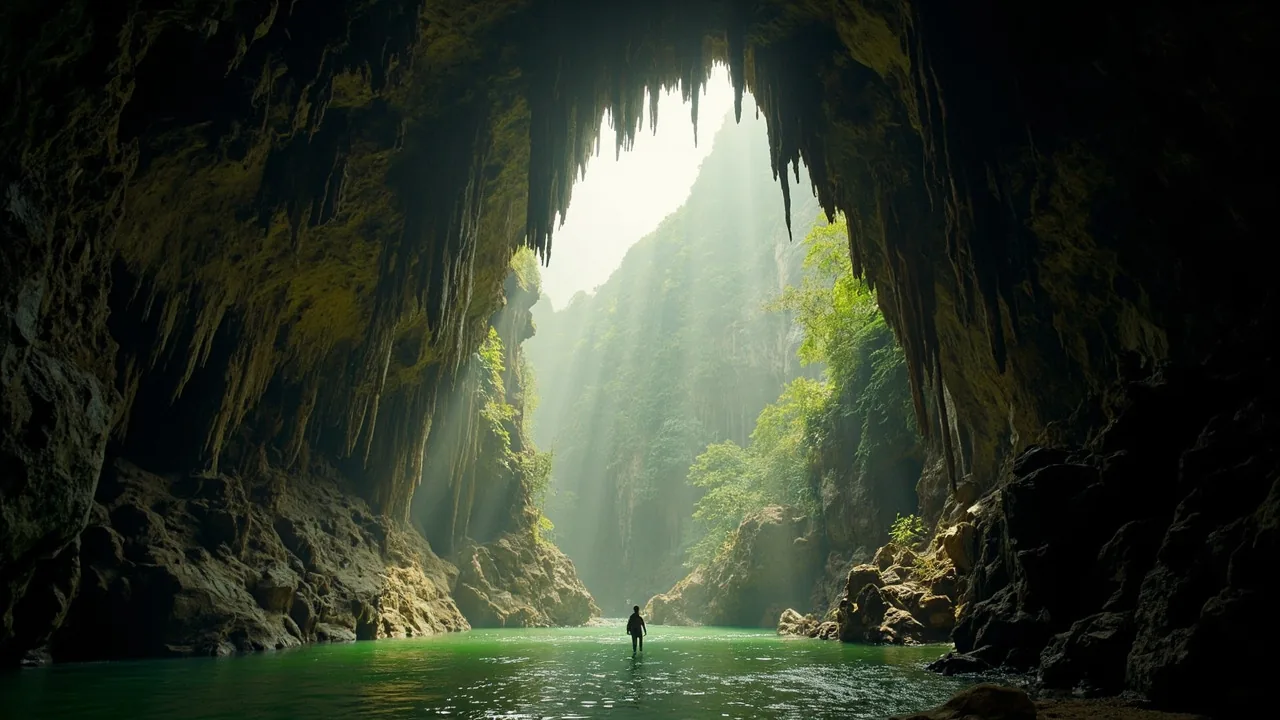
Son Doong is the real thing: a cave so large it has its own weather system, its own jungle, and a 90-meter-tall stalagmite called the Hand of Dog that makes every photo from inside look Photoshopped. If your budget covers it and you can book 12 months out, it is genuinely a once-in-a-lifetime experience. If neither of those is true, don’t let travel-instagram pressure push you into a financially stupid decision.
Pros:
- The world’s largest cave, period. No other trip on earth looks like this
- All-inclusive: porters, food, caving gear, safety equipment, English-speaking guides, jungle camping
- Permits are capped, so you won’t be fighting crowds inside the cave
- The campsite inside the cave is surreal, with sunbeams through the dolines at sunrise
- Conservation fee goes back into the national park
Cons:
- ₹289,017-₹385,356 (~3,000-4,000 USD) is more than a year of mid-range Vietnam travel for most backpackers
- 4 days off work plus 2 travel days plus recovery, this is a 7-day commitment minimum
- Fitness requirement is real: 10km jungle treks, river crossings, abseils through dark chambers, 80% humidity
- Booking opens 12-18 months out and sells out within weeks
- No refund if you cancel under 90 days out, Oxalis keeps 50% even earlier
- Single operator means no price competition, you pay what they charge
The price is the price because the permit is the permit. Oxalis holds a monopoly granted by the Vietnamese government and the conservation model caps total visitors at around 1,000 per year. If you’re travelling from India specifically for this, factor in ₹18,000-₹25,000 (~$186.84-$259.50) round-trip flights from Delhi or Mumbai to Dong Hoi (the nearest airport), 3-4 nights in Phong Nha hostels before and after the trek (around ₹918-₹1,836 (~250,000-500,000 VND or ~$9.53-$19.06) per night for a dorm), and the trek itself. All in, budget ₹350,000-₹450,000 (~$3,633-$4,671.01) for the trip if you’re coming from India.
Son Doong vs. Hang En vs. Tu Lan. Honest Comparison
This is the section most blogs skip, and it’s the one that matters for Indian backpackers reading this on a real budget.
Son Doong (4 days, ₹289,017-₹385,356 (~3,000-4,000 USD)): The world’s biggest. Owns the bragging rights. You’ll tell your grandkids. You will also need a year of planning and a small personal loan.
Hang En (2 days, ₹173,410-₹211,946 (~1,800-2,200 USD)): World’s third-largest cave, and the campsite inside Hang En is the one used as a filming location for the same doline scenes you see in Son Doong photos. You get the “sleep inside a giant cave” experience at roughly half the cost. Many trekkers report Hang En was the highlight of their trip, not the consolation prize.
Tu Lan (1 day, ₹13,969 (~145 USD) or 2 days for ₹37,091 (~385 USD)): The budget option, and a genuinely good one. Tu Lan is a cave-and-river system that involves swimming through cave passages, abseiling, and jungle trekking. The 1-day version is doable for anyone reasonably fit, and at ₹13,969 (~145 USD) it’s accessible to backpackers who would never otherwise see a guided caving trip. Travellers consistently rate it 9/10 or higher.
Phong Nha Day Cave (boat trip, ~₹918-₹1,836 (~250,000-500,000 VND or ~$9.53-$19.06)): Not a trek, just a river boat through the entrance chamber of the Phong Nha system. Cheap, beautiful, but you won’t get muddy.
For Indian travellers specifically, the practical calculus usually goes: Son Doong if you have the budget and a year of lead time, Hang En if you can swing ₹60,000-₹80,000 (~$622.80-$830.40) for the bragging rights of a major expedition, Tu Lan if you want a real cave adventure under ₹15,000 (~$155.70). All three are operated by Oxalis under the same safety standards.
How to Book Son Doong (Step by Step)
Oxalis runs the whole operation through their website. There is no Indian booking agent, no third-party reseller, no “premium package” upgrade. Here’s how it works in practice.
- Go to oxalis.com.vn and find the Son Doong expedition page
- Pick a date window from the available 2027 departures (2026 weeks are likely full by the time you read this)
- Pay a ₹48,170 (~500 USD) deposit per person to hold the slot
- Complete the medical and fitness questionnaire they email you
- Pay the balance 90 days before departure
- Fly into Dong Hoi Airport, transfer to Phong Nha (about 45 minutes by taxi, ₹2,570-₹3,672 (~700,000-1,000,000 VND or ~$26.68-$38.12))
- Brief at Oxalis HQ the day before, then you’re off
Indian passport holders need a Vietnam e-Visa, which is 90 days multiple-entry and can be applied for at the official portal. Apply at least 3 working days before travel.
The fitness requirement isn’t a checkbox. Expect 10km treks on consecutive days, river crossings in fast water, abseiling 25+ meters down cave walls, and full-day humidity above 80%. If you haven’t trekked before, do a Himalayan weekend trip first to know whether your knees and lungs can handle it. Travellers who skip this step have been turned away on day 1.
What to Pack Specifically for Caving in Phong Nha
Subodh’s Pro Tip: Oxalis provides caving-specific gear (helmet, headlamp, harness, gloves). Don’t buy your own unless you plan multiple trips. For everything else, here’s the real list.
- Quick-dry trekking shirts (2-3), not cotton
- Sports sandals with heel strap (Tevas or Decathlon Quechua) for river crossings
- Trekking shoes with good grip, broken in
- 30+ SPF reef-safe sunscreen
- Dry bag (10-15L) for phone, passport, and electronics on water sections
- Microfibre towel, real ones take forever to dry
- Insect repellent with DEET, jungle mosquitoes in Phong Nha are aggressive
- Headlamp with spare batteries even though Oxalis supplies one
- Refillable water bottle, 1.5L minimum for jungle sections
Pack light. Oxalis porters carry the main bag (12kg limit). If you show up with a 60L backpack you will repack at their office and pay for storage.
Season Costs Comparison
The dry season premium on Phong Nha is real but smaller than coastal Vietnam. Here’s what you’re paying.
| Item | Peak Season (Feb-Apr) | Shoulder Season (Nov, May-Jun) | Low Season (Sep-Oct) |
|---|---|---|---|
| Flight from India to Dong Hoi | ₹25,000 (~$259.50) | ₹18,000 (~$186.84) | ₹15,000 (~$155.70) |
| Dorm bed per night | ₹1,285 (~350,000 VND or ~$13.34) | ₹918 (~250,000 VND or ~$9.53) | ₹734 (~200,000 VND or ~$7.62) |
| Private room | ₹2,938 (~800,000 VND or ~$30.49) | ₹2,203 (~600,000 VND or ~$22.87) | ₹1,652 (~450,000 VND or ~$17.15) |
| Phong Nha boat cave tour | ₹1,285 (~350,000 VND or ~$13.34) | ₹1,102 (~300,000 VND or ~$11.43) | ₹918 (~250,000 VND or ~$9.53) |
| Beer at Tipsy Monkey | ₹220 (~60,000 VND or ~$2.29) | ₹184 (~50,000 VND or ~$1.91) | ₹165 (~45,000 VND or ~$1.72) |
| Bowl of pho | ₹165 (~45,000 VND or ~$1.72) | ₹147 (~40,000 VND or ~$1.52) | ₹129 (~35,000 VND or ~$1.33) |
Peak season is when the dry weather and the school holiday calendar align, February-April pulls the biggest crowds and the highest prices. Low season is August-October, when some multi-day treks are cancelled for safety. Shoulder months are the sweet spot for budget-conscious trekkers who don’t need bragging rights to a specific season.
Where to Stay in Phong Nha
Phong Nha is small enough that any of these hostels put you within 10 minutes of the Oxalis office, the river, and the main strip of restaurants. All three are backpacker-focused with mixed dorms and private rooms.
| Hostel | Vibe | Book |
|---|---|---|
| Nguyen Shack Retreat (rating 10.0) | Riverside bungalows, the top-rated spot in town | Check prices |
| Phong Nha Tuan Garden House (rating 9.78) | Garden setting, family-run, social common area | Check prices |
| Green Riverside Cosy Home (rating 9.58) | Quiet, river-facing, good for digital nomads | Check prices |
| Dorm beds in Phong Nha range from ₹661-₹1,322 (~180,000-360,000 VND or ~$6.86-$13.72) depending on season. Phong Nha Tuan Garden House tends to be the most social of the three, Nguyen Shack is the splurge pick. |
What to Eat in Phong Nha (Veg-Friendly Spots)
Phong Nha’s restaurant scene has improved massively in the last 5 years. Vegetarians will find options, though it’s not Hanoi-level easy. Rice dishes, fried noodles, and banh mi with egg or cheese are everywhere. For veg meals specifically, the spots below all serve Vietnamese food with vegetarian-friendly options or build-your-own veg plates.
Lantern Restaurant (rating 4.9): The fusion pick. Travellers consistently mention the lemongrass chicken and homemade yogurt, and the staff are used to swapping meat for tofu. Dinner mains run ₹294-₹551 (~80,000-150,000 VND or ~$3.05-$5.72). Cozy atmosphere, good for a post-trek meal.
Green Point Cafe & Restaurant (rating 4.9): Farm-to-table with Vietnamese and Western options. The kitchen handles veg requests without fuss. Expect ₹257-₹477 (~70,000-130,000 VND or ~$2.67-$4.96) per main, higher for Western breakfast plates.
Pi và Gạo Quán Restaurant (rating 4.8): The local noodle specialist. Their Mi Quang (turmeric noodle soup) is the dish to try, ask for it without the pork or prawn and they’ll make it with just broth and greens. Mains run ₹147-₹257 (~40,000-70,000 VND or ~$1.52-$2.67).
Nhà Hàng ẩm thực Phương Mỹ (rating 4.8): Authentic Vietnamese menu, the safest bet for vegetarian pho and com (rice) plates. Most dishes ₹129-₹239 (~35,000-65,000 VND or ~$1.33-$2.48).
Dark Cave Restaurant (rating 2.9): Located right at the Dark Cave / Nuoc Mooc Ecotrail entrance, so it’s a convenient stop after a day trip but the reviews are mixed. Better used for a drink than a serious meal.
For Indian vegetarian food specifically, options are limited in Phong Nha proper. Some hostels (including Nguyen Shack) occasionally host Indian dinner nights, ask on arrival. Otherwise, the Om Yoga & Cafe spot has North Indian thalis around ₹294-₹441 (~80,000-120,000 VND or ~$3.05-$4.57) when it’s open.
Other Things to Do in Phong Nha (If Son Doong Books Out)
The whole national park has more than just the famous cave. If you’ve got 2-3 days before or after your trek, these are real, walkable activities from town.
Phong Nha Cave (boat trip): The cave the town is named after. Easy half-day boat tour through the entrance chamber, ₹918-₹1,836 (~250,000-500,000 VND or ~$9.53-$19.06). See Phong Nha Cave tours on GetYourGuide.
Tien Son Cave (rating 4.7): A dry cave behind the Phong Nha tourist boat dock, with a long staircase climb through impressively lit stalactite and stalagmite formations. Worth the ₹330 (~90,000 VND or ~$3.43) entry as a same-day add-on. See Tien Son Cave tours on GetYourGuide.
Paradise Cave (Thien Duong): Often confused with the smaller dry caves, Paradise Cave is 31km long (only 1km is open to visitors), and the lit walkway inside feels like a cathedral. Half-day tour from Phong Nha town, around ₹1,285 (~350,000 VND or ~$13.34).
The Duck Stop (rating 4.7): A working farm that doubles as a half-day experience: feed ducks, bathe pigs, plant rice, drink coffee. The kind of weird, wholesome activity that breaks up a trek-heavy itinerary. Half-day tours run around ₹2,203-₹3,305 (~600,000-900,000 VND or ~$22.87-$34.30). See The Duck Stop tours on GetYourGuide.
Feed Ducks, Bathe Pigs & Plant Rice (rating 4.7): Similar farm-experience tour, a good alternative to The Duck Stop on days when that one is fully booked. See Feed Ducks, Bathe Pigs & Plant Rice tours on GetYourGuide.
Morning Primate Watching Tour: A guided jungle walk at dawn to spot langurs. Real wildlife, not a zoo. Worth it if you’re a birder or primate nerd. See Morning Primate Watching Tour tours on GetYourGuide.
For explorers who want a harder-to-find cave without the Son Doong price tag, Hang Chỉ Huy - Commander Cave (rating 5) and Golden Cave - hang Vàng (rating 5) are smaller, less-visited caves that serious cavers in the hostel common rooms will point you toward. Most require hiring a local guide (₹1,469-₹2,938 (~400,000-800,000 VND or ~$15.25-$30.49)). See Commander Cave tours on GetYourGuide and See Golden Cave tours on GetYourGuide.
For a full-day trip from Hue, the From Hue: Phong Nha Cave Tour 1 Day runs on odd calendar days and bundles transport, guide, and meals.
Learn more about Phong Nha activities on GetYourGuide
Getting Connected in Phong Nha
WiFi in Phong Nha hostels is decent for the river-and-garden type of work. If you need mobile data for booking Oxalis confirmations, Grab, or checking weather (rain in the dry season does happen), grab a Viettel or Mobifone SIM at Dong Hoi Airport on arrival, around ₹734-₹1,102 (~200,000-300,000 VND or ~$7.62-$11.43) for 30 days with 4-5GB per day. Get Nomad eSIM if you prefer to skip the airport SIM counter and activate before you fly.
Getting to Phong Nha
From Hanoi: Sleeper bus or train to Dong Hoi, then taxi or local bus to Phong Nha. The train is the comfortable option, around ₹2,203-₹3,305 (~600,000-900,000 VND or ~$22.87-$34.30) for a soft sleeper, 10-11 hours overnight. Buses run ₹1,285-₹1,836 (~350,000-500,000 VND or ~$13.34-$19.06) and take 9-10 hours.
From Hue: Closer, around 3 hours by bus or private car. Buses run ₹734-₹1,102 (~200,000-300,000 VND or ~$7.62-$11.43).
From Hoi An / Da Nang: Around 5-6 hours by bus, ₹1,285-₹1,652 (~350,000-450,000 VND or ~$13.34-$17.15), several daily departures. Book ahead in peak season.
From Dong Hoi Airport: 45 minutes by taxi (around ₹2,570-₹3,672 (~700,000-1,000,000 VND or ~$26.68-$38.12)) or pre-booked Oxalis pickup.
For long-distance buses and trains, book through 12go or Hanoi to Phong Nha direct. For the Hue route, 12go Hue to Phong Nha shows current schedules.
Safety Alert: Vietnam is generally a safe destination for Indian travellers, and Phong Nha specifically is one of the safer small towns in the country. For current travel-advisory updates before you fly, check the Indian Ministry of External Affairs advisory page at mea.gov.in and Vietnam’s official immigration portal at evisa.xuatnhapcanh.gov.vn. These are the two sources that matter when something changes, unlike random travel-blog warnings.
FAQ
How much does the Son Doong cave tour cost from India all-in?
Budget ₹350,000-₹450,000 (~$3,633-$4,671.01) total. That’s the ₹289,017-₹385,356 (~3,000-4,000 USD) trek fee, ₹18,000-₹25,000 (~$186.84-$259.50) round-trip flights from Delhi or Mumbai to Dong Hoi, 3-4 nights of dorm stays at ₹918-₹1,836 (~250,000-500,000 VND or ~$9.53-$19.06) each, food, transfers, and a small buffer for incidentals.
How far in advance should I book Son Doong?
12-18 months is the realistic window. Oxalis opens each year’s slots about a year ahead, and most weeks sell out within 2-3 weeks of opening. If you’re reading this in mid-2026, you’re looking at February-April 2028 for the next realistic openings. Some shoulder-season 2027 weeks may still have slots.
Is Son Doong harder than a Himalayan trek?
Different kind of hard. The altitude is low (under 1,000m elevation gain), so no altitude sickness. The challenge is 10km days through mud and river crossings in 80%+ humidity, plus abseiling 25+ meters down cave walls. Travellers report it feels harder than it looks on paper, but anyone who can do a moderate Himalayan weekend trek can handle it.
What are the cheapest alternatives to Son Doong in the same area?
Tu Lan 1-day at ₹13,969 (~145 USD) is the budget pick. Hang En 2-day at ₹173,410-₹211,946 (~1,800-2,200 USD) is the mid-tier. The Phong Nha day-cave boat tour at ₹918-₹1,836 (~250,000-500,000 VND or ~$9.53-$19.06) is the cheapest way to step inside any cave in the area, though it’s a boat ride rather than a trek.
Can Indians get a Vietnam visa easily in 2026?
Yes, the e-Visa system is the standard route for Indian passport holders. Apply at the official portal evisa.xuatnhapcanh.gov.vn at least 3 working days before departure. The fee is ₹2,408 (~25 USD), valid 90 days, multiple entry. The portal occasionally gets slow during Vietnamese holidays, so don’t leave it to the last day.
Is February the best month for Son Doong?
February-April is the prime dry-season window. February is the best balance of weather (20-28°C, low humidity) and crowd levels slightly below the March-April peak. If you can only go in one month, February.
Will the rain cancel my trek?
Oxalis monitors weather daily and will cancel multi-day treks if river levels or trail conditions are unsafe. This is most common August-October. They don’t refund the full amount in that case, so build 1-2 buffer days into your schedule if you’re flying out the day after the trek ends.
Subodh’s Take
If you’ve got the budget and the lead time, Son Doong is worth it. It’s the kind of trip that genuinely deserves the hype. But the pressure to “do Son Doong or skip Phong Nha” is bogus. Tu Lan at ₹13,969 (~145 USD) will give you the swimming-through-cave-rivers experience most people want, Hang En at half the Son Doong price gives you the sleep-inside-a-giant-cave part, and the Phong Nha boat trip costs less than a nice dinner in Hanoi. Don’t bankrupt yourself or burn a year of planning anxiety for the Instagram photo. Pick the tier that matches your wallet, and the cave won’t care.