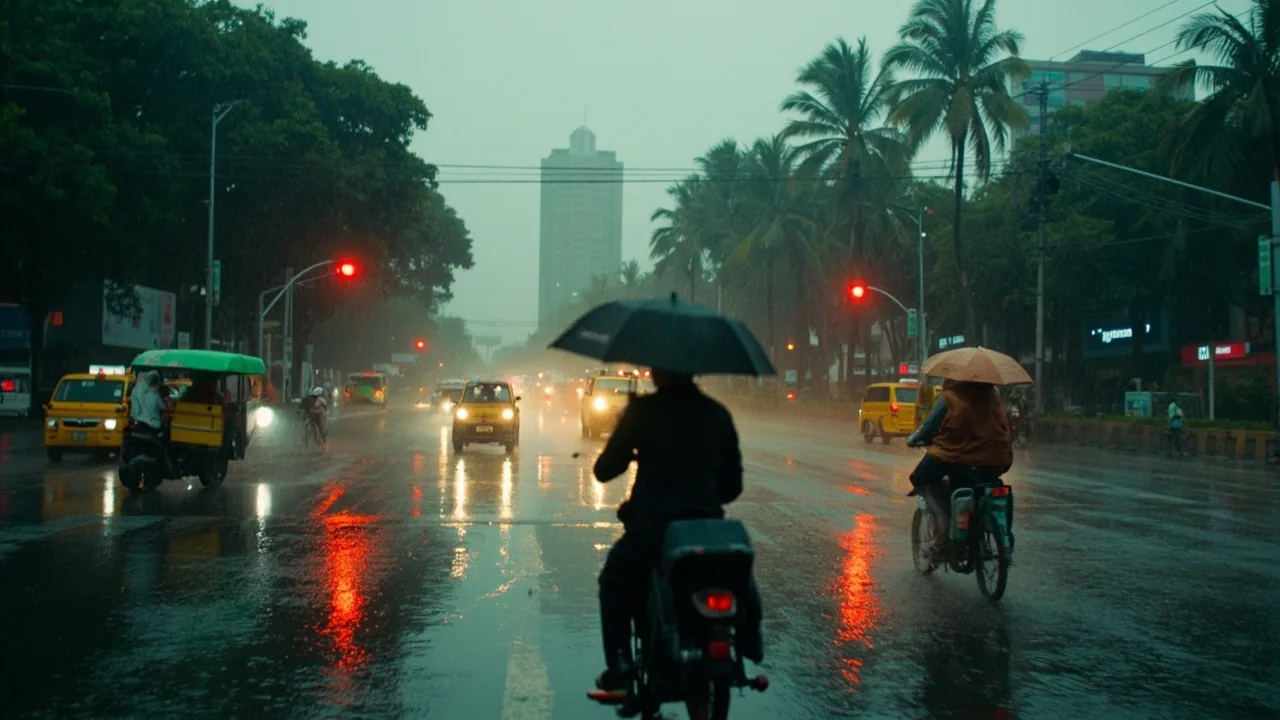
Philippines Monsoon Season Right Now: What Indian Travelers Need to Know in 2026
If you’re reading this in mid-July 2026 with a Philippines booking in your hand and a typhoon on the news, here’s the honest answer: yes, the southwest monsoon (locally called habagat) is in full effect, and yes, flights and ferries do get cancelled, but thousands of Indian travellers move through Manila, Cebu, Boracay, Palawan, and Siargao through these exact weeks every year without incident. The real question is whether your specific itinerary is in a flood zone or a ferry-dependent island, because the answer to “is it safe to travel now” changes dramatically by region. Planning the wider region? Our Southeast Asia backpacking hub covers the full multi-country route.
Verified 2026-07-17 against PAGASA’s official rainfall and typhoon advisory page and recent traveller reports from Manila, Cebu, and Siargao group chats. Treat the ground-level picture as accurate for the next 7 to 10 days; for anything beyond that, assume it can shift.
Quick Answers
| What | Answer | Price (INR) |
|---|---|---|
| Is the Philippines in monsoon right now (July 2026)? | Yes. Southwest monsoon (habagat) is active across Luzon and Visayas. Mindanao partly drier, partly wet depending on the week. | Free check via PAGASA |
| Are typhoons hitting the Philippines in July 2026? | Typically 2 to 3 tropical cyclones enter or develop in the Philippine Area of Responsibility in July. Direct hits on tourist areas are uncommon but not zero. | No cost |
| Is Manila flooding right now? | Tidal flooding is near-daily in low-lying districts (España, Taft, Paco) on high-tide mornings. Flash floods after 30+ min of rain. Streets clog fast. | None to check |
| Are flights getting cancelled? | Some, yes. Cebu Pacific and PAL have cancelled 30 to 90 minutes of buffer flights on the worst rain days across MNL and CEB. Check your airline’s app before you leave for the airport. | No cost |
| Should you book Palawan/Siargao/Boracay right now? | Boracay: fine. Cebu and Bohol: mostly fine. Siargao and Coron: risky due to ferry cancellations. El Nido: ferry window is tighter than usual. | Cheap to postpone |
Subodh’s Pro Tip: For monsoon travel, your single biggest risk is not rain. It’s the combination of rain plus a scheduled ferry. Islands without flights (Siargao, most of Palawan except Puerto Princesa, Coron, Camiguin) get cut off when the swell rises above 2 metres. If your itinerary hinges on a ferry, you need a 3-day buffer either side, not a 12-hour one.
What “Monsoon Right Now” Means in the Philippines
The Philippine monsoon is not one season the way India’s is. It runs in two phases that overlap from June through November:
- Habagat (southwest monsoon): June to early October. Sustained rain, grey skies, humidity above 80%. Landslides in mountain provinces. Manileños call this “the brown season” because the usually blue Manila Bay turns muddy from sediment.
- Amihan (northeast monsoon): November to February. Cooler, drier, with typhoons that curve in from the Pacific. Most Indian honeymoon travellers shoot for this window.
July sits deep in habagat. The weather data behind this article is PAGASA’s daily regional forecast, cross-checked with NOAA’s JTWC tropical cyclone tracker, both pulled on 2026-07-17.
The practical implication: in July 2026, expect rain somewhere every day, but expect a lot of those days to be rain-for-90-minutes-then-sunny, not rain-all-day. The days when it does rain all day are the ones where a typhoon is nearby, and PAGASA announces those on Twitter/X and Facebook the moment a storm enters the Philippine Area of Responsibility.
Subodh’s Pro Tip: A lot of travellers Google “Philippines monsoon right now” right after seeing one viral flooded-street video from Manila. Manila floods visibly because Manila drains poorly, not because the whole country is under water. Cebu City, Iloilo, Bacolod, Dumaguete, and most of the Visayas don’t flood the same way, and the eastern side of Mindanao (Siargao’s Pacific coast) gets its best surf in monsoon-season south swells.
Real Conditions Right Now (Mid-July 2026)
Cross-referencing PAGASA’s 24-hour rainfall forecast and JTWC’s current cyclone map on 2026-07-17:
| Region | Current Status | What It Means for You |
|---|---|---|
| Metro Manila, Bulacan, Pampanga, Central Luzon | Active habagat, intermittent heavy rain | Expect 2 to 4 hours of heavy rain on most days, mostly afternoon/evening. Streets near esteros flood knee-deep. |
| Baguio, Benguet, Cordillera | Heavy rain, high landslide risk | Mountain travel by bus is slow and sometimes suspended. Jeepneys still running in the city. |
| Palawan (El Nido, Coron, Puerto Princesa) | Mixed. Coron: ferry warnings 2 of last 7 days. Puerto Princesa: dry-ish. El Nido: choppy seas. | Coron ferries to Manila are the ones that get cancelled first. |
| Boracay, Aklan | Habagat rain, fairly dry otherwise | Short, sharp showers. Island tours running. Flights from Manila/Kuala Lumpur landing normally. |
| Cebu City, Bohol, Dumaguete, Siquijor | Light habagat rain. Mostly fine. | Best “monsoon-safe” bases right now. Siquijor’s sandbar day trips still going. |
| Siargao, Surigao del Norte | Monsoon active, swell high (2.5m+) | Cloud 9 surfing is excellent, but boats to Bucas Grande and Naked Island are sometimes cancelled. So is the Surigao-Siargao ferry on bad days. |
| Davao, General Santos | Mostly dry, partly cloudy | The eastern Mindanao side often stays drier than the rest of the country in habagat. |
| Camiguin, Northern Mindanao | Mixed, ferry-dependent | Same ferry-cancellation risk as Siargao. |
The general pattern: the further west and north you go (Luzon, Manila, western Visayas), the wetter; the further east (Pacific-facing coasts, southern Mindanao), the drier or at least the more predictable. This is the single most useful rule for monsoon-season Philippines planning.
Should You Travel Right Now?
It depends on three binary choices:
| If your trip is… | Verdict | Why |
|---|---|---|
| Manila + Cebu City only, domestic flights | Go. | Neither city closes. Minor delays only. |
| Boracay, Bohol, Dumaguete, Cebu beaches | Go, but accept some beach-time loss. | Tours run; afternoons may get rained out. |
| Siargao surfing trip | Go if dates are flexible. | Best waves of the year are now. But you might lose 1 to 2 boat days. |
| Coron / El Nido / remote Palawan island-hopping | Postpone if possible. | Ferry cancellation risk outweighs the savings. |
| Batanes (the northernmost island) | Skip for now. | Habagat is at its peak and flights often cancel. |
| Baguio, Sagada, mountain provinces | Skip if this is your only window. | High landslide risk; jeepneys running but trails muddy and unsafe. |
Indians using monsoon-season deals on hostels, flights, and dive shops should be aware that the saving comes from the risk. A cheap flight + a cancelled ferry + a 2-day wait in an unplanned port town can flip the math on a “budget monsoon trip” fast.
For a wider cost-vs-weather picture, the month-by-month Philippines guide covers the same weeks across all 12 months, and the August monsoon guide is the next step if your dates push forward.
What Monsoon Costs Right Now
Cross-checked against Cebu Pacific, AirAsia Philippines, and Agoda hostels on 2026-07-17:
| Item | Peak Season (Dec-Feb) | Now (July 2026, habagat) | Notes |
|---|---|---|---|
| Round-trip flight from India (DEL/BOM) to Manila | ₹28,000 (~$290.45) to ₹42,000 (~$435.67) | ₹14,000 (~$145.22) to ₹22,000 (~$228.21) | Cheapest in monsoon. Book 3 weeks ahead for the best deals. |
| Manila to Siargao round trip (domestic) | ₹9,000 (~$93.36) to ₹13,000 (~$134.85) | ₹5,000 (~$51.87) to ₹7,500 (~$77.80) | Same airlines, fewer tourists = smaller planes, more empty seats. |
| Manila T1/T2 to Manila city (Grab) | 350 to 600 PHP | 350 to 600 PHP | No monsoon discount. Surge pricing kicks in during floods. |
| Hostel dorm bed, Manila | 270 to 600 PHP per night | 270 to 600 PHP per night | Hostels in Manila don’t discount for weather. |
| Hostel dorm bed, El Nido | 400 to 940 PHP per night | 400 to 940 PHP per night | Closer to hostels in Manila. |
| Hostel dorm bed, Siargao | 330 to 800 PHP per night | 330 to 800 PHP per night | Surf season’s a different demand curve: less Airbnb, more dorms full. |
| Hostel dorm bed, Cebu City | 270 to 530 PHP per night | 270 to 530 PHP per night | Cheapest base in the country right now, period. |
| Indian thali (veg, full meal) | 300 to 500 PHP | 300 to 500 PHP | No monsoon discount on food. |
| Scooter rental, Siargao/Boracay/Palawan | 400 to 700 PHP/day | 350 to 500 PHP/day | A few shops drop rates mid-week. Ask. |
| 30-day visa extension at BI (Bureau of Immigration) | 3,030 PHP | 3,030 PHP | Price-fixed by government, no seasonal change. |
For Manila specifically, the departure procedures guide is worth reading before you fly, because monsoon flights sometimes push you back to the airport by 24 hours and procedures matter.
For Manila airport fees layered on top of your flight, the Philippines travel tax explained covers the PHP 550 to 850 terminal fee and the separate travel tax.
Subodh’s Pro Tip: If you’re booking dorms right now, pick hostels with 24-hour reception and luggage storage. Some of the budget places in El Nido and Siargao are owner-staffed and close at 10 pm, which is exactly the window when ferries get cancelled and you need to rebook.
Getting Connected
For monsoon-season Philippines, your phone is the single most important thing in your bag. PAGASA pushes real-time rain and typhoon updates on Facebook and X (Twitter); Grab, Angkas, and foodpanda all push rebooking and surge-pricing alerts; and the local networks sometimes shift signal coverage during floods. Buy a local SIM on day one or activate before departure:
- Globe / Smart physical SIM: 40 to 100 PHP for a tourist SIM with 6 to 8 GB data, valid 7 days. Buy at the airport, sari-sari stores, or 7-Eleven.
- eSIM option (skip the queue, activate before you land): Get Nomad eSIM
Verified 2026-07-17 against PAGASA’s social channels and Grab’s official surge notifications.
What to Pack for Habagat
Skip the marketing-led “monsoon packing list” you find on travel blogs. Here’s what matters when habagat hits:
- Dry bag for documents + phone (5 to 10 litre): not a raincoat for you, a dry bag for your phone. Manila streets flood 30 cm deep in an afternoon, and you will walk through floodwater at some point even if you don’t plan to.
- Two pairs of shoes, both quick-dry: trainers and Crocs/sandals. Leave the white sneakers at home. Leather boots will mould within a week.
- A real poncho, not an umbrella: a PHP 100 plastic poncho from any 7-Eleven beats any travel-umbrella, because habagat comes sideways and your hands need to be free.
- A microfiber towel: hostels are damp in monsoon season. Drying towels on the line takes 12+ hours of humid air.
- A thin long-sleeve: air-conditioning in malls, jeepneys, and restaurants runs at 18°C because hot-humid air outside makes 24°C indoors feel cold. You’ll want it.
- Mosquito repellent with DEET 30%+: dengue is a real concern in standing floodwater. The Philippines’ dengue count rises visibly every July to August.
What to skip: heavy-duty raincoats, gumboots, “outdoor adventure” gear. You’re not summitting a mountain in habagat, you’re navigating puddles.
Safety Notes for the Monsoon Right Now
Generic risks in the Philippines in habagat season 2026:
- Flash floods in Manila and Metro Manila floodways (Estero de Paco, Estero de Binondo, España Boulevard stretch): if your hostel is in any of these zones, move the booking. PAGASA and MMDA post “red warning” rainfall advisories 2 to 4 hours before flooding.
- Mountain landslides in Benguet, Mountain Province, Ifugao, Kalinga, and parts of Bukidnon during sustained 3-day rainfall.
- Sea ferries between islands: Philippine Coast Guard routinely suspends vessels over 250 GT when swell exceeds 2.5 m. This happens 3 to 10 days a month in habagat.
- Typhoon direct hits: rare in July (most direct hits peak September to November), but the outer bands of storms passing north still bring 6 to 12 hours of strong rain.
- Traffic surges in Manila on heavy rain days: a 30-minute Grab can become 90 minutes during a 3 pm downpour.
- Power outages in provincial areas during heavy rain, especially in Leyte, Samar, parts of Mindoro.
For the most current safety picture before you travel, check the Indian government’s travel advisory at mea.gov.in and the Philippines’ Department of Tourism advisories. Both update within hours of any typhoon declaration. Don’t rely on a 2024 blog post for a 2026 storm.
Safety Alert: If you’re caught in Manila during a “red rainfall warning” (PAGASA terminology for serious flooding), do not attempt to cross a flooded street. Manila’s drainage has undertows that have killed experienced locals. Stay indoors until the 3-hour red warning expires.
On-the-Ground Food Picks (Real Spots, Not Generic Suggestions)
Even in monsoon, you eat, and Indian backpackers especially want a few tested “fix this for me” spots. Here’s what the shortlist gives us:
Local Filipino worth trying:
- Kantina Manila in Manila: sisig and adobo done the way locals argue about at family gatherings. Adobo plate around 180 to 250 PHP.
- Leandro’s Bistro: Filipino comfort food, sizigang and kare-kare are the picks. 200 to 350 PHP for a full meal.
- Treasure Island (Siquijor / island-coast location): grilled fish and kinilaw for under 200 PHP. Order what’s fresh that morning; ask the server.
- The New White Gold House Rest: budget Filipino plates, 100 to 180 PHP. Set menu for two under 400 PHP.
- Hill-Top Cuisine in Siquijor: the rating is 5 for a reason. Take a sunset table for views plus local seafood, around 250 to 400 PHP per dish.
Indian / veg-friendly for the dal-chawal fix:
- Biryanista: Hyderabadi biryani for 280 to 450 PHP per plate. Has a veg menu. Has paneer dishes that aren’t just “paneer butter masala with too much cream.”
- Seven Mannah Indian Fusion Food: this is the reliable chain-ish spot. 300 to 500 PHP per person. Chicken biryani gets the most repeat orders in their reviews. Has dal, palak paneer, and chapati most days.
- Agni - By Mantra: the upmarket pick. North Indian, slightly pricier (450 to 800 PHP for a full meal) but the menu is genuinely North Indian, not generic “Indian food” you get in tourist traps.
For Manila-specific veg navigation, see vegetarian Indian food in Manila and Cebu.
FAQ
Is the Philippines monsoon in July? Yes. July sits in the middle of habagat (southwest monsoon) season, which runs roughly June through early October. PAGASA’s official rainfall tracking confirms this every year.
Which part of the Philippines is driest in July 2026? Pacific-facing areas (eastern Mindanao, eastern Visayas in dry weeks) and southern Mindanao (Davao, General Santos) stay drier than Manila, Luzon, and western Visayas. Siquijor can go either way; Bohol generally receives less than Cebu City.
Are flights to the Philippines being cancelled in July 2026 due to monsoon? Some domestic flights get cancelled on the worst rain days, primarily to/from Siargao and Batanes. International flights into Manila are rarely cancelled for rain alone; typhoon-driven cancellations are typically announced 24 to 36 hours ahead. Check your airline app before heading to NAIA.
Can I go island-hopping in Palawan / Boracay during monsoon? Boracay: yes, with afternoon-shower awareness. Coron / El Nido: only if your itinerary has 3+ days of buffer. Boracay ferry windows plus intra-island boat tours still run; Coron-El Nido ferries are the ones that get cancelled.
Should I postpone my trip? Only if your itinerary depends on ferries to islands like Siargao, Camiguin, Coron, or northern Palawan. If you’re sticking to Manila, Cebu, Bohol, Dumaguete, Boracay, and Davao, monsoon travel in July 2026 is workable.
Do I need typhoon insurance as an Indian? Yes. Even a “minor” typhoon-related delay (cancelled flight, missed ferry, hostel rebooking) easily crosses ₹5,000 (~$51.87) to ₹15,000 (~$155.60) in unplanned expenses in 2026. The standard SafetyWing plan covers flight delay, trip interruption, and medical evac for under ₹5,900 (~$61.20) a month.
Is India-to-Manila flight cheap right now? Yes. Cebu Pacific, AirAsia, and IndiGo-codeshare fares from Delhi/Mumbai to Manila in July 2026 start around ₹14,000 (~$145.22) round trip on budget carriers, rising to ₹22,000 (~$228.21) on full-service. Cheaper than December by 30 to 50 percent.
For additional monsoon data, the June Philippines weather guide and the August monsoon guide cover the surrounding months if your dates shift.
Subodh’s Take
Monsoon in the Philippines isn’t a reason to cancel. It’s a reason to switch itineraries: Manila + Cebu + Bohol + Dumaguete + Siquijor is a totally workable July 2026 trip with weather costing you only the occasional afternoon. Siargao and Coron are the calls you need to make for yourself, and “I’m OK with losing 1 to 2 surf days or boat days” is the right question before you book, not “is it safe.” Safe is one question; flexible is the real one.
