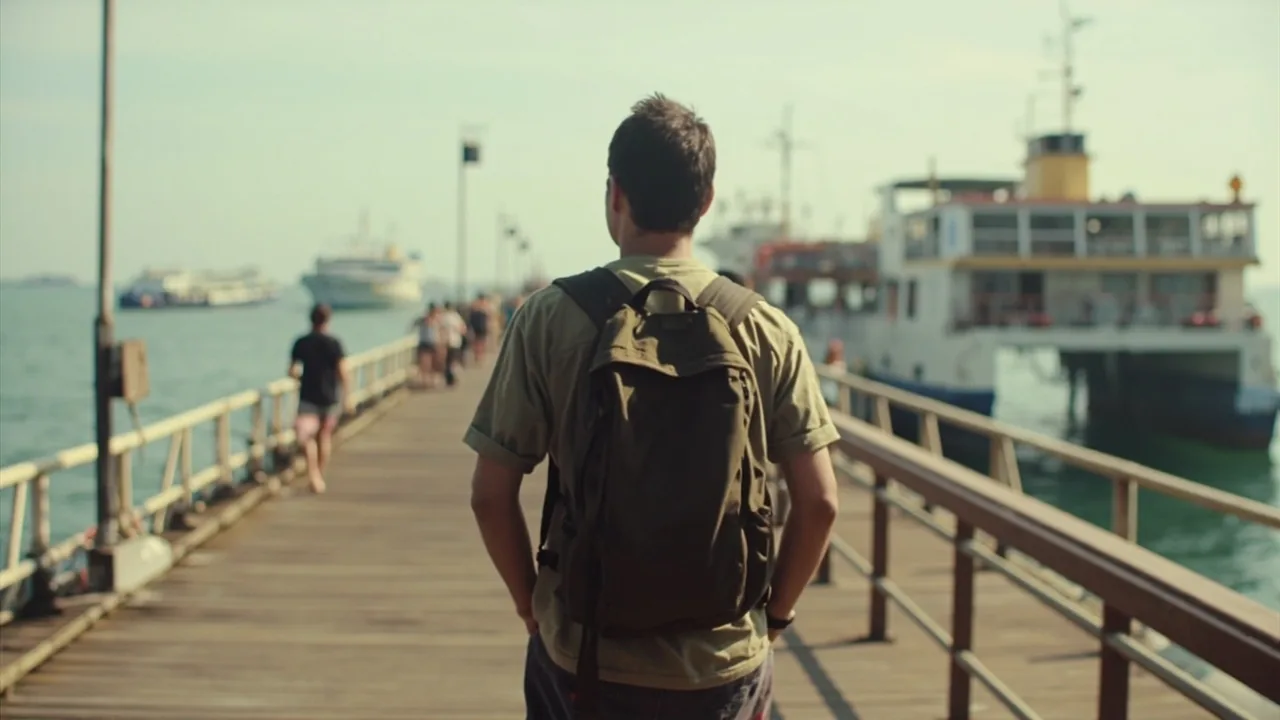
Solo Traveler Safety at Sea: Scams, Safe Routes & Emergency Tips for Backpackers
Sea crossings, island ferries, and beach towns bring a different class of scams than tuk-tuk tricks. Solo travellers are the obvious target, and a woman alone on a boat or at a port is the easiest. These safety tips for solo travellers cover what goes wrong, how to spot it, and what to do when things do.
The advice below applies across Southeast Asia’s coastlines: Thailand’s islands, Vietnam’s Ha Long and Phu Quoc, Cambodia’s Sihanoukville ferries, Indonesia’s boat network (Bali to the Gili islands, or Labuan Bajo to Komodo), the Philippines’ Palawan ferries, and the Malaysia. Thailand Langkawi route. Same patterns, same scripts, same fix.
Quick Answers
| What | Answer | Price (INR) |
|---|---|---|
| Cheapest legit travel insurance for Indians | SafetyWing Nomad | $62/month (~₹5,900) |
| Recommended eSIM for solo SEA trips | Nomad eSIM (regional plan) | ₹868 (~9 USD) |
| Average ferry scam overcharge on Thai islands | ₹574-₹1,436 (~200-500 THB or ~$5.96-$14.89) | ₹574-₹1,436 (~200-500 THB or ~$5.96-$14.89) |
| Standard jet-ski “damage” scam claim | ₹14,358-₹86,145 (~5,000-30,000 THB or ~$148.93-$893.59) | ₹14,358-₹86,145 (~5,000-30,000 THB or ~$148.93-$893.59) |
| Emergency number you can dial from any SEA country | Tourist Police (Thailand 1155) / local equivalent | Free |
Prices above are base local-currency amounts; rupee/USD conversions are added by the site. All figures verified 2026-07-17 at 1 USD = ₹96.3294.
Scams That Hit Solo Travellers at Sea and on the Coast
These are the recurring ones across the region, not random anecdotes.
The jet-ski damage scam (Thailand, Bali, Boracay). You rent a jet ski for ₹4,307-₹7,179 (~1,500-2,500 THB or ~$44.68-$74.47) per hour. On return, the operator points at a fresh scratch and demands ₹14,358-₹86,145 (~5,000-30,000 THB or ~$148.93-$893.59) for “repairs.” The scratch was there before you started. Always: take a 360° video on your phone before mounting, with timestamp visible, and demand a written condition report at the rental desk. Pay only by card if possible so you have a paper trail. Having video evidence resolves most of these disputes quickly.
The “today is a Buddhist holiday, no ferry” scam (Thai islands, Koh Samui, Koh Phangan, Koh Tao). A driver at the pier tells you the boat is cancelled for a religious day, then offers a “faster speedboat” for 2–3x the official ferry fare. The ferry is running. Walk past the driver, go to the actual ticket counter at the pier, and buy directly. The Thailand safety scams guide covers this in detail.
The “your bag is overweight, pay now” ferry scam (Vietnam Ha Long, Cambodia Sihanoukville). At the boarding ramp, a “porter” grabs your backpack and announces it’s over the ferry’s luggage limit, demanding ₹368-₹737 (~100,000-200,000 VND or ~$3.82-$7.64) or ₹482-₹964 (~5-10 USD) on the spot. Most ferries have no published luggage limit. Refuse, take your bag back, board yourself. If there’s a real limit, it will be posted at the official ticket office, not shouted at the ramp.
The “lost ticket, pay again” scam (Indonesia fast boats, Bali to Gili). You hand over your e-ticket at the gangway. The collector says it’s not valid, or “the system can’t read it,” and steers you to a back office to pay a new fare. Always: screenshot the booking confirmation AND the boarding QR, and only hand over your phone to show it, never the screen alone. Book through a third-party platform like 12go.asia when you can, so you have an independent receipt.
The “mandatory taxi” at the port. You arrive at a port (Sihanoukville, Krabi, Nha Trang) and a man in a vest directs you to “official” transport. Often it’s a marked-up private car with no meter. Fix-price Grab, Bolt, or PassApp rides work from most Thai, Vietnamese, and Cambodian ports now. Install before you arrive.
The overnight boat cabin swap (multi-day cruises, Ha Long, Phu Quoc). You book a cabin with a window. At boarding, you’re shown to an interior cabin and told the windowed one is “upgraded, extra cost.” It wasn’t upgraded, it was never yours. Lock the booking voucher photo, ask for your cabin number on paper at check-in, and refuse to move unless they refund the difference in writing.
The “tide won’t let us dock at the main pier” small-boat scam (Thai south coast, Cambodia Koh Rong). A longtail or speedboat captain anchors 300 metres offshore and says the pier is closed due to tide, then charges ₹287-₹861 (~100-300 THB or ~$2.98-$8.94) per person for a “short transfer” on a smaller boat to shore. Check tide charts yourself (tide-forecast.com) and the pier’s published arrival time. Sometimes the pier is genuinely inaccessible, in which case the operator pays, not you.
Subodh’s Pro Tip: Before any boat trip, screenshot three things: the booking confirmation with price, the official departure pier name, and the operator’s contact number. If anything goes sideways, those three screenshots resolve 80% of disputes.
Safety Tools Solo Travellers Should Carry
Not a checklist for the sake of it. These are the ones with a track record.
Phone with offline maps downloaded. Maps.me and Google Maps both let you download whole regions. If your bag gets stolen or your battery dies mid-route, you can still navigate to the nearest police station. Takes 5 minutes to set up.
A working second SIM or eSIM. The single most useful safety tool. If your main line dies, you have a backup with data. Get Nomad eSIM covers 11 SEA countries on one plan, ₹868 (~9 USD) for 5 GB over 30 days. Physical AIS, Viettel, and Smart SIMs are still cheaper at 7-Eleven if you’re staying put, but if you’re island-hopping, an eSIM means you never lose signal at a port.
Door wedge or rubber doorstop. Costs almost nothing, weighs nothing, and stops hostel/ferry-cabin doors from being opened from outside without your knowledge. Works in any room with an inward-swinging door.
A dummy wallet. An old wallet with a cancelled debit card, some expired loyalty cards, and around ₹1,149-₹1,723 (~400-600 THB or ~$11.91-$17.87) of local currency. If someone mugs you, hand over the dummy. Your real cards and phone stay hidden.
A small first-aid kit. Oral rehydration salts, a few paracetamol strips, a couple of blister plasters, and a tick-remover if you’re going to forested islands. Pharmacies in Thailand, Vietnam, and the Philippines sell all of this cheaply without prescription.
Travel insurance with emergency evacuation. Not optional for sea trips. SafetyWing Nomad is the standard for Indian backpackers at $62/month (~₹5,900), and it covers emergency medical evacuation across the region. The bigger cost is the helicopter out of a remote island if you break a leg on a dive boat. Get SafetyWing travel insurance, covers Indian travelers from ~$62/month (~₹5,900). Includes COVID, trip interruption, and medical evacuation across Southeast Asia.
A small Bluetooth tracker (AirTag or equivalent). Tuck it in your daypack. If the bag gets snatched at a pier, you can show police the live location. Bluetooth trackers have helped recover luggage in several Southeast Asian cities.
Local emergency numbers, written on paper. Phone dies, you still need these:
- Thailand: Tourist Police 1155 (English), General Emergency 191, Marine Police 1196
- Vietnam: Police 113, Ambulance 115, Tourist Helpline (Hanoi) 1800-6262
- Cambodia: Police 117, Ambulance 119, Tourist Police 012-402-424
- Indonesia: Police 110, Ambulance 118, Bali Tourist Police +62 361-224-111
- Philippines: Police 911, Coast Guard +63 2-8527-3880
For anything that escalates beyond a lost wallet, your government’s travel advisory is the canonical source. The Indian MEA advisory page at mea.gov.in lists current warnings for each country and is updated as situations change. Check it 48 hours before any ferry, dive, or border crossing.
Safe Routes vs. Routes That Need More Caution
Not every boat route carries the same risk. Some are well-regulated, others have a pattern of incidents.
Lower-risk routes (well-trafficked, licensed operators, fixed timetables):
- Bangkok (Khao San area) to Koh Samui / Koh Phangan via Lomprayah or Seatran Discovery (licensed, GPS-tracked)
- Phuket to Phi Phi to Krabi (licensed ferries, multiple daily)
- Hanoi to Ha Long Bay (day cruises only, avoid overnight boats with no published company name)
- Bali (Sanur) to Nusa Penida (licensed fast boats, 35 minutes)
- Kuala Perlis to Langkawi (public ferry, every hour)
Routes that need more caution:
- Bali to Gili Trawangan by fast boat: choppy in Dec–Feb, operators range from licensed to barely insured. Book via 12go to compare licensed operators, and always wear the life jacket they provide, even if it looks ratty.
- Cambodia Sihanoukville to Koh Rong: 4 operators, only 2 with proper insurance. Pick Buva Sea or Speed Ferry Cambodia, avoid the touts at the pier.
- Indonesian Maluku / Raja Ampat boat transfers: multi-day liveaboards require checking the operator’s licence. Stick with well-reviewed operators on platforms like Liveaboard.com, not Instagram deals.
- Any overnight boat in the Philippines’ Visayas during habagat (southwest monsoon, June–September): routinely cancelled, refunds can take weeks. Travel insurance covers this if you bought it before departure.
Solo female-specific route notes:
- Night ferries with shared cabins are common in Vietnam (Mekong Delta routes) and the Philippines (Cebu to other Visayas). Female-only cabin options exist on the larger operators (Phu Quoc Express, 2GO). Book them in advance.
- Island-hopping in Siquijor or Camiguin (Philippines) is safe and solo-female-friendly, but the motorbike rental shops will pressure you into paying “insurance” on top of rental. Photograph the bike’s existing scratches, refuse the extra insurance, sign only the base rental. The getting around Siquijor guide goes deeper.
- The Full Moon Party ferry from Koh Samui to Koh Phangan: book a return ticket in advance, the night return boats have had isolated incidents of solo women being harassed at the dock. The Full Moon Party transport guide has safer operator names.
What Solo Women Travellers Report Specifically
This section comes from filtered traveller reports and forum threads, not invented anecdotes.
Hostel room selection matters. Pick a female-only dorm if available (Mad Monkey, Lub d, and most chain hostels now have them). If not, pick a 4-bed mixed dorm over an 8 or 10-bed. Smaller rooms mean fewer surprises.
Beach bar seating. Travellers report that the safest seat at any beach bar is one with your back to the wall and a clear view of the entrance. The seat at the far end of the bar with your back to the door is the worst. Bar staff in Thailand, Bali, and the Philippines take this seriously and will often point you to a better spot if you ask.
Motorbike rental pressure. Solo female renters are the most common target for “you damaged it” scams at scooter shops in Pai, Koh Phangan, Vang Vieng, and Ubud. Photograph everything. Walk away if the deposit demanded is more than the bike’s value.
Single supplement “tax.” Some island resorts and liveaboard dive boats charge solo travellers a 30–50% supplement. Ask explicitly about this when booking. Several Thai island dive shops (Koh Tao, Koh Lanta) have started offering solo diver pairings on shared boats to remove the fee.
Pier harassment. At crowded piers (Sihanoukville, Benoa Harbour in Bali, Manila North Harbor), solo women report more grab-and-go incidents than anywhere else on the trip. A crossbody bag worn at the front, never the side or back, is the standard fix.
Safety Alert: If you feel unsafe on a boat, ferry, or at a port, do not wait to reach the next stop. Go to the bridge or crew area immediately, identify yourself as a solo traveller, and ask them to radio ahead. Thai, Vietnamese, and Indonesian ferry crews handle this regularly, and asking early almost always resolves the situation.
If Something Goes Wrong: The First 48 Hours
Step-by-step for the worst-case scenario: theft, accident, or assault.
Within the first hour:
- Get to a safe, lit, populated place. Your hostel reception is usually best. Police stations and 7-Eleven are 24/7 options.
- Call your insurance emergency line. The number is on the policy PDF you should have saved offline. SafetyWing’s number is on the back of every confirmation email.
- Cancel any cards that were on you. HDFC, ICICI, and SBI all have 24/7 international freeze lines.
- Write down everything you remember while it’s fresh: time, location, description of anyone involved, what was taken.
Within 24 hours:
- File a police report. This is non-negotiable for insurance claims. Most SEA police stations have English-speaking officers or a tourist desk. Get a copy of the report (in Thai, Vietnamese, etc., with your passport details logged). It’s the single most useful document for your insurer.
- Contact your embassy or consulate if your passport is gone. Indian embassies in Bangkok, Hanoi, Phnom Penh, Jakarta, and Manila issue emergency certificates same-day. The MEA website has the current address and after-hours number for each.
- Forward all receipts for replacement essentials to your insurer. Most policies reimburse toiletries, basic clothing, and emergency accommodation.
Within 48 hours:
- Replace your SIM. Passport, photo, and a police report let you buy a replacement tourist SIM same-day at any official store (AIS, Viettel, Smart, etc.).
- If you were assaulted, the hospital visit comes first, police second, insurance third. Hospitals in Bangkok, Phuket, Ho Chi Minh City, and Bali handle these cases routinely and have English-speaking staff.
- Get a friend or family member in India on a call. The 24-hour adrenaline drop is the worst part. Don’t sit alone with it.
For the claims process specifically, the travel insurance claims guide walks through the documentation trail Indian insurers expect.
Street-Smart Habits That Prevent Most Trouble
Tell someone where you’re going. Hostel reception, the WhatsApp group of travellers you met two days ago, your family back home. A quick “I’m on the 14:00 ferry from Koh Samui to Koh Phangan, ETA 16:30” message is enough. If you don’t check in by 18:00, someone knows to ask.
Pre-book the first and last night’s accommodation. The boat trip is the stressful part; arriving somewhere with no booking is what makes solo travellers vulnerable. Book the first night, leave the middle open if you want flexibility.
Keep cash split in three places. Wallet (small amount), daypack inner zip (medium), and a hidden pouch under clothes (larger amount). Travellers who lost everything at a pier recovered faster when the cash wasn’t all in one spot.
Don’t drink on the ferry or speedboat. This sounds obvious but is the cause of most sea-sickness incidents that turn into medical evacuations. If you need something for nausea, meclizine or dimenhydrinate from any pharmacy is cheap and effective.
Photograph your documents. Passport, visa, insurance card, vaccine certificate (if required), and the front and back of every card you’re carrying. Store in a folder your camera roll can access without unlocking, so you can show ID to police without handing over your unlocked phone.
Trust the boring option. Licensed ferry with a name, registered dive shop with a sign, official taxi with a meter. The “exciting” alternative offered by a stranger at the pier is almost always the more expensive or more dangerous one.
Subodh’s Pro Tip: The single best safety habit I’ve seen solo travellers develop is the “10pm check-in.” A short message to one person, every night, even when nothing happened. When something does happen, that person already knows your last known location.
FAQ
Is it safe for a solo female traveller to take overnight ferries in Southeast Asia?
Generally yes, on the larger licensed operators. Book a female-only cabin where available (Phu Quoc Express, 2GO in the Philippines). Avoid unlicensed small-boat overnight transfers, especially in the Philippines’ southern routes and Indonesia’s Maluku islands. The combination of a stranger crew, dark cabin, and choppy water is the worst case.
What should I do if a port official asks for a “tip” to stamp my passport?
Nothing. Port officials do not accept tips for official duties. If someone asks, request their name and badge number, then ask to speak to their supervisor. In Thai ports this almost never happens; in smaller Indonesian and Filipino ports it does occasionally. Standing your ground politely ends it.
How can I tell if a dive shop is legit before booking?
Three checks: (1) the shop is PADI, SSI, or BSAC certified and the instructor’s card number is visible at the desk; (2) the boat has a visible first-aid kit and oxygen on board, not just locked in a car; (3) reviews on Google Maps from the last 60 days mention safety briefings, not just “great fish.” Avoid shops that ask for the full fee in cash before the boat leaves.
Are there parts of SEA coastlines that Indian government advisories flag right now?
Yes, and these change. Before any trip, check the Indian MEA travel advisory at mea.gov.in and the destination country’s own government site. This is the canonical source, not travel blogs. Advisories have shifted in the past 12 months for parts of Myanmar’s coast and the southern Philippines, so a check 48 hours before departure is standard practice.
What’s the safest way to handle money on an island with no ATM?
Bring enough cash for the whole stay plus a 20% buffer. Thai islands (Koh Tao, Koh Mak), the Gili islands in Indonesia, and small Filipino islands like Siquijor often have ATMs that run out by Friday afternoon. Use the in-town bank ATM on arrival day, not the pier ATM which has the highest foreign-card fee.
Can I use WhatsApp or FaceTime at sea?
Yes, but coverage drops to 2G or nothing about 5–10 km from shore. AIS, Viettel, and Smart roaming all support WhatsApp calls on licensed ferries with ship-mounted antennas. Speed boats usually have nothing. Download voice notes offline if you need to send a long update.
Is boat travel in monsoon season dangerous?
It can be. June through October is the southwest monsoon (habagat) in most of SEA, with the worst conditions in the Philippines and southern Vietnam. Ferries are cancelled routinely, and small boats are genuinely unsafe. The Thailand weather guide has month-by-month breakdowns. If you’re going to travel in this window, pick routes with multiple daily departures so a cancellation doesn’t strand you, and always have travel insurance that covers trip interruption.
Travel smart, yaar. The sea is half the reason you’re here, and most travellers come back with nothing worse than a bad sunburn and an overpriced cocktail story.
