Vegetarian Con Dao: Where to Find Plant-Based Meals on the Islands
Con Dao is small, quiet, and 90% Vietnamese seafood-and-rice territory. Vegetarian food here is thinner than Hanoi, Hoi An, or Da Lat, but it’s not impossible. You just need to know the right phrases, the right chay (vegetarian) spots, and the one temple buffet on the main island. Verified against the latest traveller reports and Vietnamese-language listings in July 2026. For a full overview of the islands beyond food, see our Con Dao complete guide for Indian travelers, and for the broader Southeast Asia backpacking picture, our SEA backpacking hub covers all nine countries in one place.
The Con Dao Islands sit about 185 km offshore from Vung Tau in southern Vietnam. The main island (Con Son) has roughly 6,000 residents and a small tourist strip around the town centre. Almost every restaurant along the strip leans meat-and-seafood, and many cooks assume chicken broth or fish sauce in any “rau xao” (stir-fried greens) you order. You will not find a fully vegan or Jain-friendly chain here like you’d find in Hoi An. What you will find: a small handful of chay restaurants, a Buddhist temple that runs a vegetarian buffet on certain lunar dates, and the local night market where you can build a safe plant-based meal from cooked vegetable stalls if you know what to ask for.
The phrase that gets you the islands for vegetarians is “an chay” (ăn chay), which means “eat vegetarian.” Vietnamese Buddhists use it daily, restaurant staff recognise it on sight, and chay restaurants often have a yellow banner or red text that signals vegan food. Your main job is learning to add “khong nuoc mam” (no fish sauce), “khong trung” (no egg), and “khong toi” (no onion/garlic for Jains). With those three additions, you can eat well here for a week without cooking in a hostel kitchen.
Quick Answers
| What | Answer | Price (INR) |
|---|---|---|
| How easy is it to eat vegetarian in Con Dao? | Moderate: 3-4 chay spots on Con Son island, plus temple buffets on 1st and 15th lunar days | , |
| Magic word to remember | ”An chay” (ăn chay) means eat vegetarian | , |
| Average price of a vegetarian meal | ₹221 (~60,000 VND or ~$2.29) | ~₹220 (~$2.28) |
| Can I find vegan/Jain food here? | Yes at chay restaurants and the temple buffet; ask for “khong trung, khong toi” | , |
| Best island for vegetarian food | Con Son (the only inhabited island with restaurants) | , |
FX used: Verified 2026-07-17 at 1 INR = 270.27 VND (1 VND = ₹0.0037). All on-island prices below are in Vietnamese Dong.
The Local Culinary Landscape
Vietnamese food is one of the most vegetarian-friendly cuisines in Southeast Asia thanks to its Buddhist chay tradition, but Con Dao is a working fishing island first and a tourist spot second. That matters because local cooks default to fish sauce (nuoc mam), shrimp paste in broths, lard in stir-fries, and oyster sauce in greens. When you order “rau xao” (stir-fried morning glory or water spinach), the standard preparation often includes oyster sauce and a splash of fish sauce unless you say otherwise.
Most locals do not consider chicken, fish, or eggs to be “meat” in the everyday sense, so the word “chay” (vegetarian) carries a stricter meaning than Indian vegetarian: a chay restaurant is fully plant-based, often with no eggs or dairy either. That is good news for Indian veg travellers. The bad news is that chay restaurants on Con Son are limited to a handful, and they cluster near the town centre and the harbour area.
The Buddhist community on Con Dao runs a temple (the main pagoda in town) that hosts vegetarian buffets on the 1st and 15th of every lunar month, plus full-moon and new-moon days. Travellers report these buffets cost a small donation (typically ₹110-₹184 (~30,000-50,000 VND or ~$1.15-$1.91)) and include rice, stir-fried vegetables, tofu, mock meat (often soy-based), and clear broth. Dates vary year to year, so ask locally a few days in advance or check with your guesthouse.
For Indian veg travellers specifically, the priority list is: confirm no fish sauce (the biggest hidden ingredient), confirm no egg (common in fried rice and banh xeo), confirm no oyster sauce (in vegetable stir-fries), and if Jain, confirm no onion/garlic. Lacto-vegetarians will find Con Dao easier than Jains, but both groups can eat well with the right phrases. If you’re also comparing daily costs, our Con Dao budget breakdown covers exactly how much you’ll spend on food, transport, and accommodation.
Key Phrases in Local Script
| English Phrase | What it Means | Local Script | Pronunciation |
|---|---|---|---|
| I am vegetarian | Sets the entire meal context | Tôi ăn chay | ”toy ahn chay” |
| No fish sauce | The single most important add-on | Không nước mắm | ”khong nuk mum” |
| No oyster sauce | Critical for stir-fried greens | Không dầu hào | ”khong dow how” |
| No egg | Common in fried rice, pancakes | Không trứng | ”khong trung” |
| No onion/garlic (Jain) | For strict veg/Jain travellers | Không tỏi, không hành | ”khong toy, khong hahn” |
| No shrimp paste | Hidden in many broths and dips | Không mắm tôm | ”khong mum tom” |
| Just vegetables and rice | The simplest safe order | Chỉ rau và cơm | ”chee row vaa kum” |
| Is this chay/vegetarian? | Check before ordering | Cái này chay không? | “kai nay chay khong?” |
Subodh’s Pro Tip: Print this table or screenshot it on your phone before arriving. Vietnamese phone keyboards with diacritics are clumsy to type on the fly, and showing a phrase on screen often works better than pronouncing it wrong. Most restaurant staff on Con Son are used to foreign tourists and will nod or point to confirm.
Safe Local Dishes and What to Order
You will not find a chaat stall or a paneer curry on Con Dao. What you will find is a small set of plant-based Vietnamese dishes that are either vegetarian or easy to make vegetarian by asking the right questions. The list below covers the safest bets across the islands.
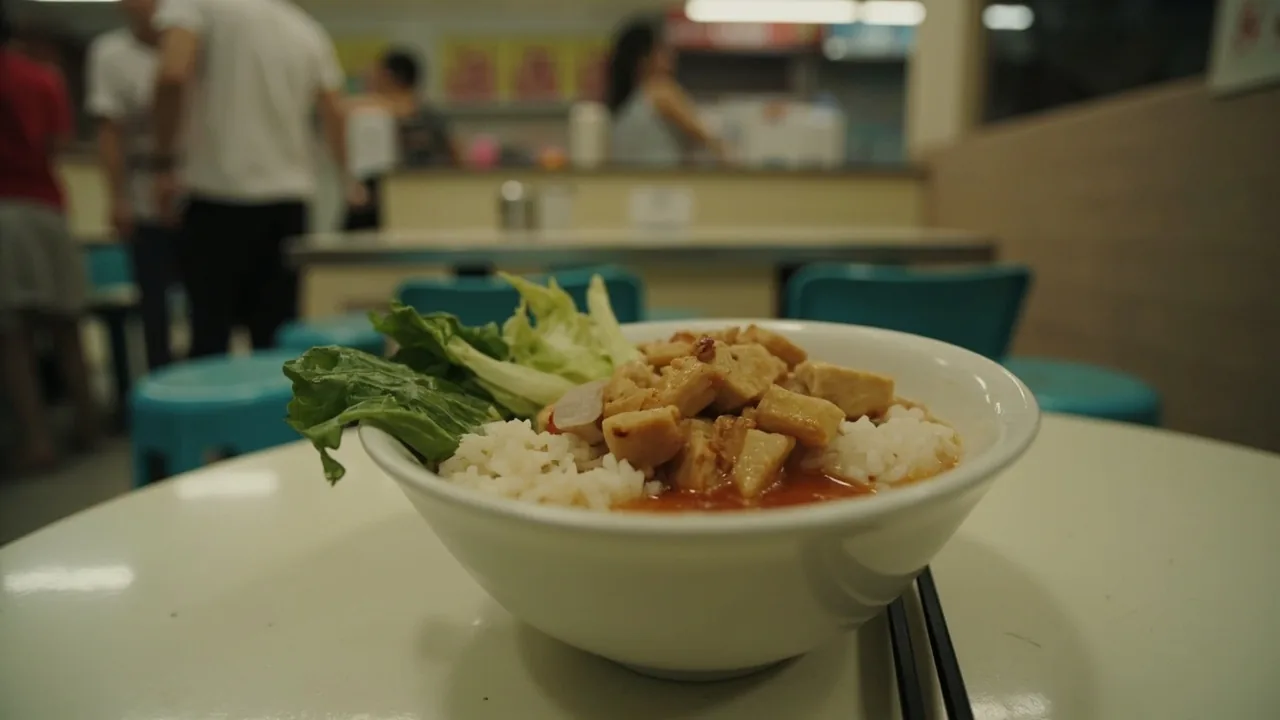
Com chay (chay set meal with rice). The single most reliable order on Con Dao. A typical chay set at a local spot includes jasmine rice, a stir-fried vegetable (morning glory, bok choy, or eggplant), tofu in tomato sauce, a clear broth, and sometimes a soy-mock meat dish. Cost: ₹184-₹295 (~50,000-80,000 VND or ~$1.91-$3.06) at sit-down chay restaurants. Specify “khong nuoc mam, khong trung” when ordering and you’ll get a fully plant-based plate.
Bun chay (vegetarian rice vermicelli noodles). Cold rice noodles topped with fried tofu, pickled vegetables, crushed peanuts, and a soy-lime dressing. The standard vegetarian version has no fish sauce in the broth. Cost: ₹147-₹221 (~40,000-60,000 VND or ~$1.53-$2.29) at chay restaurants. Travellers report this is one of the safer bets because the dish is vegetarian in its chay form.
Rau muong xao (stir-fried morning glory). The default preparation uses garlic and oyster sauce, which makes it unsafe for vegetarians and Jains by default. Ask for “khong nuoc mam, khong dau hao, khong toi” and most places will cook a plain version with soy or salt instead. Cost: ₹110-₹184 (~30,000-50,000 VND or ~$1.15-$1.91) at regular Vietnamese restaurants.
Banh mi chay (vegetarian baguette sandwich). Available at a few banh mi stalls in town, especially near the harbour and the night market. The chay version skips pate and cold cuts and uses tofu, pickled carrot and daikon, cucumber, cilantro, and soy sauce. Cost: ₹74-₹129 (~20,000-35,000 VND or ~$0.76-$1.34). Confirm “khong nuoc mam” because some stalls brush the bread with fish-sauce butter.
Che (Vietnamese sweet dessert soup). Plant-based in most versions. Made with mung beans, taro, pandan jelly, coconut milk, and palm sugar. Cost: ₹55-₹92 (~15,000-25,000 VND or ~$0.57-$0.96) at street stalls and the night market. Safe for vegetarians; confirm with the vendor if you want to be sure no egg or dairy sneaks in.
Subodh’s Pro Tip: When you sit down at a non-chay Vietnamese restaurant, the safest order pattern is: pick a stir-fried vegetable dish, a rice or noodle dish, and the soy/tofu mock meat option if they have one. Always say “an chay” first, then “khong nuoc mam, khong trung.” That two-part phrase gets you 80% of the way there.
Recommended Vegetarian Restaurants on Con Son
Con Dao has roughly 3-4 dedicated chay (vegetarian) restaurants and a small cluster of regular restaurants that do chay meals on request. Traveller reports and Vietnamese-language reviews point to a handful of chay spots clustered near the town centre and the harbour area on Con Son island, with most set meals in the typical price range noted below for a sit-down chay restaurant.
Chay spot near the town centre on Con Son island. The most-cited chay restaurant on Con Dao by travellers and locals. The menu is 100% plant-based and includes com chay, bun chay, tofu hotpot, and stir-fried vegetable plates. Travellers report the staff are used to foreign tourists and the kitchen understands “no fish sauce” without further explanation. Typical price range: ₹184-₹295 (~50,000-80,000 VND or ~$1.91-$3.06) per meal. Vibe: simple, clean, local. Must-try: com chay with tofu in tomato sauce and a clear broth.
A second chay spot in central Con Son. A good backup in case the first spot is closed or full. This spot reportedly has a slightly larger menu with mock meat dishes (soy-based “fish,” “chicken,” and “duck” preparations) that are fully plant-based. Typical price range: ₹221-₹331 (~60,000-90,000 VND or ~$2.29-$3.44) per meal. Vibe: casual, family-run, often busy at lunch.
A homestyle Vietnamese restaurant in Con Son town. Not a dedicated vegetarian restaurant, but travellers report this place reliably handles “an chay” orders and has a separate chay menu on request. Useful as a backup on days when the chay-only spots are closed. Typical price range for chay orders: ₹258-₹368 (~70,000-100,000 VND or ~$2.67-$3.82). Vibe: homestyle Vietnamese, popular with both tourists and locals.
Street stalls near the harbour in central Con Son. The night market on Con Son runs most evenings from around 5 PM to 9 PM and includes a few stalls selling com chay (vegetarian rice plates), banh mi chay, and che desserts. The food is cooked to order, the stalls rotate frequently, and the turnover is high enough that hygiene is reasonable. Typical price range: ₹74-₹184 (~20,000-50,000 VND or ~$0.76-$1.91) per item. Vibe: casual street food, no seating, take away to your guesthouse. Where you stay on the island affects your food access — see our Con Dao hostel guide for budget stays within walking distance of the chay spots and night market.
For a deeper guide to Vietnamese chay food culture, see our Vietnam vegetarian food guide, and for safe street food patterns across the region, our Southeast Asia street food safety guide is worth a read before you arrive.
The Temple Buffet on Con Son
The vegetarian temple buffet is the single best-kept secret on Con Dao for plant-based eaters. Vietnamese Buddhist pagodas run a community vegetarian meal on the 1st and 15th of every lunar month, plus the full-moon and new-moon dates. Travellers report that the main pagoda in town, along with a couple of smaller temples nearby, hosts these meals.
The format is simple: arrive between 11 AM and 1 PM, make a small donation (typically ₹110-₹184 (~30,000-50,000 VND or ~$1.15-$1.91)), and join the buffet line. The spread usually includes rice, stir-fried vegetables, tofu preparations, mock meat (soy-based), clear broth soup, and a dessert. The food is cooked by volunteers, follows strict Buddhist vegetarian rules (no meat, no fish sauce, no eggs in most preparations), and is genuinely good. Some temples also serve these meals on full-moon Tet and major Buddhist holidays.
Travellers report the experience is welcoming to foreigners but quiet: dress modestly (covered shoulders and knees), remove your shoes at the temple entrance, and let the volunteers guide you through the line. For more on respectful behaviour at Vietnamese pagodas, our Con Dao temple etiquette guide covers the full do’s and don’ts. The dates vary by lunar calendar, so ask at your guesthouse or the pagoda itself a few days in advance.
Food Safety and Hygiene on Con Dao
Con Dao is small enough that food hygiene is generally fine, but a few patterns help:
- Stick to cooked food. The islands’ tap water is not safe; bottled water is cheap (₹37 (~10,000 VND or ~$0.38) for a 1.5L bottle at any convenience store) and your guesthouse will usually provide a kettle or refill.
- Eat at busy spots. The chay restaurants and night market stalls that turn over customers quickly are safer than empty ones. No major food poisoning incidents have been reported at the well-known chay spots.
- Skip raw salads unless you trust the source. Some Vietnamese restaurants serve raw herb plates as garnishes; these are fine at busy chay restaurants but riskier at small unknown stalls.
- Fruit is safe if you peel it. Mangoes, pineapples, dragon fruit, and coconuts (fresh coconut water is sold everywhere for ₹74-₹110 (~20,000-30,000 VND or ~$0.76-$1.15)) are reliable snacks.
- Wash your hands or carry sanitizer. The night market has shared spoons and serving utensils; clean hands before eating is the simplest safeguard.
Safety Alert: Bottled water only on Con Dao. Ice in drinks at established restaurants is fine (they use commercial ice), but at small roadside stalls, ask “đá sạch không?” (clean ice?) or skip the ice to be safe.
Getting Connected
Data on Con Dao is patchy compared to the mainland. Vietnamese carriers (Viettel, Mobifone, Vinaphone) cover the main island reasonably well, but signal drops on the smaller islands and on remote beaches. A local SIM is cheap (₹184-₹368 (~50,000-100,000 VND or ~$1.91-$3.82) for a Viettel tourist SIM with 3-5 GB of data, available at the airport or in town). For travellers without a physical SIM slot or who want a backup, Get Nomad eSIM lets you activate data before you land. Getting between the chay spots and the night market is easy on foot, but for temples and beaches further out, our Con Dao local transport guide covers bike rentals and boat transfers.
Common Mistakes Indian Veg Travellers Make on Con Dao
Mistake 1: Assuming Vietnamese “vegetable soup” is safe. Many soups use a chicken or pork broth base, and the vegetables floating in it are not the main ingredient. Always ask about the broth, or stick to chay restaurants where the broth is vegetable-based.
Mistake 2: Ordering “veg fried rice” without specifying no egg. The default com chien (fried rice) on Con Dao includes egg. Ask for “com chay, khong trung” (vegetarian fried rice, no egg) instead.
Mistake 3: Eating the herb plate without thinking. The raw herb and vegetable garnish that comes with many Vietnamese meals looks safe but is sometimes the cause of stomach issues. At trusted chay restaurants it is fine, but at unknown stalls, skip it.
Mistake 4: Forgetting to ask about oyster sauce. “Rau xao” (stir-fried greens) almost always includes oyster sauce by default. If you don’t say “khong dau hao,” you’ll get a non-vegetarian dish even at a friendly restaurant.
Mistake 5: Skipping the temple buffet dates because they seem inconvenient. The temple buffet is widely considered one of the best meals on the island. Plan your schedule around the 1st and 15th of the lunar month if you can.
FAQ
Can I eat vegetarian on Con Dao for a whole week? Yes. With 3-4 chay restaurants, the temple buffet, and the night market, you have enough variety for 7-10 days. The food is repetitive compared to Hanoi or Hoi An, but it is fully plant-based and safe.
Is fish sauce in everything? Almost everything. It is the default seasoning in Vietnamese cooking, and even vegetable dishes use it. Always specify “khong nuoc mam” (no fish sauce) when ordering, and prioritise chay restaurants where fish sauce is never used.
Can I find Jain food (no onion/garlic) on Con Dao? Yes at the temple buffet and at most chay restaurants, but you must specify “khong toi, khong hanh” (no garlic, no onion) every time. A few chay spots use garlic in their mock meat preparations by default.
Is the temple buffet free? It runs on donations. A contribution of ₹110-₹184 (~30,000-50,000 VND or ~$1.15-$1.91) is typical. The meal is part of Buddhist community practice and is open to visitors.
Should I bring snacks from Ho Chi Minh City? Not necessary. The convenience stores on Con Son carry biscuits, dried fruit, nuts, and instant noodles. If you want Indian snacks (Mix Murukku, Khakra, or pre-packaged bhujia), bring a few from India, but the local veg food is enough on its own.
Is the night market safe for vegetarians? Yes, the stalls selling com chay and banh mi chay are reliable. Travellers report no major issues. Specify “khong nuoc mam” at every stall because the cook’s default may differ from yours.
Can I cook at my guesthouse? Most guesthouses on Con Dao do not have shared kitchens, so cooking your own veg meals on the islands is not a reliable option. Eating at chay restaurants and the temple buffet is your best path. Don’t plan around hostel cooking.
Subodh’s Take
Con Dao is the kind of place where you don’t need a long restaurant list. You need the right two phrases (“an chay, khong nuoc mam, khong trung”) and the names of three spots: a reliable chay restaurant near the town centre, a backup chay spot in central Con Son, and the main pagoda on the 1st and 15th of the lunar month. With those, you eat better than half the meat-eating tourists on the island. Just remember to ask about fish sauce every single time, because on a fishing island like Con Dao, that one ingredient is everywhere.