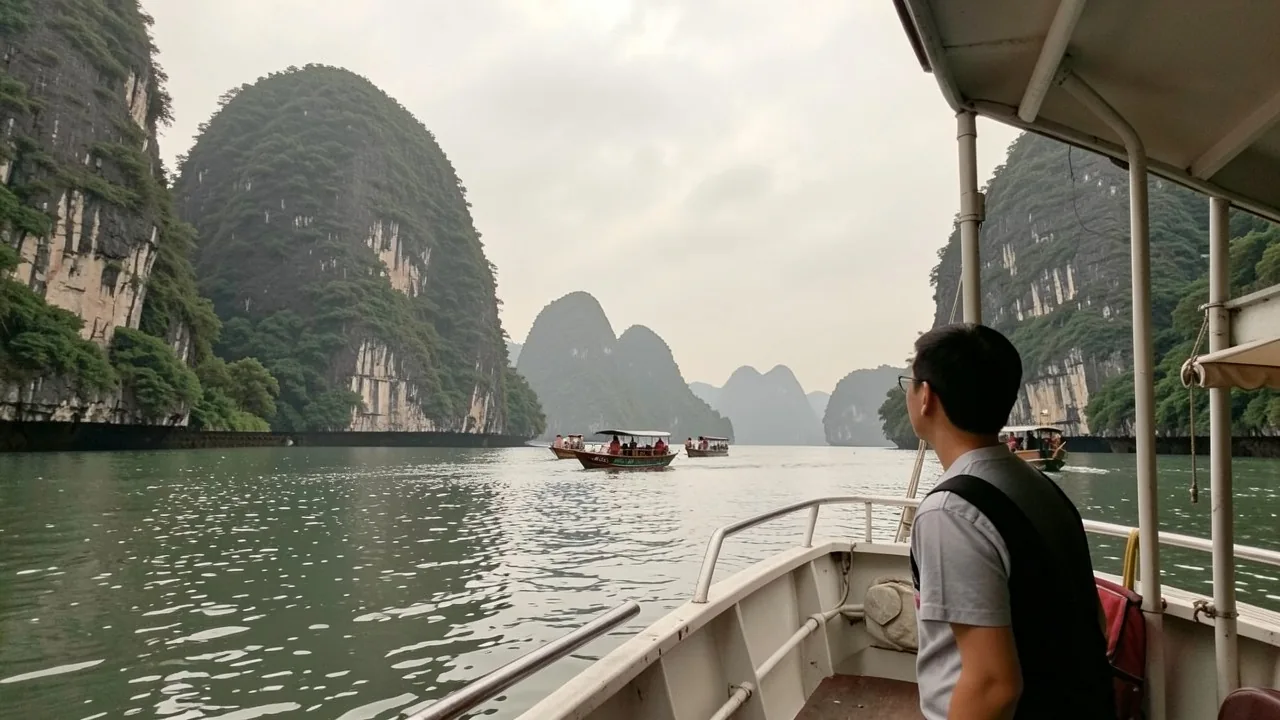
Visiting Vietnam in June: Weather, Crowds & Prices (2026)
Visiting Vietnam in June means three different weather stories. The north is hot and stormy, the centre is shifting out of its dry window, and the south is firmly wet. Crowds thin, prices drop, and a June trip becomes a numbers game: pick the region whose weather matches your tolerance for humidity.
This guide is the Indian-backpacker version of that call. Where the rain hits, where it doesn’t, how dorm beds and Hanoi flights move in June, and what to pack so a downpour doesn’t ruin your trip. For regional context, see our guide on Sea Backpacking Hub.
Subodh’s Pro Tip: Vietnam’s weather is a three-country problem disguised as one country. A June itinerary that mixes Hanoi with Saigon will give you two completely different trips in the same week. Pick the side whose weather you can handle, or split your time between north and south where the rain windows don’t overlap.
For a month-by-month picture of the full year, see the Vietnam month-by-month guide. For weather patterns at the city level, the Vietnam weather by month and region piece is the deeper reference.
Quick Answers
| What | Answer | Price (INR) |
|---|---|---|
| Is June a good time to visit Vietnam? | Mixed: south and central are wet, north is hot and stormy | , |
| What’s the weather like in Vietnam in June? | North 35°C and thunderstorms, central shifting wet, south daily heavy rain | , |
| Are there crowds in Vietnam in June? | Low to moderate, southern beaches nearly empty | , |
| Are prices cheaper in June? | Yes, 20-30% below peak for hostels and flights | , |
| Best region in June? | Northern Vietnam (Hanoi, Ha Giang, Sapa) for dry windows | , |
| Worst region in June? | Central coastal cities during typhoon precursors | , |
| Vietnam e-visa fee for Indians | ₹2,408 (~25 USD) | ₹2,413 (~$25.05) |
Safety Alert: Central Vietnam in late June through September is typhoon-prone. Coastal flooding in Hue and Da Nang has shut down beaches and trains in recent years. Check the Indian MEA travel advisory page and Vietnam’s own National Centre for Hydro-Meteorological Forecasting before you book anything non-refundable for that corridor.
Month-by-Month Breakdown: May to August
June sits between the May shoulder and the July full-monsoon peak. Here’s how the season runs.
| Month | Weather | Crowds | Cost Level | Verdict |
|---|---|---|---|---|
| May | Dry central, warming north, dry south | Moderate | Shoulder (₹₹) | Last good window for central Vietnam |
| June | North hot & stormy, central shifting, south wet | Low to moderate | Low-monsoon (₹) | Go north, avoid central coast |
| July | Full monsoon nationwide | Low | Lowest (₹) | Cheapest month, wettest skies |
| August | Peak monsoon, typhoon risk central | Lowest | Lowest (₹) | Stick to north or south interior |
For the month just before June, see visiting Vietnam in May. For the month after, the July guide picks up the same story once the monsoon is in full swing.
Weather Across Vietnam in June
Vietnam’s weather in June splits cleanly into three zones, and you can’t summarize them with one umbrella.
Northern Vietnam (Hanoi, Ha Giang, Sapa, Ninh Binh)
June in the north is hot, humid, and increasingly stormy. Hanoi sits at 32-35°C during the day with humidity above 80%, and afternoon thunderstorms roll in for one to two hours most days. The rain is sharp and brief, the streets drain fast, and life carries on. Sapa and Ha Giang are noticeably cooler (24-28°C) but the mountain roads get slippery after heavy rain.
This is the closest June gets to a “still-good” window for trekking. The Sapa rice terraces haven’t yet hit their green-mirror peak (that’s July-August), but you get the green-rice-and-water-fall phase with fewer tour buses. Ha Giang loop riders report June as one of the better riding months: dry mornings, dramatic skies, occasional afternoon storms you can wait out in a village café.
Central Vietnam (Hue, Da Nang, Hoi An, Nha Trang)
Central Vietnam’s dry season ends in May or early June, depending on the year. By mid-to-late June, you’re into the rainy transition: high humidity, cloud build-up, and the first real tropical downpours. Hue in particular sits at the tail end of its dry window and can flood early. Hoi An stays mostly walkable through June but the lantern-lit nights become harder to plan around wet evenings.
Nha Trang is the odd one out: it stays mostly dry through June and into early July, and only goes wet in October-November. If you want a beach leg in June, Nha Trang is your pick. For Nha Trang’s seasonal pattern in detail, the Nha Trang weather guide covers the full year.
Southern Vietnam (Ho Chi Minh City, Mekong Delta, Phu Quoc, Mui Ne)
The south is fully wet in June. Ho Chi Minh City sees daily afternoon downpours of one to three hours, sometimes accompanied by evening lightning that lasts until midnight. Daytime temperatures hold at 31-33°C with humidity around 85%. The Mekong Delta floods seasonally, which is part of its charm in a controlled way (floating markets still run, boats still move) but back-road travel gets complicated.
Mui Ne and Phu Quoc stay warm and dry-ish: 28-32°C with brief showers, and the beaches are emptier than any other month. For Mui Ne specifically, the Mui Ne weather guide walks through the year.
Safety Alert: The south’s June rains are mostly routine tropical storms, not the typhoon-grade events that hit central Vietnam later. Travellers report flooded pavements and slow traffic more than actual trip disruption. Still, monsoon-season travel in any of the three regions means you should check the Indian MEA travel advisory for India-specific guidance before you fly.
Crowds in June
June is the start of Vietnam’s low season for international tourism. European summer holidays don’t start until late June or July, school groups from Korea and China thin out, and the main domestic travel rush is the Reunification Day long weekend at the end of April, well behind you by June.
What that looks like on the ground:
- Hanoi Old Quarter: noticeably quieter than March-April, café owners report a 30-40% drop in foreign customers
- Ha Giang loop: one of the best months, fewer motorbikes on the road, hostels report higher vacancy mid-week
- Hoi An Ancient Town: still busy but the shoulder-season rush is gone
- HCMC backpacker district (Bui Vien): calmer, easier to find a seat anywhere
- Da Nang beaches: near-empty weekdays
If you’ve been to Vietnam in peak season and want to see the same places without the tour-group crowd, June is one of the best months to do it.
June Pros and Cons
Pros:
- Northern Vietnam (Hanoi, Ha Giang, Sapa) is still ridable, walkable, and photogenic before the full monsoon
- Nha Trang beaches are dry and uncrowded through June
- Dorm beds and flights drop 20-30% versus December-February peak
- Fewer tour groups in Hoi An and Hue, easier to find a guide on short notice
- Phu Quoc and Mui Ne stay warm with brief showers, not the washout central and north get later
- Local restaurants are quieter, easier to get a table at the good ones
Cons:
- Central Vietnam’s dry window closes, Hue in particular can flood
- HCMC afternoon rainstorms are real, plan around 3pm-6pm for any outdoor plans
- Ha Giang mountain roads get slippery after multi-day rain
- Mekong Delta back-road travel becomes harder, boat schedules shift
- Typhoon precursor weather can ground central-coast ferries and slow trains
- Some hiking routes in Sapa close for short windows after heavy rain
The ground-level detail behind those trade-offs: a Hanoi dorm bed that runs ₹1,285-₹1,836 (~350,000-500,000 VND or ~$13.34-$19.06) in December drops to ₹661-₹1,322 (~180,000-360,000 VND or ~$6.86-$13.72) in June (the lower end is genuinely the low end, expect a 6-8 bed dorm, not a 4-bed). A Mumbai-Delhi-Hanoi round trip that costs ₹28,000-₹35,000 (~$290.64-$363.30) in peak goes for ₹15,000-₹22,000 (~$155.70-$228.36) in June if you book 3-4 weeks ahead. Trains between Hanoi and Saigon follow the same pattern, especially the soft sleeper berths.
Subodh’s Pro Tip: The biggest mistake Indian backpackers make with June is treating Vietnam as one country weather-wise. A Hanoi-Hoi An-Saigon itinerary in June means packing for three different microclimates. Either commit to one region or be honest about swapping cities when the rain moves.
What to Pack Specifically for June
Standard Vietnam packing list plus these June-specific items:
- Lightweight rain jacket or poncho: not the tourist shop plastic one, a proper breathable rain shell. You will get rained on.
- Dry bag for electronics: 10L size, fits a phone, wallet, and a small camera. Day-bag sized. The Vietnamese storms leak.
- Quick-dry shirts and trousers: cotton stays wet for hours, polyester-nylon blends dry in 30 minutes on a hostel line
- Sandals that grip wet tile: Hoi An and HCMC pavements turn into skating rinks in the rain
- Mosquito repellent with DEET: dengue and chikungunya tick up in June, especially in the Mekong and central coast
- Compact umbrella: for sun and rain, the Vietnamese use them as parasols in June heat
- Waterproof shoe cover or spare socks: Ha Giang riders report soaked feet in any multi-day storm
- One warm layer for Sapa and Ha Giang: nights can drop to 18-20°C even in June
Skip: heavy hiking boots unless you’re doing serious Sapa treks, and any expectation that your laundry will dry overnight without a fan.
Season Costs Comparison
Vietnam in June sits firmly in the low-monsoon pricing tier. Here’s how the numbers move.
| Item | Peak Season (Dec-Feb) | Shoulder (Mar-May, Oct-Nov) | Low Monsoon (Jun-Sep) |
|---|---|---|---|
| Flight (Mumbai/Bangalore to Hanoi) | ₹28,000-₹35,000 (~$290.64-$363.30) | ₹20,000-₹28,000 (~$207.60-$290.64) | ₹15,000-₹22,000 (~$155.70-$228.36) |
| Dorm bed (Hanoi Old Quarter) | ₹1,469-₹2,203 (~400,000-600,000 VND or ~$15.25-$22.87) | ₹1,028-₹1,652 (~280,000-450,000 VND or ~$10.67-$17.15) | ₹661-₹1,322 (~180,000-360,000 VND or ~$6.86-$13.72) |
| Dorm bed (HCMC backpacker district) | ₹1,285-₹2,020 (~350,000-550,000 VND or ~$13.34-$20.96) | ₹918-₹1,469 (~250,000-400,000 VND or ~$9.53-$15.25) | ₹551-₹1,212 (~150,000-330,000 VND or ~$5.72-$12.58) |
| Private room (Hoi An) | ₹2,938-₹5,508 (~800,000-1,500,000 VND or ~$30.49-$57.17) | ₹1,836-₹3,305 (~500,000-900,000 VND or ~$19.06-$34.30) | ₹1,285-₹2,570 (~350,000-700,000 VND or ~$13.34-$26.68) |
| Sleeper train (Hanoi to Da Nang) | ₹3,305-₹5,141 (~900,000-1,400,000 VND or ~$34.30-$53.36) | ₹2,570-₹4,039 (~700,000-1,100,000 VND or ~$26.68-$41.93) | ₹1,836-₹3,305 (~500,000-900,000 VND or ~$19.06-$34.30) |
| Bún chả (Hanoi street stall) | ₹129-₹165 (~35,000-45,000 VND or ~$1.33-$1.72) | ₹110-₹147 (~30,000-40,000 VND or ~$1.14-$1.52) | ₹92-₹147 (~25,000-40,000 VND or ~$0.95-$1.52) |
| Cà phê sữa đá (iced coffee) | ₹73-₹110 (~20,000-30,000 VND or ~$0.76-$1.14) | 15,000-25,000 VND | 15,000-25,000 VND |
At current rates, 1 INR ≈ 270 VND, so a 200,000 VND dorm bed works out to about ₹740 (~$7.68).
The flight gap is the biggest single saving. A December Hanoi flight for ₹30,000 (~$311.40) becomes a June flight for ₹17,000 (~$176.46), a ₹13,000 (~$134.94) swing on one ticket. Multiply by a two-week trip with internal flights and you’re easily saving ₹20,000-₹25,000 (~$207.60-$259.50) versus peak season.
Visa and Entry for Indian Passport Holders
Vietnam runs an e-visa system for Indians. Apply online at the official portal at least 3 days before travel, fee is ₹2,408 (~25 USD), valid for 90 days with multiple entries. Processing is normally 3 working days but apply a week ahead to be safe.
There’s no visa-on-arrival for Indian passport holders, despite what some aggregator sites claim. If you land without an e-visa confirmation, you don’t fly back the same day, you get turned around at immigration. The full breakdown lives in the Vietnam e-visa guide for Indians.
Getting Around Vietnam in June
Vietnam’s transport network holds up well in June, with two specific caveats.
Trains: The Reunification Express (Hanoi to Saigon) runs year-round but slows down during heavy central-coast storms. Hanoi to Da Nang is usually fine, Hanoi to Hue can hit delays in late June if storms build. Book Hanoi to Da Nang and Hue to Hanoi on 12go at least 48 hours ahead.
Buses: Sleeper buses between major cities run normally, mountain routes (Ha Giang loop, Sapa) shift schedules after heavy rain. Local buses in the Mekong Delta can be cancelled on short notice during multi-day flooding.
Flights: Domestic flights (Hanoi-Da Nang, Hanoi-Saigon, Da Nang-Saigon) are the cleanest answer during monsoon. Cheap, fast, and weather-resilient. Book on 12go.
Motorbikes: Most travellers still rent, but June means real rain gear and a dry bag. Ha Giang loop in June is doable but check the day’s forecast the night before. Some rentals refuse to rent in heavy-rain months, so reserve ahead.
Where to Eat (and Where to Eat Indian)
Vietnamese food is one of the easiest cuisines in Southeast Asia for vegetarians to navigate. Pho, banh xeo, and bun cha all come with vegetable versions, and Buddhist-leaning restaurants serve fully vegan menus.
For a sit-down local meal with strong regional flavours, NGON DA NANG in Da Nang does standout plates like Bun Cha Ca (turmeric fish noodle soup) and Banh Xeo (sizzling crepe) in a rustic setting that earns the rating it has. In Hanoi’s Old Quarter, Hello Hanoi Restaurant serves authentic northern dishes in a casual setup that Indian vegetarians can navigate with point-and-grin. For a Mekong Delta trip, A Taste Of Saigon - Old Market in Ho Chi Minh City’s market district gives you traditional Vietnamese dishes and vegetarian options in the same space.
When you need the dal-chawal fix or you’re strictly vegetarian, three spots earn their 4.9 ratings by Indian-traveller consensus: MẸT Vietnamese Restaurant & Vegetarian Met 2, De Tham Restaurant in HCMC’s backpacker district, and A Taste Of Saigon - Old Market. All three run dedicated vegetarian menus, all three have English-speaking staff who understand the difference between Jain (no onion-garlic) and standard vegetarian.
For broader Vietnam trip planning, the best month to visit Vietnam guide walks through the year, and the monsoon travel guide covers Southeast Asia’s June-October window across countries.
Getting Connected
A working data line is essential in monsoon-season Vietnam for live weather and flood alerts. Local SIMs (Viettel, Mobifone, Vinaphone) run ₹184-₹367 (~50,000-100,000 VND or ~$1.91-$3.81) for 7-day tourist packs with 3-5GB/day, available at the airport kiosks on arrival. For an eSIM option that activates before you fly, Get Nomad eSIM is the cleanest setup for Indian travellers, no passport photocopy at the kiosk, no language barrier.
Events Worth Knowing About in June
Vietnam doesn’t run a major festival calendar in June the way it does for Tet (January-February) or Reunification Day (April 30). What June does have:
- International Travel Expo Ho Chi Minh City (ITE HCMC): usually late June, brings tourism-industry crowds to district 1. Hotels near the venue spike 10-15% for the week.
- Buddha’s Birthday (Vu Lan): lunar calendar, falls in August most years, but check the 2026 calendar if you’re booking around the start of monsoon
- Local district-level festivals: random village celebrations, not bookable in advance, just keep an eye out
For the bigger picture on Vietnam’s festival calendar, the Cambodian New Year guide and Boun Ok Phansa in Laos cover regional events worth planning around.
Day Trip and Side-Trip Considerations in June
June’s weather changes which side trips are worth the day.
In the north: Tam Coc and Ninh Binh are at their photogenic best in early June, the rice paddies are flooded and reflective, and the boat rides through the limestone karsts stay dry most mornings. Ha Giang loop is one of the best riding months of the year. Sapa is greener but trails get slippery. Worth doing: Tam Coc, Ha Giang, Cat Ba/Halong day boats. Skip: overnight Sapa treks if the forecast shows continuous rain.
In the centre: Hoi An’s lantern-lit nights become hit-or-miss, but daytime walking is fine. Hue’s Citadel is mostly indoor and works in any weather. Da Nang’s Marble Mountains are doable but the climb is slippery after rain. Worth doing: Hue citadel, Hoi An daytime, My Son Sanctuary if the road is open. Skip: beach days in Da Nang, overnight motorbike trips along Hai Van pass.
In the south: Cu Chi Tunnels stay dry and work fine. Mekong Delta day trips still run but expect slower boats. Phu Quoc and Mui Ne beaches are warm with brief showers. Worth doing: Cu Chi, Mekong delta market tours, Phu Quoc if you’re already there. Skip: long Mekong canal boat rides during heavy flood weeks.
Is June Worth It? The Go/No-Go
Go if: You’re flexible on region, you’re budgeting tight, you want the north (Hanoi, Ha Giang, Sapa) at its pre-monsoon best, or you’re specifically heading to Nha Trang or Phu Quoc for beach time without the peak-season crowds.
No-go if: You have a fixed central-coast itinerary (Hue, Hoi An, Da Nang) that can’t be moved indoors on rainy days, you’re set on Mekong Delta back-roads travel, or you need guaranteed dry beach weather.
Strong go for: Hanoi to Ha Giang loop riders, Nha Trang beach week, Sapa day hikes, Hoi An cultural sightseeing on a flexible schedule.
FAQ
Is it worth going to Vietnam in June?
Yes, if you’re heading north or to Nha Trang. Hanoi, Ha Giang, and Sapa are at their pre-full-monsoon best, and Nha Trang stays dry while the rest of the centre shifts wet. Skip June if your trip is fixed to Hoi An or Hue beach days.
What is the weather like in Vietnam in June?
Three different things in three regions. North: 32-35°C, humid, one-to-two-hour afternoon thunderstorms most days. Central: shifting from dry to wet, humidity above 80%, first serious tropical downpours by mid-month. South: 31-33°C, daily heavy rain, 85% humidity, the wet season in full swing.
Is June typhoon season in Vietnam?
Not quite, typhoon season proper is August-October for the central coast. June sees typhoon precursor weather in the South China Sea, which means storms, swell, and occasional flight cancellations but not the direct-hit typhoons of later months. Still worth checking the Indian MEA advisory before central-coast travel.
Can I still go to Ha Giang in June?
Yes, June is one of the better Ha Giang months. Dry mornings, dramatic skies, fewer riders, and the terraces are at green-rice stage. Watch the multi-day forecast before you ride, mountain roads get slippery after continuous rain.
Are flights cheaper to Vietnam in June?
Yes. Round-trip flights from Mumbai or Bangalore to Hanoi run ₹15,000-₹22,000 (~$155.70-$228.36) in June, versus ₹28,000-₹35,000 (~$290.64-$363.30) in December-February. Internal Vietnam flights (Hanoi-Da Nang, Da Nang-Saigon) also drop 15-25%. Book 3-4 weeks ahead for the best fare.
Is Hoi An worth visiting in June?
Yes for daytime and indoor cultural sights, no for guaranteed lantern-lit river evenings. The Ancient Town is less crowded than peak, restaurants are quieter, tailoring shops run on schedule. The risk is wet evenings that wash out the photo-op nights, and the central-coast typhoon precursor weather that can ground flights or close beaches.
How much does Vietnam cost in June for an Indian backpacker?
A 10-day Vietnam trip in June, including flights, dorms, food, and internal transport, runs ₹45,000-₹60,000 (~$467.10-$622.80) from India. Peak season the same trip runs ₹65,000-₹85,000 (~$674.70-$882.30). The biggest saving is the international flight, dorms and food drop another 20-25% on top.
Subodh’s Take
June is the underrated shoulder of Vietnam travel. The classic mistake is reading “rainy season” and skipping the country, but Vietnam’s rainy season is regional, not national, and a Hanoi-Ha Giang itinerary in June is one of the best trips of the year. The north is hot and stormy but those storms are short, the terraces are dramatic, and the Ha Giang loop has never been emptier. Pick your region honestly, pack a proper rain shell, and book refundable accommodation for the first night in case your flight lands into a tropical storm. June rewards flexibility, and penalises the rigid central-coast itinerary.
