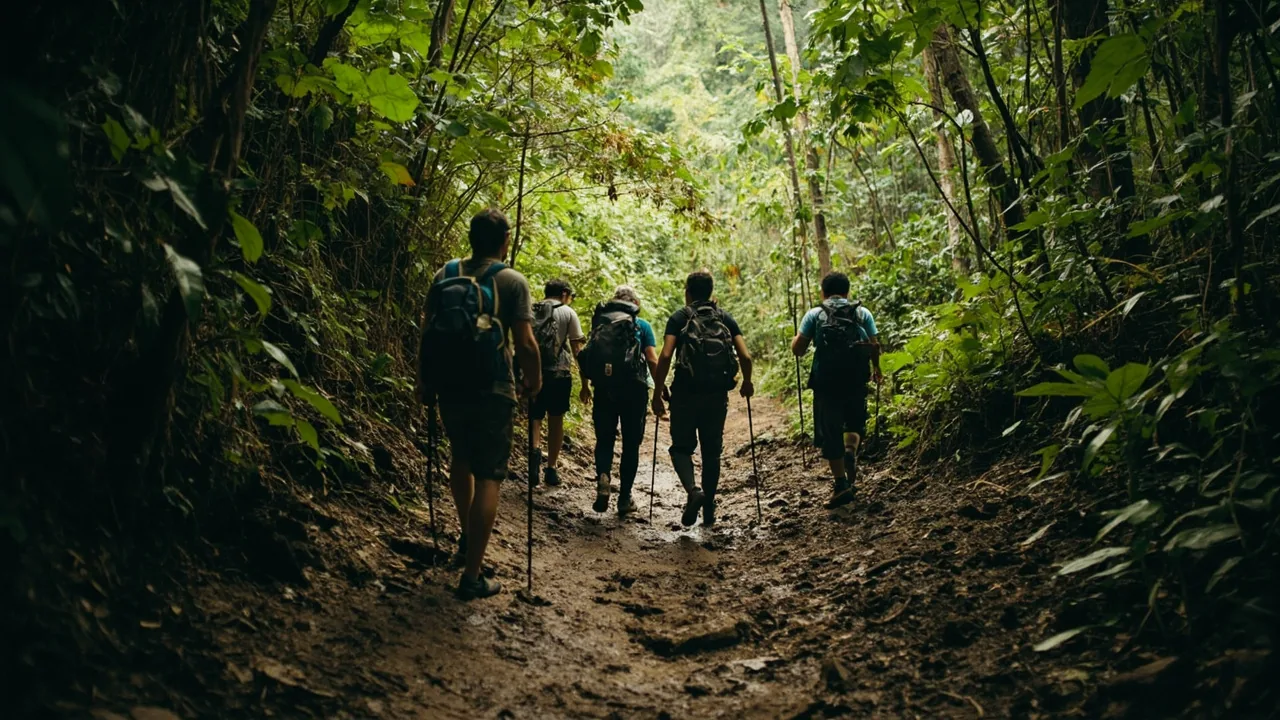
Southeast Asia Jungle Trekking Route: 3-Week Itinerary for Backpackers
📍 Distance: ~1,450 km overland, Chiang Mai to Sapa ⏱️ Fastest option: 4 days of transport + 17 days on the trail 💰 Total budget: ₹65,000-₹90,000 (~$674.70-$934.20) ✅ Best for solo backpackers: Pai → Luang Prabang → Sapa loop, joining group departures on arrival For related planning, see our guides on Sea Backpacking Hub and Southeast Asia 1 Month Backpacking Route the Best Itinerary for All Countries.
This 3-week Southeast Asia jungle trekking route stitches together the three best multi-day trail networks on the mainland: the Chiang Mai/Pai hill-tribe circuits in northern Thailand, the Nong Khiaew and Nam Et-Phou Louey treks in northern Laos, and the Sapa and Ha Giang loop routes in northern Vietnam. You move between them overland, sleep in villages along the way, and join group trek departures as they form in each town rather than booking ahead. Three weeks is enough to do all three properly without rushing. You may also find Best Places to Visit During Monsoon Season in Southeast Asia Backpacker Edition useful for this trip.
This guide is the practical logistics layer: route order, transport between trailheads, what each trek costs, what the difficulty is, where to find a jungle trekking group on arrival, and which months to avoid. It assumes you’re an Indian passport holder landing in Bangkok with a working budget of around ₹70,000 (~$726.60) for the whole route, including the international flights back home from Hanoi. See also: Festival Based Itineraries How to Plan Trips Around Southeast Asia S Biggest Events.
Quick Answers
| What | Answer | Price (INR) |
|---|---|---|
| How many days total? | 21 days (3 weeks) | - |
| Cheapest jungle trekking package? | Chiang Mai 2-day hill-tribe trek (mixed group, all-in) | ₹7,147 (~2,500 THB or ~$74.19) |
| Best multi-day trek in SEA? | Nam Et-Phou Phou Louey (NEPL), 3 days, Laos | ₹19,328 (~4,500,000 LAK or ~$200.62) |
| Most challenging trek? | Ha Giang loop northern Vietnam (motorbike + hiking) | - |
| Total route budget (21 days)? | Budget backpacker (no flights) | ₹65,000-₹90,000 (~$674.70-$934.20) |
| Best months for jungle trekking? | Nov to Feb (dry season, cool) | - |
| Months to avoid? | Jun to Oct (monsoon, leeches, trail closures) | - |
The Route at a Glance
The route runs north from Chiang Mai through the Thai-Laos border at Chiang Khong/Huay Xai, down the Mekong to Luang Prabang, then overland through northern Laos to Vietnam via the Tay Trang border, finishing in Sapa in the northern Vietnamese highlands. You can reverse the whole thing (start in Hanoi, end in Chiang Mai) if flights work out cheaper. For related planning, see our guide on Solo Traveler Itineraries for Backpackers How to Use Social Hostels Group Activities to Never Eat Alone.
Day-by-day skeleton:
- Days 1-2: Bangkok to Chiang Mai (overnight train or budget flight)
- Days 3-5: Chiang Mai 2-day hill-tribe jungle trek
- Days 6-7: Chiang Mai to Pai (minivan, 4 hrs)
- Day 8: Pai rest day or bamboo rafting
- Days 9-11: Slow boat Chiang Khong to Luang Prabang (2 days on the Mekong)
- Days 12-14: Luang Prabang to Nong Khiaew, 3-day jungle trek in Nam Et-Phou Louey NPA
- Days 15-16: Nong Khiaew to Dien Bien Phu, overnight bus
- Days 17-19: Dien Bien Phu to Sapa via Tay Trang border, rest day, second Sapa trek day
- Days 20-21: Sapa to Hanoi overnight bus, fly home
You swap one section of jungle for a Mekong boat stretch, but every other piece is on a foot trail. Real ground covered: about 100-130 km of actual hiking across 21 days, plus boat and bus time.
Week 1: Thailand (Chiang Mai + Pai)
Bangkok to Chiang Mai
You’ve got two options from Bangkok. The overnight train (2nd class a/c sleeper) runs daily from Hua Lamphong/Krung Thep Aphiwat, takes 13-14 hours, and costs around ₹3,145 (~1,100 THB or ~$32.64) for a lower berth. Budget flights on AirAsia, Nok Air, and Thai Vietjet run BKK/KDMX to CNX from ₹3,431-₹5,718 (~1,200-2,000 THB or ~$35.61-$59.35) one-way and take 1 hour 10 minutes.
The train is the better experience. You board around 7pm, sleep through the Bangkok-to-Chiang Mai corridor, and arrive at 6:40am with a free day to settle in before the trek. Travellers report the second-class a/c sleeper is comfortable for backpacker budgets, and the dining car meal at 8pm is one of those tiny travel moments worth having.
Compare Bangkok to Chiang Mai transport on 12go
Chiang Mai jungle treks
Chiang Mai’s old city has around 50 registered trekking operators and twice as many touts. The standard package is a 2-day, 1-night hill-tribe jungle trek that includes a bamboo rafting section and an elephant sanctuary half-day, though the elephant-sanctioned eco-stays are a separate (and pricier) thing now. You’ll see them pushed hard.
What you want is the jungle trail trek itself: 12-22 km of forested ridgeline walking with an overnight in a Karen or Hmong village homestay, plus a half-day of bamboo rafting downstream on Day 2. Difficulty is moderate: real uphills, real downhills, but no technical sections. Most operators cap the group at 8-12 trekkers.
Cost is ₹7,147-₹10,006 (~2,500-3,500 THB or ~$74.19-$103.86) for the standard 2D1N package, with ₹10,006 (~3,500 THB or ~$103.86) the more common price in 2026. This includes homestay, three meals, guide, rafting, and transport out of the city. Book the day before you want to start, in person, at any of the agencies along Moon Muang Road. They’ll bundle a small group of trekkers from across agencies if needed.
Day 3 is recovery: pools, a massage, real food, and an afternoon flight to your next stop.
Pai
Pai is a 4-hour minivan from Chiang Mai through 762 curves. The town itself isn’t a jungle trek destination, but it sits inside a valley with a half-day bamboo-rafting option (₹3,431 (~1,200 THB or ~$35.61)) and several single-day hill walks you can do without a guide. Treat Pai as a rest day or a half-day activity before you push east to the Mekong.
Stay an extra night if you’re tired. Don’t skip the hot springs.
Week 2: Laos (Mekong + Nam Et-Phou Louey)
Chiang Khong to Luang Prabang (slow boat)
This is the overland crossing. Take a tuk-tuk or songthaew from Pai or Chiang Mai to Chiang Khong (about 5-6 hours from Pai, 7 hours from Chiang Mai), get your Laos visa on arrival at the Huay Xai border, then board the slow boat to Pak Beng and on to Luang Prabang.
The slow boat is two days on the Mekong. Day 1 is Chiang Khong to Pak Beng (8 hours, no village in between), overnight in a basic guesthouse in Pak Beng. Day 2 is Pak Beng to Luang Prabang (6-7 hours), arriving mid-afternoon. Tickets are sold at the boat pier in Chiang Khong, around ₹1,160 (~270,000 LAK or ~$12.04) per person for the standard tourist slow boat, plus ₹215-₹344 (~50,000-80,000 LAK or ~$2.23-$3.57) for the Pak Beng guesthouse. Pack food, water, a book, headphones, and warm clothes for the a/c cabin; it’s colder than you’d expect.
If you’re time-pressed, speed boats do the same route in 6 hours but with a documented accident record (no helmets, no life jackets, multiple boats run aground every monsoon). Skip the speed boat unless you need the day back.
Compare Chiang Khong to Luang Prabang boats on 12go
Visa on arrival (Indian passport)
Laos issues visa-on-arrival to Indian passport holders at Huay Xai. Bring:
- 2 passport photos
- ₹3,372-₹3,854 (~35-40 USD)
- Proof of hotel/hostel booking for first night in Laos
- Passport valid 6+ months
The process takes 20-40 minutes depending on queue, and you pay in USD. Some border staff accept Thai baht at a worse rate; bring USD.
Luang Prabang to Nong Khiaew
Nong Khiaew is 3 hours north of Luang Prabang by minivan, a small village flanked by sheer karst cliffs and a stretch of the Nam Ou river. This is your base for the Nam Et-Phou Louey (NEPL) jungle trek.
NEPL is the best multi-day jungle trail trek in Southeast Asia. The protected area covers roughly 6,000 sq km of primary forest in northern Laos and has a properly-managed community-based ecotourism program run by the provincial tourism authority. Treks are 2-4 days, with 3 days / 2 nights being the most common. You hike through dense forest, camp along the Nam Nga river, and have a decent chance of seeing wildlife (gibbons, black bears, possibly tigers with a bit of luck). Difficulty is high: this is real jungle, real elevation, and slippery in any season. You’ll need a guide, mandatory.
Cost: ₹19,328 (~4,500,000 LAK or ~$200.62) per person for the standard 3D2N package, including guide, camp gear, food, river transport, and entry permits. Book directly through the NEPL Visitor Centre in Nong Khiaew, ideally 2-3 days ahead. Minimum group size is usually 2; if you’re solo, the centre will join you with other solo trekkers forming a small jungle trekking group.
Day 14 is buffer and recovery in Nong Khiaew; the trek leaves and returns to the same village so you don’t have to schlep your big bag.
Week 3: Vietnam (Tay Trang → Sapa)
Nong Khiaew to Dien Bien Phu
Nong Khiaew has a direct sleeper bus to Dien Bien Phu (DBP) at 7pm, arriving around 4-5am. Tickets are ₹945-₹1,203 (~220,000-280,000 LAK or ~$9.81-$12.48), sold at any agent in town. Dien Bien Phu is the biggest town in northwestern Vietnam and a useful overnight stop: you get your Vietnam visa (e-visa applied for online before you leave home, ₹2,408 (~25 USD) per person for 30-day single entry) and reset before crossing to Sapa.
If you don’t already have a Vietnam e-visa, apply online at least 3 working days before border crossing. E-visas work at the Tay Trang border.
Tay Trang border crossing (Laos to Vietnam)
Tay Trang is the western border crossing between Laos (Pang Hok) and Vietnam (Tay Trang). It’s smaller and quieter than the Nam Phao/Cau Treo route, with far fewer touts. Buses from Dien Bien Phu drop you 5 km from the Vietnamese border post; you take a motorbike taxi to the checkpoint, walk across, then another motorbike taxi on the Laos side to the nearest road and flag a bus to Muang Khua or Udomxai.
If you’re heading directly from the border to Sapa, take a direct minivan from Dien Bien Phu to Sapa (7-8 hours, ₹1,102 (~300,000 VND or ~$11.43)) and skip the two-step border crossing on public transport. Easier, faster, and the same Tay Trang post handles all the paperwork in one stop.
Sapa
Sapa is the headline jungle trekking destination in northern Vietnam. The town sits at 1,600m elevation, surrounded by terraced rice fields and forested ridges, and is the base for treks into the Hoang Lien Son mountains (including Mt. Fansipan, the highest peak in Indochina at 3,143m, and reachable by a tough one-day summit hike).
Sapa has two main trek types:
-
Day treks to villages: 1-day walks to Cat Cat, Ta Van, Lao Chai, or Ta Phin villages through rice terraces and forest. These are easy to moderate, well-marked, and don’t need a guide (you can hire one at the trailhead for ₹918-₹1,469 (~250,000-400,000 VND or ~$9.53-$15.25) per day). Standard price for an organised 1-day group trek is ₹1,836-₹2,570 (~500,000-700,000 VND or ~$19.06-$26.68) per person, including lunch and a local H’mong or Dzay guide.
-
Multi-day homestay treks: 2-day, 1-night or 3-day, 2-night village homestay treks with a guide, food, and overnight in a Red Dao or H’mong family home. Cost is ₹4,406-₹6,610 (~1,200,000-1,800,000 VND or ~$45.74-$68.61) per person for 2D1N, depending on group size. These are the ones the agencies along Sapa’s main street will push.
The 3D2N Mt. Fansipan summit trek is a separate beast, harder, more expensive (₹9,180-₹12,852 (~2,500,000-3,500,000 VND or ~$95.29-$133.40) with guide and porter), and best done in October to December when the views clear. If your timing is right, do it.
Tours from local operators (the women in the colourful headscarves around the church square) often undercut the agencies on price and route flexibility, but make sure they’re licensed before handing over cash.
Compare Hanoi to Sapa buses on 12go
Sapa to Hanoi
Final leg. Overnight sleeper bus from Sapa to Hanoi runs 9-10 hours, ₹1,285-₹1,836 (~350,000-500,000 VND or ~$13.34-$19.06), departing around 8-9pm. You arrive in Hanoi’s My Dinh or Giap Bat station at 5-6am, transfer to the airport by Grab or airport bus, and fly home.
Book the sleeper bus 1 day ahead through your hostel.
When NOT to Take This Route
Monsoon (June to October): The Nam Et-Phou Louey trail in Laos closes for part of this period (the park reopens in stages; check the official NEPL site for current status before committing). Trails in northern Vietnam get leech-heavy and the Sapa rice terraces are partially flooded (great for photography, terrible for trekking). Slow boats run in low water but the journey takes longer.
Chinese/Lunar New Year (late Jan/early Feb): Vietnamese domestic travel spikes, Sapa and Ha Giang accommodation triples in price, buses sell out. Lao and Thai sections are fine.
Typhoon season along the coast (Aug-Oct): Doesn’t affect this inland route directly, but northern Vietnam gets heavy rain that can close mountain passes.
The clean window for this exact route is November to early March. If your timing is off, push the route forward by a month or two; jungle trekking group formation works best in the dry, cool season.
Getting Connected
Coverage along the route is decent in towns (AIS in Thailand, Unitel in Laos, Viettel in Vietnam) but disappears fast once you’re on a jungle trail or a Mekong boat stretch. Download offline maps (Maps.me + Gaia GPS for the trails) before you leave each town, and treat any signal as a bonus. The hill-tribe villages you’ll stay in usually have WiFi but it’s patchy.
For SIM cards, the cheapest move is a local tourist SIM at each border. For cross-border convenience without the SIM-swap dance, an eSIM loaded up before you fly out works. Get Nomad eSIM covers Thailand, Laos, and Vietnam on a single data package.
Indian Passport Specifics
- Thai visa: Free visa-on-arrival stamp at BKK airport for Indian passport holders (60 days, extendable). No fee as of late 2024 and still in effect.
- Laos visa: ₹3,372-₹3,854 (~35-40 USD) cash, 2 photos, 30-day stamp at Huay Xai. Bring small, clean bills.
- Vietnam visa: E-visa applied online before departure, ₹2,408 (~25 USD) for 30 days single entry. Works at Tay Trang.
- Carry 4-5 photocopies of your passport main page and the visa pages, separately from your passport. This is the single most useful insurance against a lost-document scenario on the route.
- Indian embassy in Vientiane: +856 21 413 391 (in case of emergency; Sapa is closer to Hanoi if you need consular help).
Daily Cost Breakdown
At current rates, 1 INR = ~7.43 THB, 1 INR = ~233 LAK, 1 INR = ~270 VND. Your day-to-day spend per country:
| Category | Thailand (per day) | Laos (per day) | Vietnam (per day) |
|---|---|---|---|
| Dorm bed | ₹1,001-₹1,715 (~350-600 THB or ~$10.39-$17.81) | ₹344-₹644 (~80,000-150,000 LAK or ~$3.57-$6.69) | ₹551-₹1,102 (~150,000-300,000 VND or ~$5.72-$11.43) |
| Street meal | ₹172-₹343 (~60-120 THB or ~$1.78-$3.56) | ₹107-₹215 (~25,000-50,000 LAK or ~$1.11-$2.23) | ₹129-₹257 (~35,000-70,000 VND or ~$1.33-$2.67) |
| Local beer | ₹229-₹343 (~80-120 THB or ~$2.37-$3.56) | ₹64-₹107 (~15,000-25,000 LAK or ~$0.67-$1.11) | ₹73-₹147 (~20,000-40,000 VND or ~$0.76-$1.52) |
| Sim (1 week) | ₹855 (~299 THB or ~$8.87) | ₹215 (~50,000 LAK or ~$2.23) | ₹367 (~100,000 VND or ~$3.81) |
| Trek day (group) | ₹7,147-₹10,006 (~2,500-3,500 THB or ~$74.19-$103.86) | ₹19,328 (~4,500,000 LAK or ~$200.62) | ₹1,836-₹5,508 (~500,000-1,500,000 VND or ~$19.06-$57.17) |
Budget backpacking total across 21 days, excluding international flights: ~₹65,000-₹90,000 (~$674.70-$934.20), depending on how many nights you upgrade to a private room and how many extras you tack on.
FAQ
Can I do this route solo, or do I need a jungle trekking group?
Solo works. The Chiang Mai and Sapa group treks assemble on arrival; you won’t be hiking alone. NEPL in Laos has a minimum group size of 2, but solo travellers get merged with others waiting at the visitor centre. Joining an existing jungle trekking group is the cheapest way to do this route because single-supplement costs vanish.
What difficulty level should I expect on the actual jungle trails?
Easy to moderate on the Chiang Mai and Sapa village routes (4-6 hours walking, some steep sections, no technical ground). Moderate to hard on NEPL (slippery trails, river crossings, longer days, real elevation). Hard on a Fansipan summit push. If you’ve not trekked before, do Chiang Mai first as a warm-up.
Are Indian-vegetarian food options available on the treks?
On village homestay treks in Sapa and Chiang Mai, yes: the operators know Indian travellers and will cook vegetarian meals on request, sometimes separately. NEPL is more limited; bring your own snacks (nuts, protein bars, instant noodles) and tell the guide in advance. Street food is the easiest veg source in towns.
Is the slow boat from Chiang Khong to Luang Prabang safe for solo female travellers?
It’s the standard route and tens of thousands of solo travellers, including women, do it every year. The Pak Beng overnight is the only slightly uncomfortable piece (basic guesthouses, shared rooms); book a private room (₹344-₹515 (~80,000-120,000 LAK or ~$3.57-$5.35)) if you want quiet.
How much cash should I carry for the Laos and Vietnam sections?
Carry ₹19,268-₹28,902 (~200-300 USD) in clean, unfolded bills for visa fees and bigger purchases. Withdraw local currency (LAK, VND) from ATMs in Luang Prabang and Hanoi; don’t count on ATMs in Nong Khiaew or Dien Bien Phu.
What happens if I lose my passport on the route?
File a police report at the nearest station, contact the nearest Indian embassy or consulate (Bangkok, Vientiane, or Hanoi, depending on where you are), and apply for an emergency travel document. This is why you carry photocopies separately, and why travel insurance matters.
Subodh’s Take
This route works because each country’s jungle trekking scene operates on its own logic: in Thailand and Vietnam, you join a group departure the day before; in Laos, you go through a single visitor centre that controls access to the actual protected area. Trying to plan all three treks from home in advance is the most common mistake. Book the international flights, get the Vietnam e-visa, then turn up in each town and let the local scene sort the trail logistics. That flexibility is what makes 3 weeks on this route relaxing, rather than a checklist chase.
