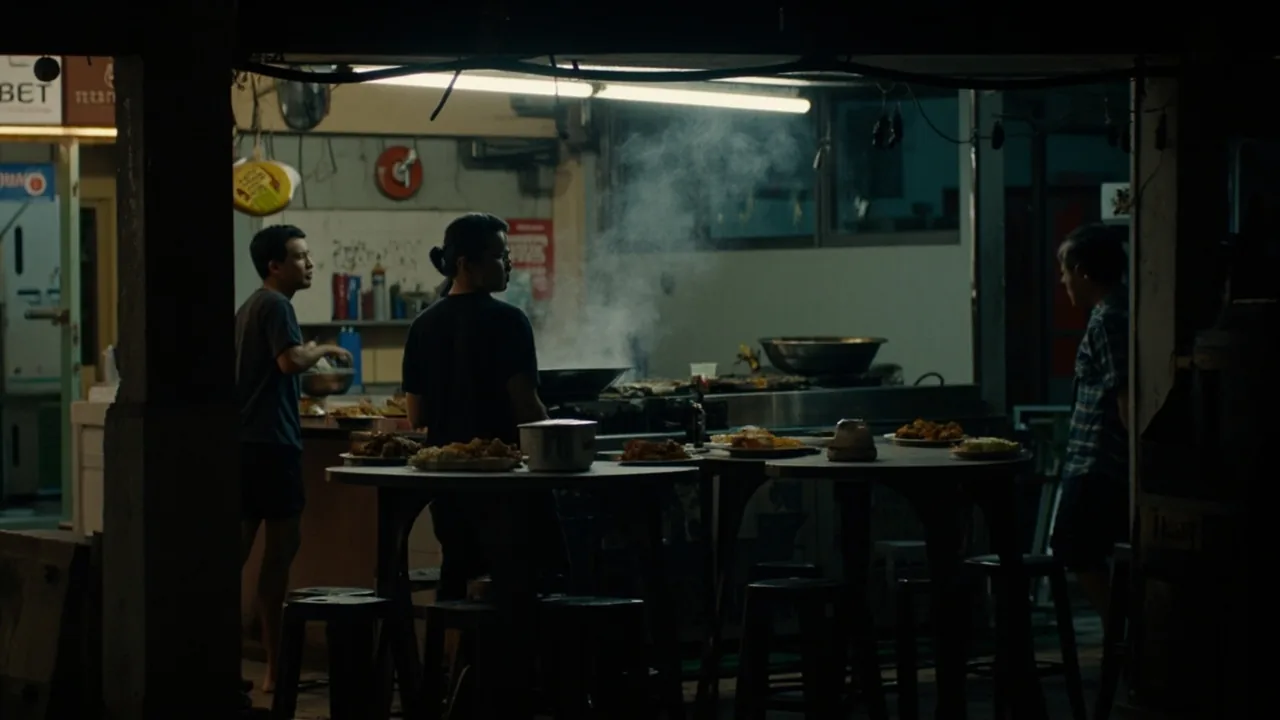
Is Malaysian Street Food Safe? A Solo Female Traveler’s Honest Guide (+ What to Do If You Get Sick)
Is Malaysian street food safe for tourists? Yes, mostly. This guide covers clean stall red flags, solo female eating etiquette, clinic and pharmacy basics, and the real cause of traveller’s diarrhea in Malaysia — which is usually tap water, not food. For planning, see Sea Backpacking Hub.
I write this from the perspective of someone who has eaten at least one dodgy-looking hawker stall per Malaysian city, paid for it once, and never since. Below is the same checklist I’d hand to a friend flying into KLIA tonight.
Quick Answers
| What | Answer | Price (INR) |
|---|---|---|
| Is Malaysian street food safe? | Yes, from busy stalls with high turnover and visible hygiene | Free to assess |
| Can you drink tap water in Malaysia? | No, stick to bottled or filtered water even for brushing teeth | ₹47 (~2 MYR or ~$0.49) per 1.5L bottle |
| Is ice in drinks safe? | Yes if from a reputable stall with a sealed/cylindrical ice tube, never cracked cloudy cubes | Free |
| Cost of a clinic visit if you get food poisoning? | Private clinics charge ₹1,178-₹3,534 (~50-150 MYR or ~$12.23-$36.68) for consultation plus meds | ₹1,178 (~50 MYR or ~$12.23) |
| Pharmacies that stock ORS and charcoal pills? | Watsons, Guardian, and Caring Pharmacy at every mall, no prescription needed | ₹188 (~8 MYR or ~$1.96) for ORS |
Street Food Safety: What Makes a Stall Safe
The single best predictor of a safe hawker stall is turnover. A stall that sells 200 plates of nasi lemak between 7 and 10 AM cannot afford to have yesterday’s batch sitting in the wok at 9:45. That’s why Penang’s famous morning hawker centres are statistically safer than quiet dinner spots: the food is cooked to order and eaten within minutes.
Beyond turnover, here is the actual checklist I run through in my head before sitting down:
The cook should have clean hands and short nails. Long painted nails under a hawker stall are a yellow flag, not because the cook is malicious but because chipped polish traps bacteria.
Look for food covered or wrapped. Pre-cooked items left open under flies are the highest-risk category. Stalls with glass sneeze-guards or cling-wrapped ingredients are objectively safer.
Watch the wok and the oil. Re-used oil that is dark and foaming means yesterday’s fry-up is still happening. Fresh oil is amber and quiet.
Look at the floor and the bin. A clean floor and a bin that is not overflowing tells you the operator cares. Filth on the floor tracks into the food prep area.
Look at the queue. Local families and office workers in line is the single strongest signal. Tourists-only queues at “famous” spots sometimes mean the food is staged for Instagram, not cooked fresh.
The water source matters. Reputable stalls use filtered water for cooking and have sealed cylindrical ice tubes for drinks. If you see a bag of loose ice cubes sitting on the ground, that’s your cue to drink bottled water only.
The Tap Water and Ice Problem (The Part Most Guides Skip)
Most food poisoning reports from Malaysian trips trace back to water, not food preparation. The food was fine, the ice was fine, but the traveler brushed her teeth with tap water on day one and got sick anyway.
Malaysian tap water in KL, Penang, and Johor Bahru is treated to high standards but the old pipes in heritage zones, the rooftop tanks in budget hotels, and the way some hostels store water make it unreliable for travelers. The conservative rule is: drink bottled or filtered water, brush your teeth with bottled water, and don’t swallow shower water. A 1.5L bottle at any 7-Eleven or convenience store runs ₹47 (~2 MYR or ~$0.49), which is the same as a sachet of anything. There is no upside to chancing it.
For ice, the rule is to look at the shape. Most hawker centres and mamaks use factory-sealed cylindrical tube ice, the kind that comes pre-bagged and split with a small mallet. That ice is made from filtered water and is safe. Cloudy, irregular, hand-cracked cubes from a bag sitting on the floor are the ones to refuse. Our full water safety guide for Southeast Asia goes deeper on ice rules across the region.
Subodh’s Pro Tip: Buy two 1.5L bottles the moment you check into your hostel. One for drinking and one at your bedside for brushing teeth. Cost is ₹94 (~4 MYR or ~$0.98) total. Sleepwalking to the tap at 2 AM after a long-haul flight is how most travelers pick up their first stomach bug.
Safe Stall Picks Worth Knowing
The Malaysian hawker scene is large enough that you can eat a different stall every meal for a month and never repeat. A few named anchors to get started:
niàn Cafe in KL is a plant-based option that is the safer end of the spectrum if you have a sensitive stomach, with a clean enclosed kitchen and a calm seating area. Their menu is small but everything is made to order, which removes almost all the usual variables.
Armani Food Garden in KL serves local Malay cuisine in a garden setting, which means the seating is open but the kitchen is sealed behind glass. Good middle-ground for first-time street food explorers who want local flavours with a slightly more controlled environment.
Seeds Origin in KL is another healthy cafe option with strict hygiene visible from the seating area. Useful if your stomach is already on edge and you want a clean meal.
De Telang Cafe in Cameron Highlands is a charming spot with visible kitchen practices. If you are doing the highland leg of a trip, this is the safer lunch stop.
Food Stalls as a category, meaning the actual street-side hawker centres, are worth rating in their own right. The well-run ones (Pudu, Jalan Alor, Penang Road, Gurney Drive) consistently out-perform tourist-trap areas on hygiene because the food moves so fast. Travellers report that the same stall that serves office workers at noon rarely makes anyone sick.
For Indian and strict-veg fallback meals, the safety calculus flips a bit because the food is cooked from scratch with fresh ingredients:
Ponmalar Indian Stall in Cameron Highlands is a family-run South Indian stall, clean kitchen, banana leaf service, and prices that are honest.
Food Paradise Restaurant & Bistro serves Pakistani and Indian cuisine with a visible kitchen, useful if you want a dal-chawal reset after a few days of noodles.
Madam Priya’s House of Curries @ Beach Street in Penang does a banana leaf set meal for ₹377-₹613 (~16-26 MYR or ~$3.91-$6.36) per person, which is one of the safer, more filling options on that strip. Travelers consistently report it as a clean kitchen with attentive service.
Eating Alone as a Solo Female: The Cultural Bit Nobody Mentions
This is the part most food safety guides ignore because the writer has never sat alone at a hawker stall. Eating solo at a Malaysian hawker centre is completely normal and slightly easier than in some other Southeast Asian countries because the food-court model means everyone is at their own table with their own tray.
A few practical notes:
Pick the food court over the street-side stall. Food courts like the ones in Lot 10, Bukit Bintang, or Penang’s New Lane have shared seating, which makes a solo female diner look like every other office worker on her lunch break. Eating alone at a tiny roadside stall with two plastic stools feels more exposed, and some travelers report that male strangers occasionally try to sit down and chat, which can feel intrusive if you are not in the mood.
Pick the busy hours. Lunch between 12:30 and 1:30 PM and dinner between 6:30 and 8 PM are when the hawker centres are at maximum occupancy. Solo female diners blend in.
Bring a book or your phone. Reading or scrolling while eating is the universal “I am comfortable being alone” signal. No one will bother you.
Politely decline chats if you are not in the mood. Malaysians are genuinely friendly, and some solo travelers love the conversations. If you do not, a simple “terima kasih, saya makan” (thank you, I’m eating) with a smile closes the interaction in 90% of cases. It is not rude.
Pick seats near families or groups of women. This is the same instinct solo female travelers use in restaurants worldwide: seat yourself where other women are present, and the social temperature drops noticeably.
Safety Alert: Trust your gut. If a stall or seating area feels off, leave. There are always other hawker centres within a five-minute Grab ride. Pay the ₹141 (~6 MYR or ~$1.47) for the Grab and eat somewhere that feels right.
What to Do If You Get Food Poisoning
Most cases of traveller’s diarrhea in Malaysia are mild, last 12 to 36 hours, and clear up on their own. The standard kit that Indian travelers should pack or buy at any pharmacy:
ORS sachets (oral rehydration salts). Available at every Watsons and Guardian, no prescription, around ₹188 (~8 MYR or ~$1.96). Take one after every loose stool. Dehydration is what makes food poisoning dangerous, not the diarrhea itself.
Loperamide (sold as Imodium in Malaysia). One 2mg tablet after a loose stool, max 8mg per day. Stops symptoms if you need to be on a bus or a flight. Do not use if you have a fever.
Activated charcoal tablets. Sold at Caring Pharmacy as charcoal pills, around ₹283 (~12 MYR or ~$2.93). Mildly useful for bloating.
Probiotics like culturelle or any lactobacillus brand. Useful once the worst has passed.
A thermometer. Most pharmacies sell basic digital thermometers for under ₹471 (~20 MYR or ~$4.89). A fever above 38.5°C means it’s time to skip self-treatment and see a doctor.
If symptoms last more than 48 hours, if you have a high fever, blood in stool, or cannot keep water down, head to a clinic. Most neighborhoods in KL, Penang, and Johor Bahru have a private GP clinic (look for “Klinik” signs) that charges ₹1,178-₹3,534 (~50-150 MYR or ~$12.23-$36.68) for a consultation, plus medication. They will see walk-ins without an appointment, English-speaking staff is the norm, and most Indian travelers report being able to explain symptoms without issue.
For real emergencies, every Malaysian state has a government hospital with a 24-hour Accident and Emergency unit. Pantai Hospital, Gleneagles, and KPJ are the major private hospital chains. A private hospital ER consultation starts around ₹4,712 (~200 MYR or ~$48.91).
Subodh’s Pro Tip: Screenshot your travel insurance card and the insurer’s emergency number before you leave your hostel. When you are at a clinic feeling terrible, you do not want to be digging through emails. The SafetyWing plan most Indian backpackers use covers GP visits, hospital stays, and emergency evacuation. Get the policy number in your phone, not just your inbox.
Pharmacy Kit: The ₹707 (~30 MYR or ~$7.34) Starter Pack
Walk into any Watsons or Guardian with this list:
- 6 sachets ORS (oral rehydration salts)
- 1 small pack Imodium (loperamide 2mg)
- 1 bottle activated charcoal tablets
- 1 small pack electrolyte drink mix
- 1 thermometer
Total cost: around ₹707 (~30 MYR or ~$7.34). This handles 90% of what solo travelers need for stomach issues in Malaysia. For the remaining 10%, you go to a clinic.
If you are planning a longer trip, also pack these in your bag from India:
- Your usual probiotic brand (cheaper at Apollo than at Watsons)
- A small pack of electrolyte powder
- Any prescription medication you take regularly, with the prescription stapled to the passport
SIM Cards and Connectivity for When You Need Help
When you are sick or feeling unsafe, having working data on your phone matters. The Malaysian tourist SIM market is simple: Hotlink (by Maxis) and Celcom are the two main operators, both have tourist packs, both work fine. The 7-day tourist SIM with around 5GB runs ₹353 (~15 MYR or ~$3.67) at airport counters, convenience stores, or official brand shops. Same product, same price everywhere. There is no need to overpay at the airport, but if you land at midnight, the airport kiosk is the only open option.
The other option is an eSIM, which lets you land with data already working before you clear immigration. Useful if your Grab is pre-booked, if you want to text home on landing, or if you need Google Maps working the second you step outside. For solo female travelers especially, having data the moment the plane lands removes the awkward window where you are standing in an airport with no connection and no local currency.
Common Mistakes Indian Travelers Make With Malaysian Street Food
Mistake 1: Ordering ice in drinks from a stall with no visible ice source. Travelers report this is the single most common way they pick up a stomach bug. Either drink without ice or order from stalls with sealed cylindrical ice tubes.
Mistake 2: Brushing teeth with tap water on day one. Same lesson as above. Use bottled water until you have been in Malaysia for at least a week without symptoms.
Mistake 3: Eating only at the “famous” tourist stalls. Famous stalls are often the busiest, which is good for turnover, but the worst for hygiene because they have stopped caring. Local office-worker queues at 12:30 PM outperform Instagram-famous stalls at 7 PM.
Mistake 4: Bringing Indian snacks from home to “avoid” street food. This is the wrong instinct. The street food is the best part of the trip. Eat it, just pick smart stalls.
Mistake 5: Not carrying small ringgit notes. Many hawker stalls and small warungs cannot break a ₹1,178 (~50 MYR or ~$12.23) note for a ₹141 (~6 MYR or ~$1.47) meal. Travelers report awkward moments where they had to add an extra dish just to get change. Carry a few 1, 5, and ₹236 (~10 MYR or ~$2.45) notes at all times. Use our currency guide to know what to expect at the ATM.
Mistake 6: Skipping travel insurance for “short trips.” A 5-day Penang trip with one ER visit can run ₹35,342-₹70,683 (~1,500-3,000 MYR or ~$366.85-$733.69) out of pocket. The insurance cost for the same trip is under ₹1,445 (~15 USD). There is no math that says skip it.
Cultural Etiquette at the Hawker Centre
A few small notes that make solo dining smoother:
Return your tray. Most hawker centres have a tray return counter. Leaving your tray on the table is considered rude. The only hawker centres where you don’t have to return trays are the air-conditional food courts in malls, which are signed clearly.
Don’t point with your finger. Use your whole hand, palm down, in the direction of what you want to order. Pointing with one finger is considered slightly rude.
Chopsticks or hands, not both. Malay and Indian food is eaten with the right hand. Chinese-Malaysian food often comes with chopsticks and a spoon. If you are confused, watch the locals at the next table for three seconds and copy them.
Don’t double-dip into shared sambal. If you are sharing a table with strangers, use a clean spoon for the sambal bowl. Most travelers report this being less of an issue than they feared because solo diners at hawker centres rarely share a table unless the place is packed.
FAQ
Is it safe to drink tap water in Malaysia?
For locals used to it, mostly. For Indian travelers whose gut flora is calibrated to Indian water systems, the safer bet is bottled or filtered water even for brushing teeth. The cost is ₹47 (~2 MYR or ~$0.49) per bottle, the risk of skipping is a 48-hour stomach bug, and the math is not close.
Can I get hepatitis A from Malaysian street food?
Theoretically yes, in the same way you can get it from any food anywhere. Hepatitis A vaccination is part of the standard pre-trip checklist Indian backpackers should follow. The vaccination guide covers what is necessary and what is overkill.
Are mamak stalls safe?
Mamak stalls (24-hour Indian-Malaysian restaurants) have a mixed reputation because some are spotless and some are not. The same rules apply: look for turnover, look for the queue, look for the kitchen. A busy mamak at 11 PM with families eating is safer than an empty one at 4 PM.
Should I avoid street food entirely if I have a sensitive stomach?
No. Pick the safer options (banana leaf meals, freshly cooked rice dishes, hot soups) and avoid the riskier ones (raw vegetables, seafood that has been sitting, anything lukewarm). Most travelers with sensitive stomachs report that Malaysian banana leaf meals and freshly fried noodles are completely fine.
What if I am vegetarian?
Malaysia is one of the easier Southeast Asian countries for vegetarians because of the large Indian-Malaysian population. Banana leaf restaurants, Indian stalls in hawker centres, and dedicated vegetarian spots in KL and Penang make it straightforward. The KL street food guide lists vegetarian-friendly hawker stalls in detail.
Can I eat street food during my period in Malaysia?
Yes, no special rules. Malaysian street food is safe for menstruating travelers in the same way it is safe for everyone else. Hydration matters more than usual during this time, so carry an extra ORS sachet or two.
Is it rude to take photos of the food?
No, Malaysians are used to it. Just don’t photograph the cooks without asking, especially older aunty and uncle cooks who may not want their photo on Instagram.
What if I have a serious allergy?
Carry an allergy card in Malay or English listing your allergens. Pharmacies sell antihistamines over the counter, but for anaphylaxis you need an EpiPen, which most Malaysian pharmacies do not stock. Bring your own from India. The solo traveler safety guide has more on this.
Subodh’s Take
Malaysian street food is safe. Eat at the busy stalls, drink bottled water even for brushing teeth, and carry a ₹707 (~30 MYR or ~$7.34) pharmacy kit and you will almost have a clean run. The 5-10% of travelers who do get sick usually trace it back to tap water or dodgy ice, not to the food itself, which is a fixable problem on day one of your trip. The real risk for solo female travelers is not the food. It is the social situation of eating alone somewhere unfamiliar, and that is solved by picking busy food courts, polite body language, and trusting your gut about seats and stalls. Malaysia is one of the easiest Southeast Asian countries for solo female travelers to eat well in. Do not let the worry keep you from the char kway teow.
