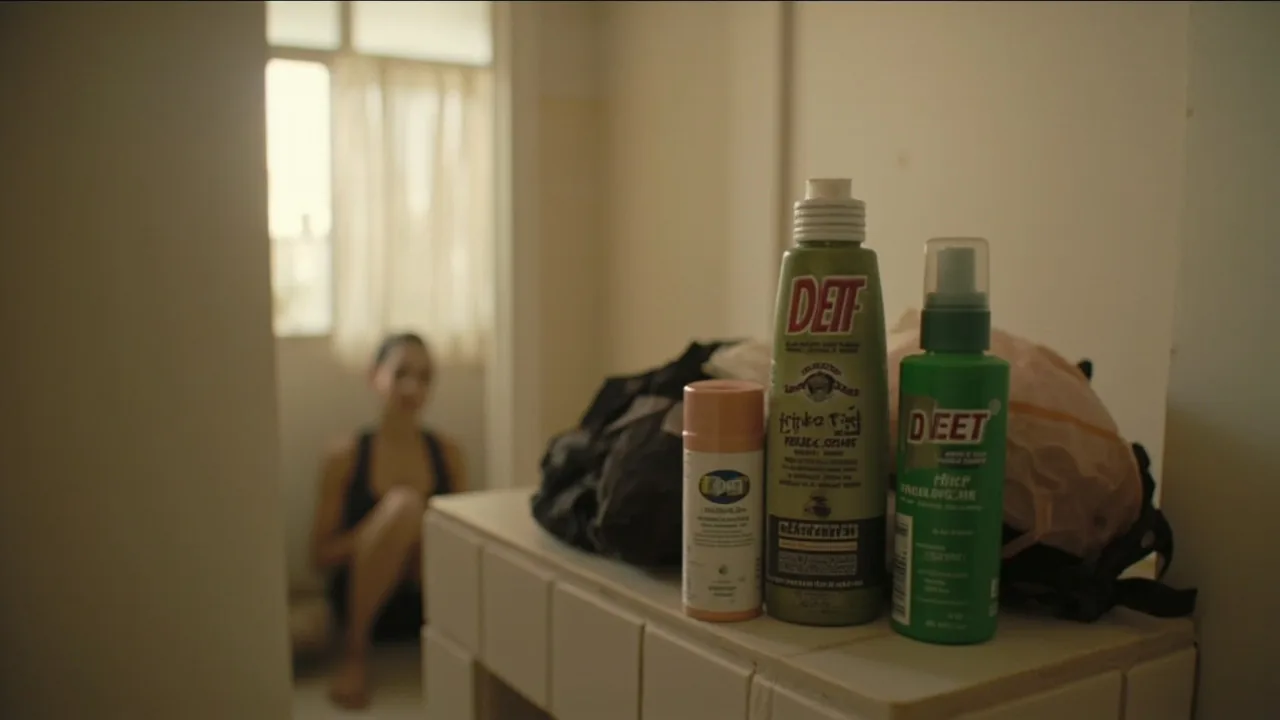
Malaria & Dengue in Cambodia: Areas to Avoid + Best Mosquito Repellents
Cambodia malaria dengue mosquito repellent is the core packing and health-planning question for any India-to-Cambodia trip. Two mosquito-borne diseases genuinely deserve attention: dengue (year-round urban risk) and malaria (restricted to forested provinces). Planning the wider region? Our Southeast Asia backpacking hub covers the full multi-country route.
Quick Answers
| What | Answer | Price (INR) |
|---|---|---|
| Do I need malaria prophylaxis for Phnom Penh or Siem Reap? | No, both cities and the main Angkor zone are malaria-free. | , |
| Do I need malaria pills if I’m going to Mondulkiri or remote northeastern jungles? | Yes. CDC recommends atovaquone-proguanil (Malarone) or doxycycline for these provinces. | ₹3,800 (~$39.42) |
| Is dengue vaccine (Qdenga) worth it for a 2-4 week trip? | No, only recommended if you’ve had dengue before or are staying long-term. | ₹9,800 (~$101.66) |
| What DEET % repellent works in Cambodia? | 20-30% DEET for daytime, 30-50% for jungle treks. | ₹550 (~$5.71) |
| Are mosquito coils or bracelets enough? | No, treat them as backup only. Use DEET on skin + permethrin on clothes. | ₹250 (~$2.59) |
The Real Risks (What to Worry About)
| Risk | Likelihood | Impact | How to Avoid |
|---|---|---|---|
| Dengue (urban areas, year-round) | High in wet season, moderate in dry season | High (fever, joint pain, hospitalisation) | 20-30% DEET daily, long sleeves at dusk, eliminate standing water in hostels |
| Malaria (remote forests only) | Low for typical backpacker routes, moderate in Mondulkiri/Ratanakiri | Severe if untreated | Atovaquone-proguanil or doxycycline + DEET 30-50% + permethrin-treated clothes |
| Chikungunya | Low, sporadic outbreaks | Moderate (joint pain lasting weeks) | Same protocol as dengue |
| Japanese Encephalitis | low for short trips, rural rice fields | Severe | Vaccine if staying 1+ month in rural areas; otherwise avoid mosquito bites |
| Zika | low, isolated cases reported | Low for adults, serious for pregnancy | Standard mosquito avoidance; pregnant travellers should consult a doctor |
Subodh’s Pro Tip: Travellers report dengue as the disease that sends backpackers to a Cambodian clinic. Malaria is on the official “know the risk” list, but the cities you’ll sleep in (Phnom Penh, Siem Reap, Kampot, Koh Rong) have not had locally transmitted malaria in over a decade.
Where Dengue and Malaria Are in Cambodia
Dengue: everywhere, especially cities during the wet season
Cambodia’s National Dengue Surveillance Programme reports dengue transmission in all 25 provinces, with Phnom Penh, Siem Reap, Kandal, and Battambang consistently topping case counts during May to October. The 2024-2025 cycle was a heavy one (travellers report wards at Siem Reap Provincial Hospital full of kids and backpackers on drips in September 2025), and the 2026 wet season is tracking above the five-year average as of mid-July. The peak is usually July through September, falling off in November when the rains stop.
The key fact for backpackers: dengue is an urban, daytime-biting disease. The Aedes mosquito that carries it lives in cities, breeds in standing water (air-con drip trays, plant pots, discarded tyres, uncovered water tanks), and bites aggressively during the day, especially mid-morning and late afternoon. That last detail matters because most mosquito advice focuses on dusk and dawn, but in Cambodia’s cities, daytime DEET application is what stops the bites.
Malaria: only in forested border provinces
The World Health Organization classifies malaria risk in Cambodia as “low and geographically restricted.” The provinces with ongoing transmission as of 2026 are:
- Mondulkiri (east, jungle, hill tribes), moderate risk, mostly Plasmodium falciparum
- Ratanakiri (northeast, jungle, crater lakes), moderate risk
- Preah Vihear (north, forested parts away from temple), low to moderate risk
- Oddar Meanchey (northwest, forested border with Thailand), low risk
- Stung Treng (northern Mekong, forested areas), low to moderate risk
- Pursat (Cardamom Mountains foothill forests), low risk
Phnom Penh, Siem Reap, Battambang, Sihanoukville, Koh Rong, Kampot, Kep, and the Angkor temple complex itself are malaria-free. If your trip is the standard Siem Reap plus Phnom Penh plus coast loop, you do not need malaria prophylaxis.
Safety Alert: Cambodia’s eastern provinces border Vietnam and see periodic land-use and security tensions around protected forests. Check the Indian Ministry of External Affairs travel advisory page (mea.gov.in) and the Cambodia e-Visa portal’s official news section within a week of departure if you’re planning jungle treks in Mondulkiri or Ratanakiri.
Prevention and Preparation
Before You Leave India
- Book a travel-medicine consult 4-6 weeks before departure. This is the single most useful step. Clinics like Travelsafe Clinic Mumbai or Delhi’s Centre for Sight Travel Health will give you the actual current Cambodia map, not the generic one. They will prescribe malaria prophylaxis (if your itinerary needs it) and review your routine vaccines.
- Routine vaccines to be current: Hepatitis A and B, typhoid, tetanus, Japanese Encephalitis (if doing rural stays longer than a month). Yellow fever is not required for Cambodia unless you’re transiting an endemic country.
- Buy your repellent in India. Indian pharmacies and Amazon India carry DEET 30-50% sprays and creams (Odomos is DEET-free and not strong enough for Cambodia; see the repellent section below for what works).
- Pack a permethrin treatment kit for your clothes (Sawyer Permethrin spray or similar). One application lasts six washes and is the difference between getting bitten through your t-shirt and not.
- Travel insurance that explicitly covers dengue hospitalisation and medical evacuation. Standard Indian domestic policies won’t cover you abroad. Get SafetyWing travel insurance, which covers Indian travellers from ~$62/month (~₹5,900) and includes dengue treatment and emergency evacuation across Southeast Asia.
What to Pack (the actual repellent toolkit)
| Item | Why | Price in Cambodia |
|---|---|---|
| DEET 20-30% lotion or spray (e.g., 3M Ultrathon, Ben’s, Odomos Power+) | Daytime skin protection | ₹596 (~25,000 KHR or ~$6.18) |
| DEET 30-50% for jungle treks | Higher protection for forested areas | ₹715 (~30,000 KHR or ~$7.42) |
| Permethrin spray for clothes (Sawyer brand, 8 oz can) | Treats 2 sets of clothes, lasts 6 washes | ₹1,073 (~45,000 KHR or ~$11.13) |
| Mosquito plug-in vaporiser (Raid, Baygon brand, refill bottles) | Plug in overnight in hostel rooms without nets | ₹429 (~18,000 KHR or ~$4.45) |
| Mosquito net (if your hostel doesn’t provide one, common in rural stays) | Backup if no fan or sealed room | ₹596 (~25,000 KHR or ~$6.18) |
| Plug adapter (Type A/C/G for Cambodia) | For vaporiser | ₹191 (~8,000 KHR or ~$1.98) |
Cambodia uses US-style 120V plugs (Type A and C). Bring a universal adapter.
Best Mosquito Repellents That Work in Cambodia
DEET at the right concentration is the only thing with consistent peer-reviewed evidence. Plant-based repellents (citronella, lemongrass) give 30-60 minutes of protection, which is not enough for a humid Cambodian evening. Picaridin 20% (Australian standard) works almost as well as DEET and doesn’t smell as harsh.
Top three products Indian backpackers should pack:
- 3M Ultrathon Insect Repellent Lotion (DEET 34%), the gold standard, one application lasts 8-12 hours, available on Amazon India for ~₹550 (~$5.71).
- Sawyer Permethrin Spray for Clothing, treat your hiking pants and one long-sleeve shirt before you go, ~₹1,200 (~$12.45) on Amazon India.
- Raid Liquid Electric Vaporiser + refill, buy locally in Phnom Penh or Siem Reap supermarkets for ~₹429 (~18,000 KHR or ~$4.45) per starter kit, refills ~₹286 (~12,000 KHR or ~$2.97).
The Indian market’s Odomos (DEET-free neem-based) is marketed heavily but tests poorly against Aedes mosquitoes. Skip it for Cambodia unless you’re already in a low-risk area and just want cosmetic protection.
Daily Routine That Prevents Bites
- Apply 20-30% DEET to exposed skin every 6-8 hours during daylight (this is the Aedes window, not just dusk).
- Wear long-sleeved, light-coloured shirts and full-length trousers from late afternoon.
- Sleep under a net or in a room with a plug-in vaporiser. Most Phnom Penh and Siem Reap hostels have fans, which help (Aedes is a weak flyer).
- Check your room for standing water in window corners, plant pots, or shower trays. Empty them.
- Re-apply repellent after swimming or heavy sweating.
What to Do If You Get Sick
Suspected Dengue (high fever, severe joint pain, rash, pain behind the eyes)
- Take paracetamol (Dolo 650 in your bag, or Crocin 500, both sold over the counter across Cambodia). Avoid ibuprofen, aspirin, or any NSAID. They worsen dengue bleeding risk.
- Hydrate aggressively.
- Get to a clinic within 24 hours for a NS1 antigen blood test. Recommended private clinics that handle dengue regularly in Phnom Penh: International SOS, Royal Phnom Penh Hospital, and the Mercy Medical Center Cambodia. In Siem Reap, the Royal Angkor International Hospital handles dengue well.
- Hospital admission with IV fluids costs ₹19,281-₹38,561 (~200-400 USD) per night in private hospitals in Cambodia. Your travel insurance should cover this if dengue is named in the policy.
- Watch for warning signs that mean go to ER immediately: severe abdominal pain, persistent vomiting, bleeding gums, blood in urine, rapid breathing, cold/clammy skin. These are signs of dengue haemorrhagic fever, which is a medical emergency.
Subodh’s Pro Tip: If you spike a fever on day 5-7 in Cambodia and you feel like your bones are broken, assume it’s dengue until a blood test says otherwise. Don’t tough it out and try to catch the night bus to Bangkok.
Suspected Malaria (fever with chills, sweats, headaches, in a risk province)
- Get a rapid diagnostic test (RDT) within 24 hours of fever onset. Any provincial hospital can do this.
- Treatment is Artemisinin-based Combination Therapy (ACT), which is the first-line drug in Cambodia. Most government hospitals provide it free; private hospitals charge ₹4,820-₹14,461 (~50-150 USD).
- If you took prophylaxis correctly and still get fever, you still need testing, no prophylaxis is 100% effective.
- Severe malaria (confusion, seizures, jaundice) is a medical emergency requiring ICU.
Finding Help Fast
- Ambulance (Phnom Penh): 119 (public), 023 991 000 (Royal Phnom Penh Hospital private)
- Ambulance (Siem Reap): 012 235 888 (Royal Angkor International Hospital)
- Indian Embassy in Phnom Penh: +855 23 210 912 / +855 89 678 267 (after hours). Located at 5, Street 466, Phnom Penh. Indian e-visa and consular help available by appointment.
- Tourist Police (English-speaking): 012 999 999 (Phnom Penh), 012 402 595 (Siem Reap)
Wet Season vs Dry Season: How Risk Changes
Cambodia’s wet season (May to October) and dry season (November to April) shift the disease picture meaningfully.
Wet season (May to October):
- Dengue cases peak. July-September worst.
- Malaria risk in forested provinces slightly increases (more mosquitoes).
- Standing water everywhere, even in cities.
- Higher humidity makes DEET last less long, re-apply more often.
Dry season (November to April):
- Dengue drops by 60-70%, but doesn’t go to zero.
- Malaria risk in forests drops but doesn’t disappear.
- Less humid, repellent lasts longer.
- Dusk and dawn biting becomes more of an issue (Culex mosquitoes, which carry Japanese Encephalitis, peak in cool dry evenings).
If you have flexibility, February and March are the lowest-risk months. November through February is also low-risk and pleasant.
Indian-Specific Considerations
Common Indian Medicine Equivalents in Cambodian Pharmacies
| Indian brand | What it is | Local Cambodia equivalent |
|---|---|---|
| Dolo 650 / Crocin 500 | Paracetamol | Panadol, Paraceta (sold everywhere) |
| Combiflam | Ibuprofen + Paracetamol | Sold as Ibuprofen 400mg at U Care, Pharmacie de la Gare |
| Metrogyl 400 | Metronidazole (for traveller’s diarrhoea) | Flagyl, also generic metronidazole |
| Pantocid / Pan 40 | Pantoprazole (acid reflux) | Pantoprazole generic, common |
| Electral / ORS | Oral rehydration | ORS sachets at every pharmacy, also “Oral Rehydration Salts” brand |
| Avomine | Motion sickness (promethazine) | Avomine still sold in Phnom Penh international pharmacies |
| Ciplox / Cifran | Ciprofloxacin (antibiotic) | Sold by prescription; avoid using without doctor consult |
What Indian Doctors Often Get Wrong About Cambodia
Indian general practitioners sometimes default to chloroquine-based malaria prophylaxis (which is useless in Cambodia due to widespread resistance) or recommend primaquine for travellers who don’t need it. Cross-check any malaria prescription from an Indian doctor with the CDC Cambodia malaria page or a travel-medicine specialist. Current correct options for Cambodia’s forest regions are:
- Atovaquone-proguanil (Malarone), daily, start 1-2 days before travel, continue 7 days after leaving
- Doxycycline 100mg, daily, start 1-2 days before, continue 4 weeks after leaving (cheaper, also covers some tick diseases)
- Mefloquine (Lariam), weekly, less preferred due to neuropsychiatric side effects
For a typical Siem Reap + Phnom Penh + coast trip, none of these are needed.
Connectivity (so you can call for help)
A working phone with data is the fastest way to pull up an embassy number, translate a pharmacy label, or call an ambulance. Local SIMs are cheap: Smart, Cellcard, and Metfone all sell 30-day tourist packages with 10-30 GB for ₹482-₹964 (~5-10 USD). Buy at the airport kiosk with passport.
If you’d rather skip the airport queue and have data the moment you land, get a Nomad eSIM before you fly. Cambodia is covered, activation is instant, and you keep your Indian number active on WhatsApp for family check-ins.
When to Skip a Province Entirely
If your itinerary is flexible, you can substantially reduce your risk by skipping the deepest forest treks. The risk profile of common backpacker routes looks like this:
- Phnom Penh: dengue risk (wet season), no malaria risk. Stay in central Phnom Penh with window screens, repellent at dusk and midday.
- Siem Reap + Angkor: dengue risk, no malaria risk. The Angkor temple zone itself is well outside malaria areas.
- Battambang: dengue risk, no malaria risk.
- Kampot, Kep, Sihanoukville, Koh Rong: dengue risk only, no malaria. Coastal breeze helps.
- Kratie (Mekong dolphins): low malaria risk in the forested islands, but the town itself is fine. Take prophylaxis if doing multi-day island stays.
- Mondulkiri, Ratanakiri, Preah Vihear, Stung Treng jungle treks: malaria prophylaxis required, DEET 30-50%, permethrin-treated clothes, ideally a guide who knows the forest.
For the best of Cambodia beyond Angkor, the jungle treks in Mondulkiri and Ratanakiri are the only ones where prophylaxis is genuinely needed.
Subodh’s Take
Dengue is the disease that will slow you down, and it’s mostly preventable with daytime DEET and a vaporiser in your room. Malaria is a real risk only if you’re sleeping in the deep forests of Mondulkiri or Ratanakiri, and the prophylaxis is cheap and well-tolerated. Do the doctor consult before you fly, pack the right repellent, and don’t let a few mosquito bites push you into skipping the country’s best places. Cambodia’s coast and Phnom Penh are worth the small effort of doing prevention right.
FAQ
Is dengue outbreak 2026 worse than previous years?
Yes, as of July 2026, case counts are running 15-20% above the five-year average according to Cambodia’s National Center for Parasitology, Entomology and Malaria Control. The wet season peak is typically July-September.
Do I need the dengue vaccine (Qdenga)?
For a 2-4 week trip, no. WHO and most travel clinics only recommend it for people who’ve had dengue before or are staying long-term in endemic areas. It’s also expensive (~₹9,800 for two doses) and not available everywhere in India.
Is malaria back in Cambodia?
Malaria never fully went away, but it’s now restricted to forested border provinces. Transmission has dropped over 90% since 2010 due to better nets, ACT treatment, and the UN-funded elimination programme. For the cities and temples you’ll visit, there’s no malaria risk.
Can I get dengue twice?
Yes, and the second infection is statistically more dangerous than the first. There are four dengue serotypes, and immunity to one doesn’t protect against the others. This is another reason to pack DEET and not get complacent after your first trip.
What about Zika in Cambodia?
Cases have been reported but at low levels. The standard CDC advice is for pregnant women to avoid travel or consult a specialist. For everyone else, standard mosquito avoidance is sufficient.
Where can I get tested for dengue in Cambodia?
Private hospitals (Royal Phnom Penh Hospital, Royal Angkor International, International SOS) have NS1 antigen rapid tests with results in 2-4 hours. Government hospitals and clinics also test but may have longer waits. Cost is typically ₹1,446-₹3,856 (~15-40 USD) for the test plus consultation.
Is Cambodia safe for Indian tourists overall?
Yes, beyond the dengue and the rare malaria zones, Cambodia is generally safe. Watch for the common Cambodia transport and scam risks and review what not to eat in Cambodia for food safety. The bigger practical risks are tuk-tuk and scooter accidents, not disease.
