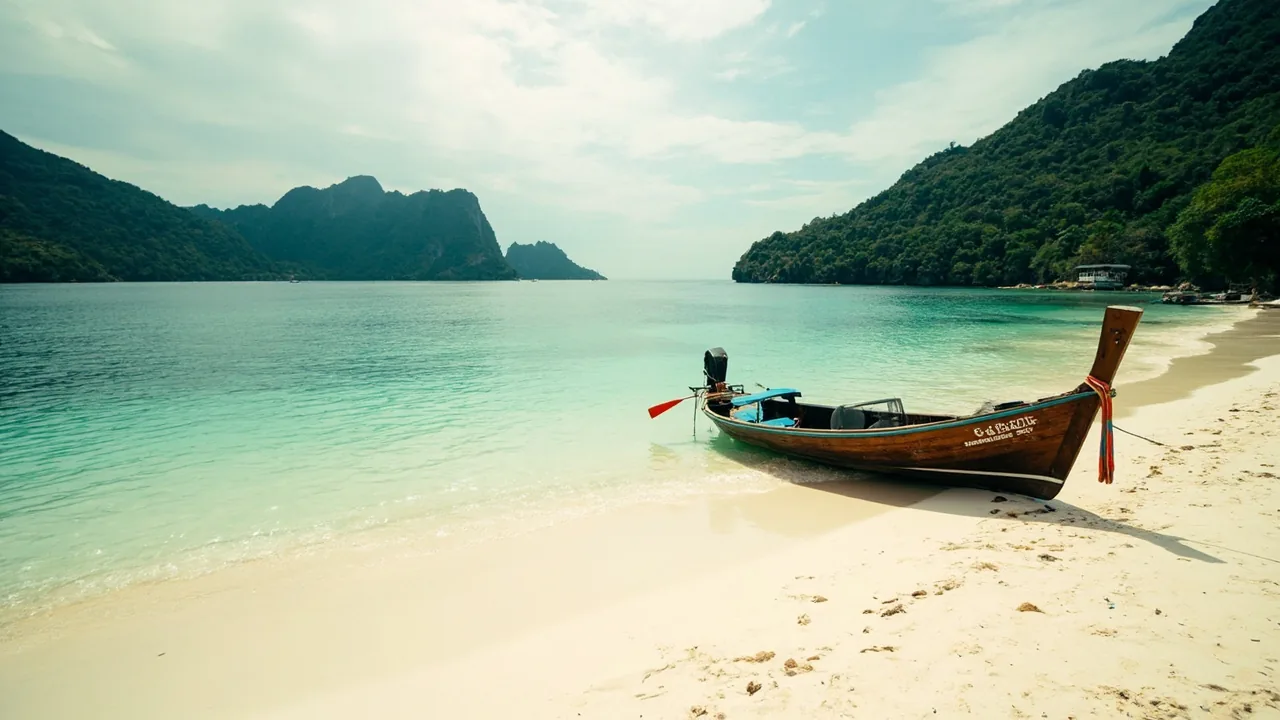
Southeast Asia Off the Beaten Path: 2026 Backpacker Guide to Hidden Destinations
If the standard Southeast Asia loop feels too crowded in 2026, you’re right. Traveller numbers in Thailand alone crossed 35 million last year. This guide to sea off the beaten path collects the towns, islands, and regions Indian backpackers are moving to instead. See also our Sea Backpacking Hub.
What Counts as “Off the Beaten Path” in 2026?
For this guide, “off the beaten path” means destinations that get under 5% of the region’s backpacker traffic, have working dorms or guesthouses (not just day-trip tours), and stay reachable without chartering a private boat. That rules out a few places that look remote on Instagram but are practically inaccessible, and a few that are still genuinely remote but unsafe for first-time India-to-SEA travellers. Everything below fits both.
Quick Answers
| What | Answer | Price (INR) |
|---|---|---|
| Best low-season months | May to October (fewer tourists, lower hostel rates) | — |
| Cheapest SEA country right now | Laos (dorms from ₹258 (~60,000 LAK or ~$2.67), meals from ₹64 (~15,000 LAK or ~$0.67)) | ₹258 |
| Most underrated region | Northern Vietnam (Ha Giang loop) and northeast Cambodia (Banlung, Mondulkiri) | — |
| Easiar transport from India | Bangkok, via direct flights from Delhi, Mumbai, Bengaluru | — |
| One thing most guides skip | How to get to Kratie, Koh Rong Sanloem, or Bolaven Plateau without a tour | — |
The routes and towns below come from Indian backpacker reports between January and June 2026, not from generic travel PR.
The 11 Places Indian Backpackers Are Moving to in 2026
1. Kanchanaburi, Thailand
Two hours west of Bangkok by minivan, this riverside town has the River Kwai bridge, seven national parks (Erawan being the most famous), and dorm beds that go for under ₹1,001 (~350 THB or ~$10.39). Most travellers skip it because it looks “boring on a map.” That’s the point. You stay here to float on the river, swim in tiered waterfalls, and base yourself for side trips to the Myanmar border towns that few people visit.
How to get there: minivan from Bangkok’s Southern Bus Terminal, ₹429-₹629 (~150-220 THB or ~$4.45-$6.53). Trains also run, slower but scenic.
2. Koh Tao (Quiet Side), Thailand
Most of Koh Tao is a diving factory. The quiet side, Chalok Baan Kao Bay, has the same reefs but a third of the dive schools. Dorms here are ₹858-₹1,287 (~300-450 THB or ~$8.90-$13.35), half what you’d pay on Sairee. Ferries from Chumphon (cheaper than from Surat Thani): ₹1,287 (~450 THB or ~$13.35), 1.5 hours.
3. Chiang Khan, Thailand
A 200-year-old teak town on the Mekong, two hours east of Loei. Travellers report walking through the old quarter at sunrise and not hearing another tourist voice for an hour. Dorms are ₹715-₹1,001 (~250-350 THB or ~$7.42-$10.39). Best from November to February when the morning fog sits over the river.
4. Pai, Thailand
Pai is technically known, but most backpackers skip it because it’s “too far from Bangkok.” It’s 3 hours from Chiang Mai by minivan, and stays cooler than Chiang Mai by 4 to 6 degrees. Worth it for the canyon, the hot springs, and the sleeper train route people take to reach it.
5. Koh Rong Sanloem, Cambodia
The main island, Koh Rong, has full-moon parties. Koh Rong Sanloem (different island, 45 minutes by boat) has Saracen Bay and Lazy Beach, both still quiet. Dorms and bungalows start at $8/night. Ferries run from Sihanoukville pier for ₹1,445 (~15 USD) return.
6. Banlung and Mondulkiri, Cambodia
Northeast Cambodia, 7 to 8 hours by bus from Phnom Penh, has crater lakes, elephant sanctuaries (ethical ones, not the ride-the-elephant kind), and the Bou Sraa waterfall. Indian travellers rarely come here. Dorms from ₹482 (~5 USD), meals under ₹289 (~3 USD).
7. Kratie, Cambodia
A Mekong town famous for spotting the Irrawaddy dolphins. Small enough to walk end to end in 30 minutes, but a useful base for the dolphins and the bamboo-tram bridge at Koh Pdao island. Buses from Phnom Penh take 6 to 7 hours.
8. Ha Giang Loop, Vietnam
The most consistently recommended off-route by Indian backpackers in 2026. Four-day motorbike loop through the northernmost mountains, limestone karsts, and ethnic H’mong villages. Dorms in Ha Giang town: ₹551 (~150,000 VND or ~$5.72). Motorbike rental for the loop: 250,000 VND/day.
If you’re not confident on a motorbike, “easy rider” tours (a local guide drives, you ride pillion) cost ₹4,406-₹5,508 (~1,200,000-1,500,000 VND or ~$45.74-$57.17) for four days, including bike, fuel, accommodation, and most meals. Book through any hostel in Ha Giang town the day before.
9. Phong Nha, Vietnam
Home to Son Doong (the world’s largest cave, restricted permit access) but also to Paradise Cave and Phong Nha Cave, both reachable without a permit. The town itself is one main street with riverside restaurants and a few hostels. Dorm beds from ₹734 (~200,000 VND or ~$7.62). Trains from Hanoi to Dong Hoi (the nearest station): ₹1,285 (~350,000 VND or ~$13.34), 7 hours, then a 1-hour bus to Phong Nha.
10. Bolaven Plateau, Laos
Coffee plantations, waterfalls, and the most uncrowded stretch of road in mainland SEA. Base yourself in Pakse, then motorbike the loop in 3 days. Dorms in Pakse from ₹258 (~60,000 LAK or ~$2.67), motorbike rental 100,000 LAK/day. The plateau is 1,200m up, so it stays cool year-round.
11. Nong Khiaw, Laos
A river town between Luang Prabang and the Vietnam border, two hours off the main highway. Limestone cliffs drop straight into the Nam Ou river. Dorms from ₹215 (~50,000 LAK or ~$2.23). Slow boats to Luang Prabang run for ₹472 (~110,000 LAK or ~$4.90), 6 hours through some of the prettiest river scenery in Laos.
How to Plan an Off-Route Trip: Step by Step
Step 1: Pick 3 Regions, Not 11 Towns
Trying to “do” all of these in one trip means a bus every other day. Pick three that cluster geographically. The most common Indian backpacker pairings in 2026:
- Northern Vietnam (Ha Giang + Phong Nha) + Luang Prabang/Nong Khiaw
- Northeast Cambodia (Banlung + Kratie) + Koh Rong Sanloem
- Kanchanaburi + Chiang Khan + Pai (Thailand-only loop)
Step 2: Build in 2 Slow Days per Region
Off-route places have fewer buses, fewer hostels, and almost no Grab or Bolt. If you try to move every day, you’ll burn out. Plan at least 2 nights per stop, with the second day free for waterfalls, motorbike loops, or doing nothing.
Step 3: Get the Right SIM First
A local SIM covers most of SEA, but coverage drops fast outside cities. Travellers report AIS in Thailand and Viettel in Vietnam/L/C as the most reliable in rural areas. Buy at the airport for fastest setup, or at any 7-Eleven in the city for ₹57-₹143 (~20-50 THB or ~$0.59-$1.48) less.
If you’d rather skip the airport queue and have data on before you land, Get Nomad eSIM lets you activate the plan before takeoff and switch on at landing. Useful if you’re flying into Bangkok and immediately heading north.
Step 4: Carry the Right Mix of Cash and Card
Rural areas still take cash almost exclusively. Carry enough Thai baht, Vietnamese dong, or Lao kip for 3 to 4 days at a time. ATM withdrawals in Laos have a flat fee of ₹68 (~20,000 LAK) per transaction, so withdraw larger amounts less often. For cards, see the forex card guide for Indian travellers.
Subodh’s Pro Tip: Withdraw local currency from a bank-affiliated ATM (Bangkok Bank, Vietcombank, BCEL), not the standalone ATMs tourist areas install at 7-Elevens. The bank ones charge ₹572 (~200 THB or ~$5.94), the tourist ATMs charge 250 THB / 50,000 VND and push a worse exchange rate.
Step 5: Book Sleeper Trains and Slow Boats in Advance
The Mekong slow boat to Luang Prabang, sleeper trains from Bangkok to Chiang Mai, and any long-distance bus in Vietnam fill up 3 to 5 days ahead in peak season (December to February). Book through 12go.
Common Mistakes Indians Make on Off-Route Trips
Mistake 1: Booking tours from Bangkok for things you can do yourself in Hanoi. If you’re already in northern Vietnam, local agencies in Ha Giang run the loop at half the Bangkok-quoted price. Same for Cambodia: tours to Mondulkiri booked from Phnom Penh cost ₹3,854 (~40 USD) less than the same trip sold in Sihanoukville.
Mistake 2: Underestimating monsoon rain. May to October is “low season” for a reason: roads wash out, boats cancel, and waterfalls you planned to swim in turn into brown rivers. Check the Vietnam peak season guide and the Thailand low-season explainer before locking dates.
Mistake 3: Riding motorbikes without an international license. Vietnamese police in tourist hubs (Sapa, Ha Giang, Da Nang) check foreign riders at checkpoints. The fine is ₹3,672-₹7,344 (~1,000,000-2,000,000 VND or ~$38.12-$76.23) if you can’t show one. Get the IDP from your local RTO before leaving India.
Mistake 4: Going solo to remote border zones. The Thai-Myanmar border near Mae Sot and the Cambodia-Vietnam border near Moc Bai see periodic tension. Check your government’s official travel advisory page (the MEA advisory portal at mea.gov.in) and the destination country’s own advisory site before going.
Mistake 5: Trusting tuk-tuk and taxi drivers in arrival cities. They get commissions for “the new island, quiet, you go today.” Read the tuk-tuk scam guide before Bangkok and Phnom Penh.
What Most Guides Don’t Tell You
Edge case 1: Koh Rong Sanloem’s “main pier” closes between June and September when the sea is rough. Ferries still run, but only in calm weather. If your dates are flexible, go in November to March.
Edge case 2: The Ha Giang loop has no ATMs between Yen Minh and Dong Van. Withdraw ₹5,508-₹7,344 (~1,500,000-2,000,000 VND or ~$57.17-$76.23) before leaving Ha Giang town.
Edge case 3: Bolaven Plateau roads are better in the dry season (November to April). Travellers report November to February mornings dropping to 12 to 15 degrees at 1,200m elevation. Bring a light jacket.
Edge case 4: Sapa is overcrowded even in shoulder season. If you want terraced rice fields with fewer tourists, go to Mu Cang Chai (different province, fewer buses) or the Ha Giang loop instead.
Edge case 5: Nong Khiaw has exactly two guesthouses with reliable Wi-Fi. If you need to work online, ask the hostel in advance to confirm signal strength, not assume.
Sample 21-Day Off-Route Itinerary
This is what a typical Indian backpacker on the northern loop reports spending, with Bangkok as the entry point:
| Day | Where | What |
|---|---|---|
| 1 | Bangkok | Land, SIM, sleep |
| 2 | Bangkok → Kanchanaburi | Minivan, river walk |
| 3 | Kanchanaburi | Erawan Falls day trip |
| 4 | Kanchanaburi → Chiang Mai | Sleeper train, ₹1,001 (~350 THB or ~$10.39) |
| 5 | Chiang Mai | Old city, Sunday Walking Street if it’s Sunday |
| 6 | Chiang Mai → Pai | Minivan, ₹429 (~150 THB or ~$4.45) |
| 7 | Pai | Canyon, hot springs |
| 8 | Pai → Chiang Rai → Laos border | Long day, cross at Huay Xai |
| 9 | Mekong slow boat → Luang Prabang | 2 days, overnight in Pakbeng |
| 10 | Luang Prabang | Temples, night market |
| 11 | Luang Prabang → Nong Khiaw | Minivan, ₹472 (~110,000 LAK or ~$4.90) |
| 12 | Nong Khiaw | Viewpoint, river swim |
| 13 | Nong Khiaw → Hanoi | Bus to Luang Prabang, flight to Hanoi |
| 14 | Hanoi | Old Quarter |
| 15 | Hanoi → Ha Giang | Overnight bus |
| 16-18 | Ha Giang Loop | 3-day motorbike loop |
| 19 | Ha Giang → Phong Nha | Night bus |
| 20 | Phong Nha | Paradise Cave |
| 21 | Phong Nha → Hanoi → fly home |
Budget for this 21-day loop, excluding international flights: around ₹85,000 (~$882.30) to ₹110,000 (~$1,141.80), depending on how often you take sleeper buses versus flights. Most travellers find this comes out around ₹4,500 (~$46.71) to ₹5,500/day when you average in the slower off-route days.
Safety Alert: Night buses on mountainous routes (Ha Giang, Bolaven, northern Laos) have been involved in accidents. Two operators have better safety records than the rest: in Vietnam, ask hostels for “Han Lim” or “Quang Nghi” branded buses; in Laos, the “LK” company runs the safer VIP buses to Vientiane. Avoid unmarked minivans at night, full stop.
FAQ
Is November a good time to visit Southeast Asia?
November sits at the start of the dry season for most of SEA. Northern Thailand, Vietnam, Cambodia, and Laos are all good. Bali enters rainy season. Check the Thailand weather guide for the specific window you need.
How much cash should I carry per day off-route?
Off-route, plan for cash to cover transport, meals, and entry fees. Cards work in the bigger hostels but not in family-run guesthouses or village restaurants. The 5,000-a-day breakdown has a sample split.
What is the rainy season in Thailand, Vietnam, Laos?
It runs May to October for most of the region, with a short break in June. Cyclones hit the Vietnamese coast between August and October. For finer detail, Thailand rainy season and Vietnam peak season cover the timing.
Can I do the Ha Giang loop without riding a motorbike?
Yes. Use an “easy rider” (you ride pillion, a local drives). Costs ₹4,406-₹5,508 (~1,200,000-1,500,000 VND or ~$45.74-$57.17) for four days, often including accommodation and most meals. Book the day before at any hostel in Ha Giang town.
Is the Mekong slow boat safe for solo female travellers?
Travellers report the slow boat is one of the safer multi-day transport options in SEA, with families and other backpackers on board. Cabins are mixed-gender; ask for a female-only dorm in Pakbeng when you overnight. The solo female SEA guide has more on this.
Do I need a return ticket to enter Thailand/Vietnam/Laos?
Officially yes, all three countries technically require proof of onward travel. In practice, immigration rarely asks. Carry a printed bus or flight booking for the next country just in case.
How do I get from Sapa to Ha Long Bay?
Most travellers take an overnight bus from Sapa to Hanoi (₹918 (~250,000 VND or ~$9.53)), then a transfer bus from Hanoi to Ha Long Bay (₹918 (~250,000 VND or ~$9.53), 3.5 hours). The route guide covers the full set of options.
Subodh’s Take
The off-route SEA of 2026 isn’t about being the first person somewhere. It’s about being the first person in your group chat. Pick one region, go for 10 days, and don’t try to “cover ground.” The whole point of skipping the famous places is so you can sit on a porch in Nong Khiaw or Koh Rong Sanloem for two days without a plan. If that sounds like a waste of time, you’re not ready for off-route SEA yet. If it sounds like the whole reason you flew 4,000 km from home, pack lighter than you think you need to.
